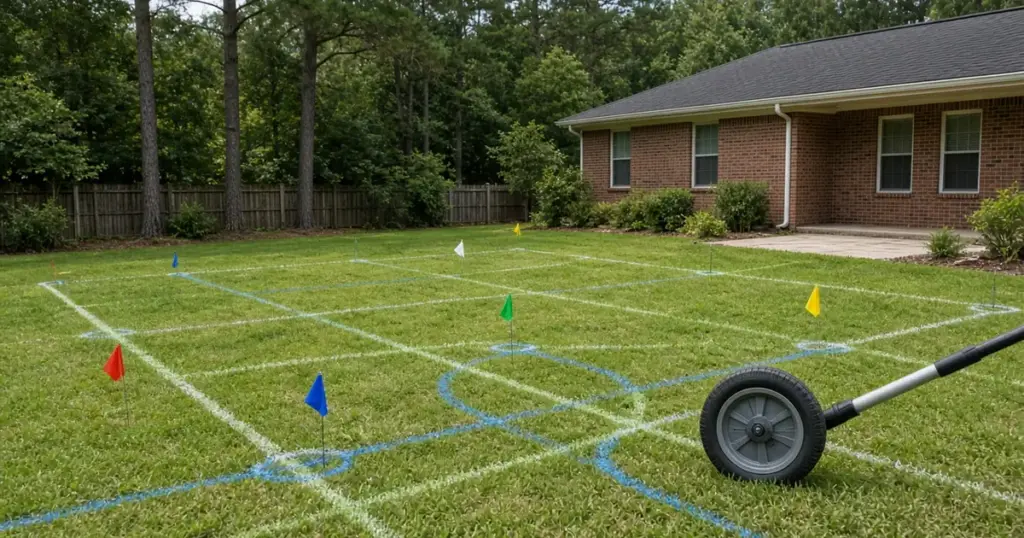
Ask ten neighbors what they paid for their sprinkler systems and you will hear ten different answers, and most of them will not tell you much about what yours should cost. A small, flat, open front yard on city water is a completely different project from a sloped, wooded acre on a well. The final price reflects decisions about design, equipment, and site conditions that are unique to each property.
We do not publish prices, and we would be wary of anyone who quotes a new system without seeing the property. Instead, this guide explains the factors that shape an installation quote, so you can compare proposals on equal terms and decide where to spend and where to save. It is written for homeowners in Huntsville, TX and across Walker County.
Factor 1: The Area to Be Irrigated
The total square footage of lawn and beds is the starting point, but shape matters as much as size. Long, narrow side yards, curved beds, islands, and areas broken up by walkways need more heads and more careful layout than a simple rectangle. Texas irrigation standards limit above-ground spray in narrow strips under 48 inches wide that are bordered by pavement on two or more sides, which often means drip or a different approach in those areas.
Factor 2: Number of Zones
Zones are driven by water supply and by plant needs. Each zone needs a valve, wiring, and its own pipe network. More zones generally mean more material and labor, but they also mean better control: separate zones for sun and shade, lawn and beds, slopes and flat areas. TCEQ rules call for zoning based on plant type, microclimate, topography, and soil, and good zoning is one of the best investments you can make in a system that performs well for years.
Factor 3: Water Source and Pressure
- City or utility water may involve a dedicated irrigation tap or meter, depending on the provider. Some cities issue permits for irrigation taps and backflow work.
- Private wells require matching zone sizes to pump capacity, and may need filtration or pressure tank considerations. Inside Huntsville city limits, irrigation wells are prohibited by the city’s development code.
- Pressure affects head choice. High pressure may call for pressure-regulated heads; low pressure may limit how many heads a zone can run.
Our existing guide to well-water irrigation systems explains the well-specific factors.
Factor 4: Soil, Roots, and Obstacles
Sandy loam over clay is generally workable, but rocks, dense roots, and compacted fill slow installation. Mature pines and oaks require routing pipe carefully to avoid damaging major roots, which can add labor. Existing utilities must be marked before digging; Texas 811 handles locate requests. Our post on how tree roots damage irrigation lines explains why routing around roots matters.
Factor 5: Hardscape Crossings
Driveways, sidewalks, and patios between the water source and the areas to be watered require sleeves or boring underneath. Homes where hardscape is already in place cost more to irrigate than lots where sleeves were placed during construction.
Factor 6: Equipment Choices
- Heads: Basic spray heads, pressure-regulated heads, rotors, and rotary nozzles vary in cost and performance. See the comparison of spray heads, rotors, and rotary nozzles.
- Drip: Drip zones need filters, regulators, and tubing, and they save water in beds. They are usually worth it for beds and foundation plantings.
- Controller: Basic, smart Wi-Fi, or expandable commercial-grade controllers.
- Sensors: Rain or moisture shut-off technology is required on new systems; freeze sensors, soil moisture sensors, and flow sensors are optional upgrades.
- Valves: Brand, quality, and features such as flow control.
Factor 7: Backflow Protection
Every system connected to a potable supply needs an appropriate backflow assembly and a test by a licensed tester at installation. The type depends on hazard level and site conditions. For example, TCEQ guidance calls for a reduced pressure assembly on irrigation systems connected to a potable supply at properties served by an on-site sewage facility. The backflow prevention and testing guide explains the types.
Factor 8: Restoration
Installation leaves narrow trench lines or pull lines in the lawn. Some quotes include careful sod replacement and cleanup, others leave restoration to the homeowner. Ask what is included.
Factor 9: Timing
Installing irrigation during new construction, after grading and before sod, is typically simpler than retrofitting an established yard. Retrofits mean working around existing landscaping, fences, and hardscape.
How to Compare Quotes
When you receive proposals, compare:
- Number and layout of zones. Fewer zones may look cheaper but can mean poor control.
- Head types and brands.
- Drip versus spray in beds.
- Controller and sensors included.
- Backflow assembly type and testing.
- Permits, if required.
- Restoration and cleanup.
- Warranty and follow-up adjustments.
- License information. Texas requires irrigation work for hire to be performed by or under a TCEQ-licensed irrigator.
A design drawing showing head locations and zones makes comparison much easier.
Where Spending More Pays Off
- Good zoning and matched precipitation.
- Pressure regulation where needed.
- Drip in beds.
- A controller you will actually use well.
- Quality valves in accessible boxes.
Where You Can Save
- Starting with the most important areas and expanding later, if the design allows for it.
- Skipping optional sensors initially if the controller can add them later.
- Doing some cleanup or mulching yourself.
The irrigation installation and upgrades guide explains planning in more depth, and the efficient irrigation guide covers how design affects long-term water costs.
When to Call a Pro
Call when you are ready for an on-site evaluation. A licensed irrigator will look at water source, pressure, soil, sun and shade, slopes, hardscape, and how you use the yard, then design zones and recommend equipment. That is the only way to get an accurate number. See our irrigation installation page for what we offer, and our FAQ page for common questions.
Frequently Asked Questions
Why do installation quotes vary so much?
Different designs, equipment, and inclusions. One quote might include more zones, drip beds, a smart controller, and restoration; another might not. Compare line by line.
Is it cheaper to install irrigation during new construction?
Usually, yes, because sleeves can go under hardscape before it is poured and there is no existing landscaping to work around.
Can I install part of a system now and add zones later?
Often, yes, if the design and controller allow for future zones. Planning the main line and controller capacity up front makes later expansion easier.
Call for a Quote
For an honest, on-site quote, call 346-586-6060 or tell us about your project. We design and install systems throughout Huntsville and Walker County.