A well-designed irrigation system is mostly invisible. Heads pop up, water lands where it should, beds get a slow drip instead of a spray, and the system shuts off when it rains. A poorly designed one announces itself every week with dry corners, soggy low spots, water on the driveway, and a bill that does not make sense.
Whether you are planning a brand-new system, adding to an existing one, or upgrading parts of an older installation, the decisions you make at the planning stage matter more than any single piece of equipment. This guide walks through those decisions for homes in Huntsville, TX and the wider Walker County area, and links to detailed articles on each topic.
Start With the Site, Not the Equipment
Before choosing heads or controllers, a good design looks at the property itself:
- Water source and pressure. City water, a water supply corporation, or a private well each bring different pressure and flow limits. Those limits decide how many heads a zone can run.
- Soil. Sandy loam over clay, common in this area, accepts water quickly at the surface but slows dramatically at the clay layer. The lawn and soil irrigation guide explains why this affects zone design.
- Sun and shade. Areas under pines and oaks need less water than open lawn and should be on separate zones.
- Slopes. Sloped areas need lower application rates or cycle-and-soak programming to prevent runoff.
- Plant types. Turf, shrubs, flower beds, and vegetable gardens all have different needs.
Texas irrigation rules reflect these same principles. TCEQ’s standards call for separate zones based on plant type, microclimate, topography, and soil, and for heads in each zone to apply water at a matched rate. TCEQ’s Questions and Answers for Irrigators summarizes many of these requirements.
Choosing Heads and Emitters
The basic options are spray heads for small and medium lawn areas, rotors for larger open areas, rotary nozzles that bridge the gap with slower application rates, and drip for beds. Our existing comparison of spray heads vs. rotor heads vs. rotary nozzles explains where each fits.
Drip Irrigation for Beds and Gardens
Drip puts water at the root zone with very little evaporation or overspray, which makes it ideal for flower beds, shrubs, foundation plantings, and vegetables. It also keeps water off leaves, which helps with disease in humid weather.
- For planning a new drip zone, see drip irrigation for flower beds and shrubs.
- For edible gardens, see vegetable garden irrigation in East Texas.
- If you have an existing spray zone watering beds, converting a spray zone to drip explains when that makes sense.
- For keeping drip working, read drip irrigation problems and maintenance.
Expanding an Existing System
Many upgrades involve adding coverage: a new bed, an extended lawn area, or a section that never got enough water. Sometimes adding heads to an existing zone works; often it overloads the zone and drops pressure for every head on it. Adding a sprinkler zone covers how to decide, and what is involved in adding a valve and wiring a new station.
Controllers and Sensors
A new installation is the ideal time to choose a controller you will actually use well. Texas rules require rain or moisture shut-off technology on new automatically controlled systems. Flow sensors, master valves, and smart scheduling are optional but useful upgrades. The controllers and smart irrigation guide covers the options.
Backflow Protection and Safety Requirements
Every irrigation system connected to a drinking water supply needs a backflow prevention assembly, and it must be tested by a licensed tester at installation. New systems also need an isolation valve between the water meter and the backflow assembly. Some cities, including Huntsville, issue permits for irrigation water taps and backflow work, so your installer should confirm what your address requires. The backflow prevention and testing guide explains assembly types and testing.
What Installation Actually Involves
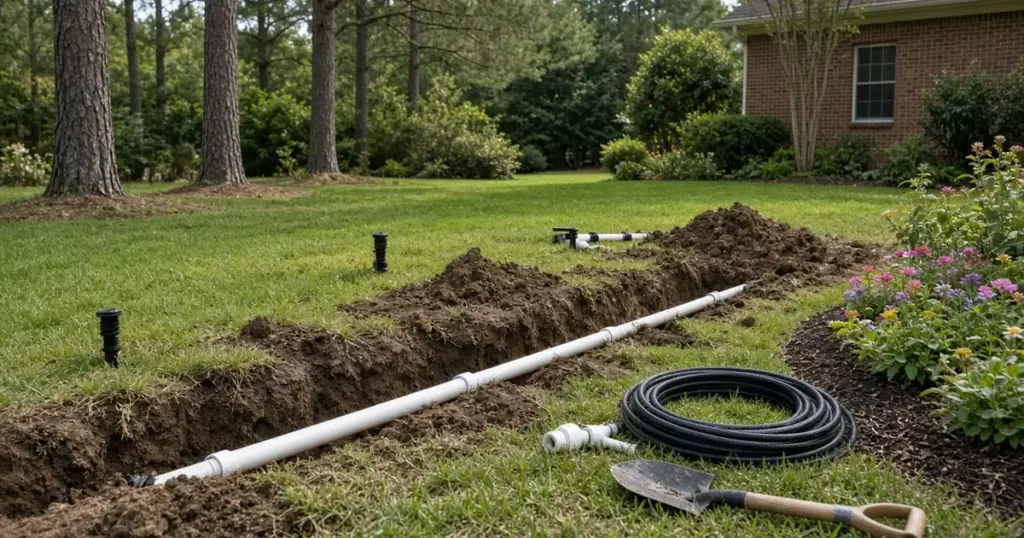
A typical new-system installation follows a sequence: design, utility locates, trenching or pulling pipe, installing the backflow assembly and valves, running pipe and wire, setting heads, flushing, testing, programming, and restoring the lawn. Before any digging, underground utilities should be marked through Texas 811. We describe each stage, and what you can expect as the homeowner, in what to expect from a new sprinkler system installation.
Building a new home? Timing matters. Installing irrigation after grading but before sod goes down saves money and disruption. See irrigation for new construction homes.
Who Can Install Irrigation in Texas
Texas requires a license from TCEQ to sell, design, install, maintain, alter, repair, or service an irrigation system, with limited exemptions. One exemption covers property owners working on their own home, but owners who install their own systems still have to meet certain standards. TCEQ explains the license types on its landscape irrigator licensing page. For what that means when you are hiring someone, read hiring a licensed irrigator in Texas.
Upgrades Worth Considering on Older Systems
- Pressure-regulated heads to stop misting on high-pressure systems.
- Check valves in heads on sloped zones to reduce low-head drainage.
- Rotary nozzles on spray zones where runoff is a problem.
- Drip conversion for beds currently watered by spray.
- A smart controller with weather-based adjustment.
- A flow sensor and master valve for leak protection.
Whether to upgrade parts or replace the whole system is a judgment call. The efficient irrigation guide covers the repair-or-replace decision and the factors that affect cost.
When to Call a Pro
Simple add-ons such as replacing a nozzle type or adding a drip line to an existing drip zone can be homeowner projects. Call a professional for new systems, new zones, any work that connects to the water supply, backflow installation or relocation, and redesigns of zones with chronic coverage problems. A licensed irrigator can also make sure the work meets state and local requirements. Learn more on our irrigation installation page or see all of our services.
Frequently Asked Questions
How long does a new sprinkler installation take?
It depends on the size of the property, soil conditions, and the number of zones. Many residential projects take a few days. Your installer should give you a timeline after the design is complete.
Can I add drip irrigation to my existing system?
Usually, yes. Drip is best on its own zone with a filter and pressure regulator. Converting an existing bed zone from spray to drip is a common upgrade.
Do I need a permit for a new irrigation system?
Requirements vary by city and water provider. Some cities issue permits for irrigation taps and backflow work. Ask your irrigator to confirm what applies to your property.
Will installation tear up my lawn?
Trenching or pipe pulling leaves narrow lines in the lawn that recover with time and watering. A careful installer minimizes disruption and restores the surface.
Plan Your System With Us
Thinking about a new system or an upgrade? Call 346-586-6060 or tell us about your project. We design and install irrigation for homes and properties across Huntsville and Walker County.