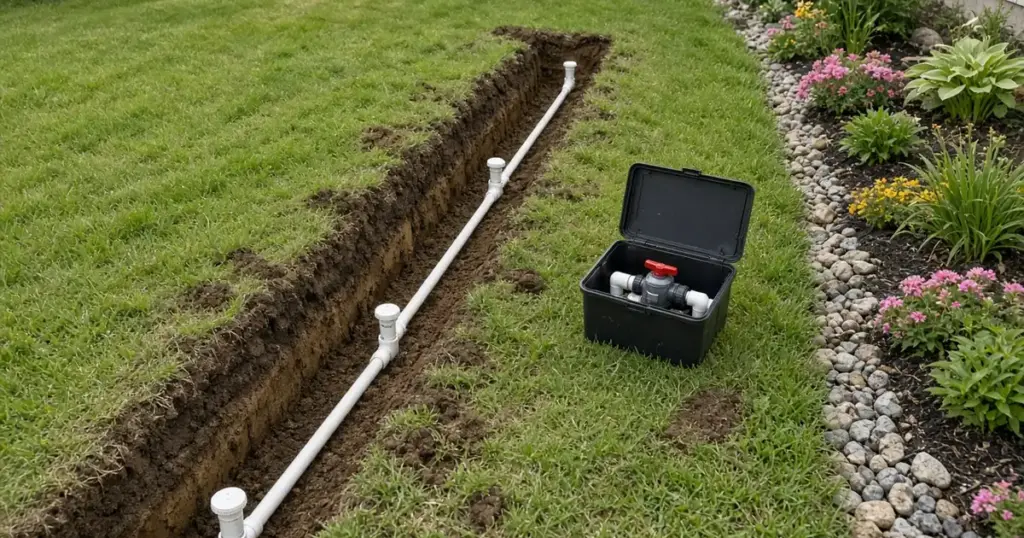
Sprinkler systems often fall behind the landscape around them. New beds go in, a patio expands, a back corner that was once bare becomes the kids’ play area, or an existing zone tries to water too much ground at once and leaves dry spots at the far end. Adding a zone is one of the most common irrigation upgrades, and it can fix coverage problems that no amount of adjusting will solve.
This guide explains when an added zone makes sense, how it is planned and installed, and what to check before you start. It is written for homeowners in Huntsville, TX and Walker County, where layered soils, mature trees, and long summers make good zoning especially important.
When Adding a Zone Makes Sense
- A new landscape area has no irrigation.
- An existing zone has too many heads for the available water flow, causing weak pressure and dry spots at the end.
- A zone mixes plant types, like lawn and beds, or sun and shade, so no single schedule works.
- A zone mixes head types, such as sprays and rotors, which apply water at different rates. Our existing article comparing spray heads, rotors, and rotary nozzles explains why that causes trouble.
- You want drip for beds or a vegetable garden. See vegetable garden irrigation.
What to Check First
Controller capacity
Each zone needs a station on the controller. Count the stations in use. If the controller is full, you may need an expansion module or a new controller. Our walkthrough on replacing an old sprinkler controller explains how to choose one.
Water supply
The new zone must run within the water supply’s available flow and pressure. A professional can measure static pressure and flow and calculate how many heads a zone can support.
Wiring
A new valve needs a wire from the controller. Spare wires in the existing bundle may already reach the valve location. Otherwise, a new wire run is required.
Main line access
The new valve must connect to the main line. Ideally, it goes in an existing valve manifold, but sometimes a new tap on the main line is closer to the area being watered.
How a New Zone Is Installed
- Design the zone. Choose head types and spacing for the area, matching precipitation rates within the zone. TCEQ design standards for new installations call for separating zones by plant type, microclimate, topography, and soil, and spacing heads within the manufacturer’s published radius.
- Locate utilities before digging.
- Install the valve on the main line, in a valve box.
- Run lateral pipe to the heads.
- Install heads at proper height, spaced correctly, and kept at least 4 inches from hardscape and directed away from it, as Texas standards require for new installations.
- Run wire and make waterproof splices.
- Flush the lines before installing nozzles.
- Connect to the controller and program the zone.
- Test coverage and adjust.
- Backfill and restore turf.
Licensing and Permits
In Texas, irrigation work for others is done by licensed irrigators under TCEQ rules. Homeowners working on their own property may be exempt from licensing, but Texas Occupations Code Chapter 1903 says exempt work must still meet the state’s standards. Inside Huntsville city limits, some irrigation work, such as new taps, has appeared on city permit records, so ask whether a permit applies to your project.
Programming the New Zone
A new zone needs its own run time, based on its head type and the area it waters, not a copy of a neighboring zone’s settings. Run a catch-cup test once the zone is installed to measure how much water it applies, and use cycle-and-soak if the area has clay or a slope. If the new zone is drip, put it on a separate program from the lawn so changes to turf watering do not affect it. Check the zone again after a few weeks, once the soil has settled around new pipe and heads, and adjust head heights and arcs if needed.
Common Mistakes When Adding a Zone
- Overloading the zone with too many heads for the available flow.
- Mixing sprays and rotors on the same valve.
- Skipping the flush, which clogs new nozzles.
- Placing heads too far apart, leaving dry gaps.
- Not updating the schedule for the new zone’s precipitation rate.
Partial Upgrades Instead of Full Replacement
Adding a zone is often part of a larger refresh: replacing worn heads, converting beds to drip, and upgrading the controller. Those improvements can extend the life of an older system. Our guide to repair or replace decisions explains how to weigh them, and the installation and upgrade guide covers other upgrade options.
Cost Considerations
We do not publish fixed prices because zone additions vary widely. The main factors are the length of pipe needed, the number and type of heads, whether a new valve location and wire run are needed, whether the controller has room, and how much hardscape is in the way. Our article on irrigation installation cost factors explains these in detail. Call for a quote based on your yard.
When to Call a Pro
Call a professional if you are unsure whether your water supply can support another zone, if the controller is full, if the new area is across a driveway or walkway, or if you want the zone designed to meet Texas standards from the start. A licensed irrigator can design and install the zone and program it correctly. We add zones for homes throughout Huntsville and Walker County. See our irrigation installation page and our services page.
Frequently Asked Questions
Can I add a zone to my existing sprinkler system?
Usually, yes, if the controller has an open station or can be expanded and the water supply can support it.
How many heads can one zone have?
It depends on the water supply’s flow and pressure and the heads’ flow rates. A professional can calculate the right number.
Do I need a new controller to add a zone?
Only if your current controller has no open stations and cannot be expanded.
Add the Zone Your Yard Needs
For help adding a zone, call 346-586-6060 or request an estimate.