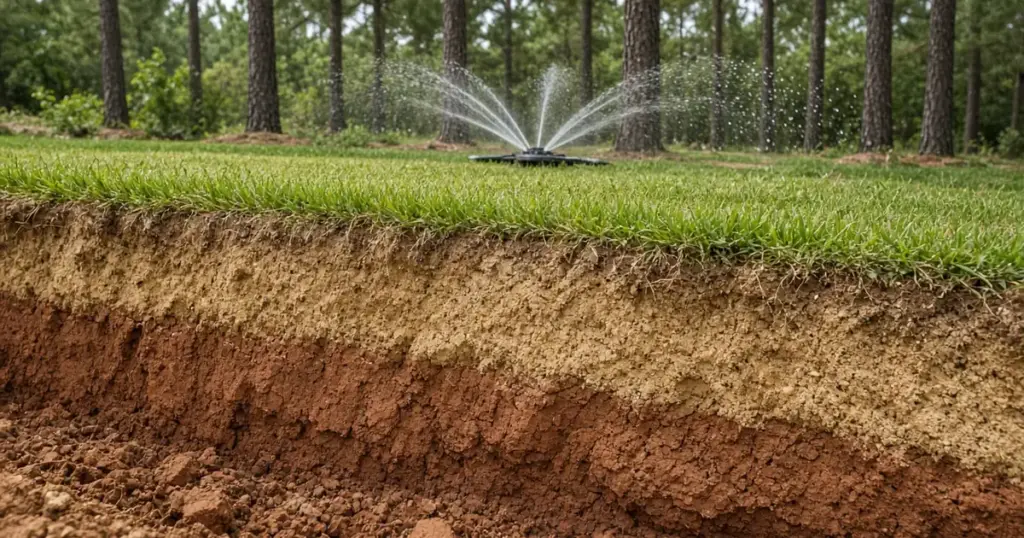
Dig a hole in many yards around Huntsville, TX and you will see two different soils stacked on top of each other. Near the surface is a sandy or loamy layer that feels loose and drains fast. A few inches to a foot or more down, the soil turns denser, stickier, and often more colorful: clay. That layering shows up across much of Walker County and the surrounding Piney Woods, and it explains a lot of the irrigation puzzles homeowners face.
Why does the lawn dry out fast in summer, yet stay soggy after a storm? Why does water seem to vanish into the ground for the first few minutes and then start running down the driveway? Why do wet spots appear in places nowhere near a sprinkler head? The answer, in many cases, is the boundary between the two layers. This guide explains how layered soil behaves and how to water it well.
How Water Moves Through Layered Soil
The sandy top layer
Sandy loam has larger particles and more pore space. Water enters quickly and moves down easily. It also holds less water, so it dries out faster in heat and wind.
The clay layer
Clay has tiny particles and small pores. Water moves into and through it slowly, and once wet, it holds water for a long time.
The boundary
When water moving down through the sandy layer reaches the clay, it slows sharply. If more water arrives than the clay can accept, it builds up at the boundary. From there it can spread sideways along the top of the clay, or the sandy layer can become saturated and water starts running off the surface.
That sideways movement is why a leak can show up as a wet spot some distance from the actual break. Our sprinkler leak repair guide explains how that affects leak detection.
What That Means for Watering
Roots and depth
Many lawn roots concentrate in the sandy layer and the top of the clay. Water that sits at the boundary is available to roots, but water that keeps building can make the root zone too wet, which starves roots of air.
Runoff
Sprinklers that apply water faster than the soil can absorb it cause runoff, especially once the sandy layer fills. Spray heads apply water fast; rotors and rotary nozzles apply it more slowly.
Uneven drying
The depth of the sandy layer varies across a yard. Where it is shallow, clay is close to the surface and the soil stays wet longer. Where it is deep, the area dries faster. That variation explains many brown and green patches that do not line up with sprinkler coverage. Our existing post on preventing lawn brown spots covers the coverage side.
How to Find Out What Your Soil Is Doing
- Dig a small test hole in a few places with a trowel or soil probe. Note how deep the sandy layer goes before you hit clay.
- Water a zone for a set time.
- Wait an hour and probe again. See how deep the moisture went and whether water is pooling at the clay.
- Watch for runoff during the cycle. Note when it starts.
Combine this with a catch-cup test to learn how much water each zone applies.
Scheduling for Layered Soil
Use cycle-and-soak
Split each zone’s run time into two or three shorter cycles with a soak period between. The first cycle wets the sandy layer, the soak lets water move down, and later cycles add more without overwhelming the boundary.
Water deeply, not daily
Daily short cycles keep the sandy layer moist but never reach the clay, so roots stay shallow. Deeper, less frequent watering encourages roots to grow down.
Adjust by zone
Areas with shallow sand over clay need less water and longer gaps. Areas with deep sand need more frequent watering. Separate zones make this possible.
Watch the weather
After heavy rain, the clay may stay saturated for days. Skip watering until the soil dries. Our existing article on watering your Huntsville lawn in humid weather covers scheduling with local humidity.
Grass Types and Layered Soil
Each common lawn grass responds differently. Bermuda roots deeply in full sun and tolerates drier sandy areas if watered deeply; see watering Bermuda grass. St. Augustine and zoysia benefit from careful moisture management to avoid disease in humid weather. The lawn and soil irrigation guide compares them.
Improving the Soil
- Aeration can improve water movement into the surface layer. Mark heads first so they are not damaged.
- Topdressing with compost over time can improve the sandy layer’s ability to hold water.
- Avoid compacting the soil with heavy equipment when it is wet.
- Mulch beds to slow evaporation from the sandy surface and keep rain and irrigation from crusting the soil.
- Be patient. Soil improvements build gradually over several seasons, so judge results over time rather than after one application.
Equipment That Helps
- Rotary nozzles apply water more slowly than standard sprays.
- Pressure regulation keeps spray from misting and drifting.
- Smart controllers can schedule cycle-and-soak automatically.
- Soil moisture sensors can skip watering when the root zone is still wet.
When to Call a Pro
Call a professional if runoff persists despite cycle-and-soak, if some areas stay soggy for days, if coverage is uneven, or if you want zones redesigned to match soil differences across your yard. A licensed irrigator can test soil, coverage, and pressure, and recommend changes. We help homeowners across Huntsville and Walker County tune systems to their soil. See our irrigation installation page and sprinkler repair page.
Frequently Asked Questions
Why does water run off my lawn even though the soil is sandy?
The sandy layer fills quickly, and the clay below absorbs slowly. Once the sandy layer is saturated, additional water runs off.
How do I know how deep the clay is?
Dig small test holes in a few spots and note where the soil changes from loose and sandy to dense and sticky.
Is cycle-and-soak worth the effort?
On layered soils and slopes, it usually makes a noticeable difference in runoff and how evenly water reaches roots.
Get Your Watering Matched to Your Soil
For help adjusting your system to layered soil, call 346-586-6060 or request a visit.