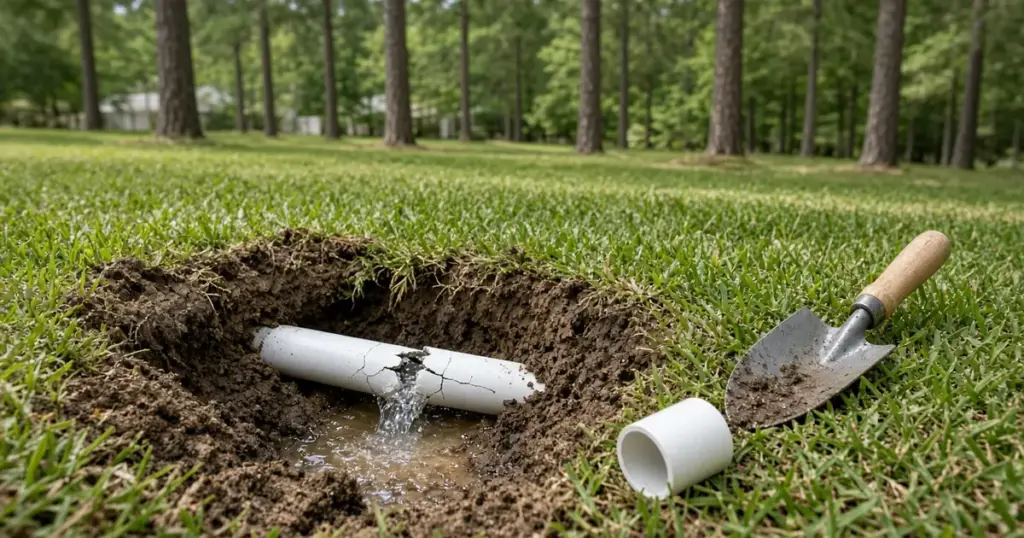
A leaking sprinkler system rarely looks dramatic at first. More often it is a patch of grass that never dries out, a valve box that is always full of water, or a water bill that creeps upward month after month. Left alone, though, a small leak can soften soil, feed fungus, undermine walkways, and waste a surprising amount of water.
This guide pulls together everything we know about irrigation leaks in Huntsville, TX and the surrounding Walker County area: where they come from, how to confirm one, how repairs actually get done, and how to keep the next one from happening. Each section links to a more detailed article if you want to go deeper on a specific type of leak.
Why Leaks Behave Differently in Local Soil
Many yards around Huntsville have a layer of sandy loam on top of denser clay. That matters for leak hunting. Water from a cracked pipe can travel sideways through the sandy layer and then sit on top of the clay, so the wet spot you see may be several feet away from the actual break. In other spots, the sand drains so quickly that a slow leak never surfaces at all. Our earlier post on signs of an underground sprinkler leak covers those subtle symptoms in detail.
Roots are the other local factor. Pines, oaks, and other hardwoods send roots toward reliable moisture, and an irrigation line is exactly that. Over years, roots can lift, pinch, and crack pipe. See how pine and hardwood roots damage irrigation lines if you have mature trees near your zones.
The Main Types of Sprinkler Leaks
Leaks at the head
Water bubbling around the base of a head, or a head that keeps weeping after the zone stops, are the most visible leaks. Sometimes the cause is a cracked body or worn seal. Often, though, the weeping comes from water draining out of the pipe through the lowest head on the zone, which is known as low-head drainage. Our article on why the lowest sprinkler head keeps leaking after shutoff explains how to tell the difference and when check valves help.
Leaks in the small fittings
The flexible connections between the lateral pipe and each head, either swing joints or “funny pipe,” take a lot of stress from mowers, foot traffic, and soil movement. They are a frequent source of slow leaks that are easy to miss. We cover them in swing joints and funny pipe leaks.
Leaks in the pipe itself
Pipe breaks can happen on the lateral lines, which are only pressurized when a zone runs, or on the main line, which is pressurized all the time. That difference changes how urgent the leak is and how you find it. Read main line vs. lateral line leaks to understand which one you are dealing with. Pipe material matters too; the repair approach for rigid PVC is different from flexible polyethylene, as explained in PVC vs. poly pipe in sprinkler systems.
Leaks at the valves
A valve box that stays full of water is a sign worth investigating. It can mean a leaking valve, a leaking fitting next to the valve, or simply groundwater after rain. Our guide to a flooded sprinkler valve box explains how to read the clues, and the sprinkler valves and wiring guide covers valve repairs.
How to Confirm You Have a Leak
The most useful tool you already own is your water meter. With every faucet and appliance off, a moving leak indicator on the meter means water is going somewhere. By opening and closing the irrigation shutoff, you can often tell whether the leak is on the irrigation side or the house side. The full procedure is in how to use your water meter to test for sprinkler leaks.
Other quick checks:
- Walk each zone while it runs and look for heads with weak pressure compared with their neighbors.
- Look for water bubbling up between heads or out of the soil.
- Press on soft, spongy spots a day after watering. Ground that stays soft longer than the rest of the lawn deserves attention.
- Watch for grass that is greener or taller in a straight line, which can trace a pipe run.
- Note any mushrooms, algae, or mold in spots that used to be dry. Our post on stopping sprinkler leaks and mold explains why humid East Texas weather makes this common.
If you are on a private well, you will not get a high bill to warn you, so physical signs and pump behavior become more important. A pump that cycles when nothing is running is a strong clue.
How Sprinkler Leaks Get Repaired
Most repairs follow the same basic pattern: shut off the water, expose the damaged section carefully, cut out the bad part, install a coupling or fitting rated for the pipe type, flush debris, pressure-test, and backfill. The details matter, though. Using the wrong fitting, letting dirt into the pipe, or backfilling before checking for drips are common reasons repairs fail. Our walk-through on how a broken sprinkler pipe gets repaired goes step by step.
Locating the break is often the hard part. Pressure testing, isolating zones, and listening equipment can narrow the search so that less of the yard has to be opened up. The post on leak detection and repair technology describes some of those tools.
Leaks That Need Fast Attention
Some leaks are a nuisance; others can cause damage. Water collecting along a slab foundation, under a driveway, or beside a retaining wall should be dealt with promptly. Persistent moisture next to a foundation can contribute to soil movement, and water running under concrete can wash out the base. Our article on sprinkler leaks near your foundation or driveway explains what to look for and why spray direction matters as much as pipe leaks.
Preventing the Next Leak
- Keep heads at the correct height and flag them before aerating or edging.
- Adjust spray so it does not soak sidewalks, siding, or foundations.
- Fix low-pressure or high-pressure problems, since both stress the system.
- Protect exposed parts and the backflow assembly before freezes.
- Have the system checked each spring so small leaks are found before the summer watering season.
The year-round sprinkler maintenance calendar lays out when to do each of these.
When to Call a Pro
Simple head replacements are fair game for DIY. Bring in a professional when the meter shows a leak but you cannot find it, when water is coming up near the main line or backflow assembly, when the leak is close to the foundation or under hardscape, or when you have tried a repair and it keeps failing. A licensed irrigator can isolate the leak, repair it with the right fittings, and pressure-test the result. Learn more on our sprinkler repair page, or use emergency service if water is running and you cannot stop it.
Frequently Asked Questions
How can I tell if my high water bill is from the sprinklers?
Turn off all indoor water use and watch the meter. Then close the irrigation shutoff valve and watch again. If the meter stops moving once irrigation is shut off, the leak is very likely in the sprinkler system.
Can a sprinkler leak damage my foundation?
Persistent water against a foundation is never a good idea, especially where soils swell and shrink with moisture. Any leak or overspray soaking the soil next to a slab should be fixed promptly.
Why does my yard have a wet spot that is not near a sprinkler head?
Water from a cracked pipe can travel through sandy topsoil and pool where it hits clay or a low spot. The surface water may be some distance from the break.
Do I need to dig up my whole lawn to find a leak?
Usually not. Isolating zones, pressure testing, and careful probing can narrow most leaks to a small area before any digging starts.
Talk to Us About a Leak
Leaks only get more expensive with time. If you suspect one, call 346-586-6060 or request service online. We serve Huntsville and the surrounding Walker County communities, and we will help you find the leak and fix it properly.