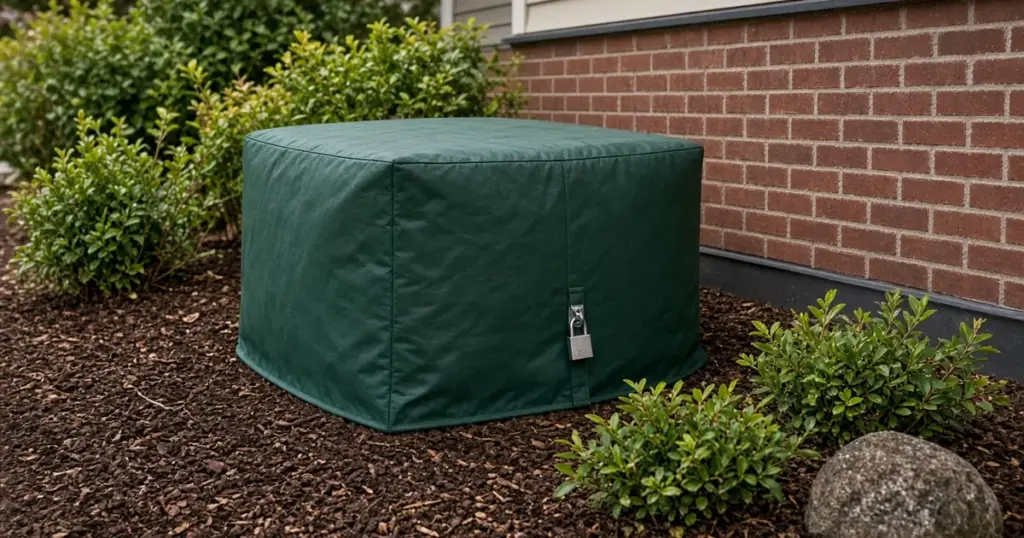
An irrigation backflow assembly usually sits above ground near the house or along a property line, exposed to everything the weather, the lawn crew, and passersby can throw at it. It can crack in a hard freeze, get clipped by a mower or a car, and on some commercial and residential properties, it can be stolen for its brass. Replacing it means downtime, cost, and a required test before it goes back into service.
Covers, enclosures, and guards reduce that risk. But they need to be chosen carefully, because an assembly also has to stay accessible for testing and, for some types, able to drain freely. This guide explains the options for properties in Huntsville, TX and Walker County.
Why Protection Matters
Freezes
Assemblies contain water and are exposed on all sides, so they are often the first component to freeze. Cracked bodies and damaged bonnets are common after hard freezes. Our existing article on protecting irrigation backflow from winter freezes explains the basics, and our post on checking sprinklers after a hard freeze covers the restart.
Physical damage
Mowers, trimmers, vehicles, and even kids playing can bend or crack piping and test cocks.
Theft
Brass assemblies have scrap value, and theft has been a problem in many places, especially on commercial properties and vacant homes. A stolen assembly leaves an open pipe and can cause significant water loss.
Sun
Long exposure to sun can degrade some plastic components and insulation.
Types of Protection
Insulated covers
Soft insulated bags or jackets fit over the assembly for freeze protection. They are inexpensive and easy to remove for testing.
Best for: Residential properties needing winter protection.
Rigid enclosures
Enclosures made of fiberglass, aluminum, or other materials sit over the assembly. Some are insulated, and some include heaters for freeze-prone locations.
Best for: Commercial properties, exposed locations, and properties where appearance matters.
Locking cages
Metal cages bolted to a concrete pad deter theft and protect against impact.
Best for: Commercial sites, HOA common areas, and properties where theft is a concern.
Landscaping screens
Shrubs or decorative screens hide the assembly but do not protect it from freezing or theft on their own.
Requirements to Keep in Mind
Testing access
TCEQ rules require testing after installation, repair, replacement, or relocation, and water providers may require periodic testing. Any cover or enclosure must allow a tester to reach the test cocks and shutoff valves. Our article on what happens during a backflow test shows what the tester needs.
Drainage for RPZ assemblies
Reduced pressure principle assemblies discharge water through a relief valve when they detect a problem. TCEQ guidance says an RPZ must be installed at least 12 inches above the ground with adequate drainage. An enclosure for an RPZ must allow discharge to drain away, not flood the assembly or the enclosure.
Height and placement for PVBs
Pressure vacuum breakers must stay at least 12 inches above the highest downstream head and piping. An enclosure should not require moving the assembly to a position that breaks this rule.
Do not bury or seal it
Wrapping an assembly in plastic or burying it can trap moisture, block air inlets, and interfere with operation.
Choosing the Right Option
| Concern | Good option |
|---|---|
| Occasional hard freezes | Insulated cover |
| Exposed site, frequent freezes | Insulated enclosure, possibly heated |
| Theft risk | Locking cage or lockable enclosure on a pad |
| Mower damage | Cage or rigid enclosure |
| Appearance | Enclosure or landscaping screen with protection |
Installation Tips
- Measure the assembly including test cocks and handles before buying.
- Leave clearance around the assembly for testing and repair.
- Anchor rigid enclosures and cages to a pad.
- Allow drainage for RPZ assemblies.
- Label the enclosure with your contact information if your water provider or tester needs access.
- Keep keys handy if you lock it, and tell your tester where they are.
Seasonal Habits That Help
Protection works best alongside a few simple habits:
- Before winter, check that covers fit and are in good condition, and know how to shut off and drain the assembly.
- During freeze warnings, put insulated covers on early rather than waiting for the night of the freeze.
- In spring, remove soft covers once freezes have passed so moisture does not stay trapped against the assembly.
- Throughout the year, inspect cages and enclosures for damage, loose anchors, or signs of tampering.
- After storms, check that debris has not piled up around the assembly or blocked RPZ drainage.
Making these checks part of a seasonal routine takes only a few minutes and helps an assembly last longer between repairs.
After Damage
If an assembly has been damaged or stolen, close the supply to the irrigation system immediately. Replacement or repair must be followed by a test from a licensed tester. Our guide on backflow preventer rebuild vs. replacement explains how repairs are decided. The backflow prevention and testing guide covers requirements in more detail. Our existing article on backflow preventer problems lists other warning signs.
When to Call a Pro
Call a professional if your assembly has been damaged, if you want an enclosure that keeps testing access and drainage intact, or if you are considering relocating the assembly to a safer spot. Relocation also requires a test. We help homes and businesses in Huntsville and Walker County protect, repair, and replace backflow assemblies. See our services page and our sprinkler repair page.
Frequently Asked Questions
Can I wrap my backflow preventer in a towel or blanket?
A temporary wrap can help during a freeze but can hold moisture. An insulated cover designed for backflow assemblies is a better choice.
Will an enclosure prevent my assembly from passing a test?
Not if it allows access to the test cocks and does not interfere with drainage or air inlets. Choose one designed for your assembly type.
What should I do if my backflow preventer was stolen?
Close the irrigation supply immediately to stop water loss, then arrange a replacement and test.
Protect Your Backflow Assembly
For help choosing protection or replacing a damaged assembly, call 346-586-6060 or request service.