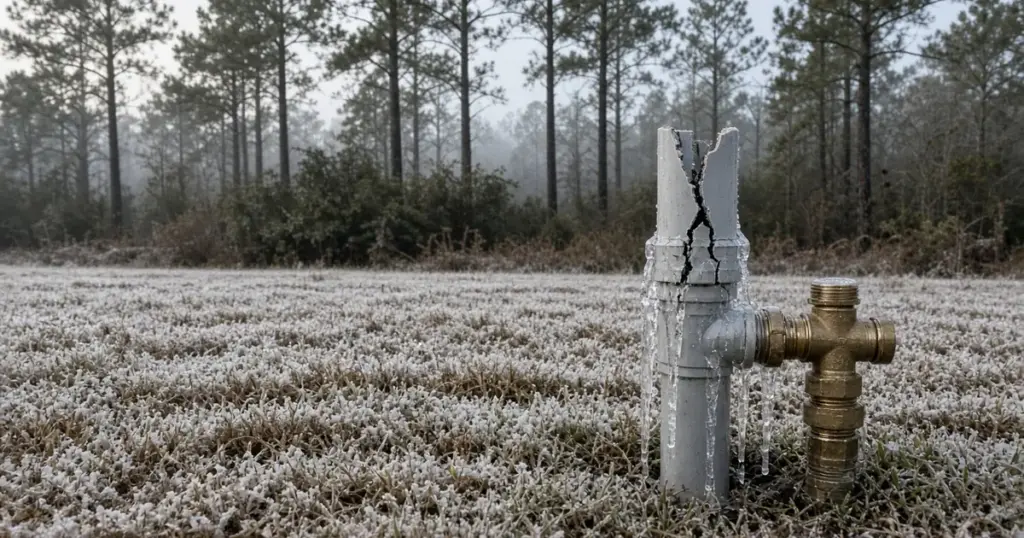
Hard freezes are not frequent in Huntsville, TX, but when they arrive, they can do real damage to irrigation systems. Water expands as it freezes, and the parts of a sprinkler system that sit above ground or just below the surface are the most exposed. A backflow assembly can crack overnight. A short run of above-ground pipe can split. Valves in shallow boxes can be damaged. Often the damage is not visible until the system is turned back on and water starts spraying where it should not.
This guide explains how to check a system after a hard freeze, how to restart it without making things worse, and what kinds of damage need professional repair. It applies to homes and businesses across Walker County and the surrounding area.
Do Not Rush the Restart
The most common mistake after a freeze is turning the irrigation supply back on and running every zone before checking anything. If a backflow assembly or pipe cracked, pressurizing it can flood the area or send water into places you cannot see. Wait until temperatures are reliably above freezing, then follow a deliberate inspection.
Step 1: Inspect the Backflow Assembly
The backflow assembly is usually the most exposed part of the system and the most likely to be damaged.
Look for:
- Cracks in the body or bonnet.
- Popped or distorted test cocks.
- Water dripping or ice on the assembly.
- Bulging or deformed parts.
If you see damage, leave the irrigation supply closed and call for repair. Our existing article on protecting irrigation backflow from winter freezes explains why these assemblies are vulnerable. Damaged assemblies may need rebuilding or replacement; see backflow preventer rebuild vs. replacement. Under TCEQ rules, a repaired or replaced assembly must be tested by a licensed tester before it goes back into service.
Step 2: Check Exposed Pipe
Look at any pipe above ground or in exposed areas, such as near the backflow assembly, along walls, or where pipe rises out of the ground. Cracks may be hairline and hard to see until the pipe is pressurized.
Step 3: Open the Supply Slowly
If the assembly and exposed pipe look intact:
- Make sure the controller is off so no zone starts while you are working.
- Open the irrigation supply valve slowly, a little at a time.
- Watch the backflow assembly and exposed pipe for leaks.
- Listen for running water and check the water meter. If the leak indicator moves with all zones off and the house water unused, there may be a leak on the main line.
If you find a leak, close the supply again.
Step 4: Run Each Zone
Run zones one at a time, manually, and walk each one.
- Watch for geysers, bubbling, or water rising from the ground.
- Check heads for cracked bodies, missing nozzles, or stuck risers.
- Look at valve boxes for water that was not there before.
- Note weak zones, which can indicate a break somewhere along the line.
Step 5: Check Valves and Controller
Valves in shallow boxes may have cracked bonnets or damaged solenoids. A controller in an unheated building may have been exposed to extreme cold; check that it still works and that the schedule is intact.
Common Freeze Damage and Fixes
| Damage | Typical fix |
|---|---|
| Cracked backflow body | Replacement and test |
| Cracked bonnet or test cock | Repair parts or rebuild, then test |
| Split exposed pipe | Section replacement and insulation |
| Cracked valve | Valve or bonnet replacement |
| Broken heads | Head replacement |
| Underground break | Locate, excavate, repair |
Our guide to repairing a broken sprinkler pipe explains how underground breaks are fixed.
Preparing for the Next Freeze
Once repairs are done, plan ahead:
- Insulate the backflow assembly with a cover designed for it.
- Insulate exposed pipe.
- Know how to shut off and drain the assembly before a hard freeze.
- Set the controller to off or use a freeze sensor so the system does not run during freezing weather.
- Watch forecasts in winter and act early.
Our article on whether you need to winterize sprinklers in East Texas explains how much preparation makes sense for this climate. The year-round maintenance calendar includes winter steps.
Hidden Damage to Watch For
Not all freeze damage shows up on the first restart. Over the following weeks, keep an eye out for:
- A water bill that rises without any change in watering.
- A soft or sunken spot in the lawn that stays wet.
- One zone with weaker spray than it had before the freeze.
- A valve that weeps or will not close completely.
Each of these can point to a crack that opened slowly. Our leak repair guide explains how to track hidden leaks down.
Watering After a Freeze
Lawns are usually dormant in winter and need little water. If the weather turns dry after a freeze, water lightly and only when the soil is dry, and not before another freeze. Avoid running the system while temperatures are near freezing to prevent ice on walks and plants.
When to Call a Pro
Call a professional if the backflow assembly is cracked or leaking, if water is flowing from the ground, if the meter shows a leak you cannot find, or if several zones show damage. After a widespread freeze, many systems need repair at once, so calling early helps. We repair freeze-damaged systems for homes and businesses in Huntsville and Walker County. See our emergency service page for active leaks and our sprinkler repair page for repairs.
Frequently Asked Questions
How do I know if my backflow preventer froze?
Look for cracks, distortion, popped test cocks, or leaks. Damage is sometimes visible only after the supply is turned back on, so open it slowly and watch.
Should I turn my sprinklers on after a freeze?
Only after inspecting the system and confirming temperatures will stay above freezing. Open the supply slowly and test zones one at a time.
Can freeze damage show up weeks later?
Hairline cracks may not leak until the system is pressurized or used regularly. Inspect again when you resume normal watering in spring.
Freeze Damage Repair
If a freeze damaged your system, call 346-586-6060 or request service.