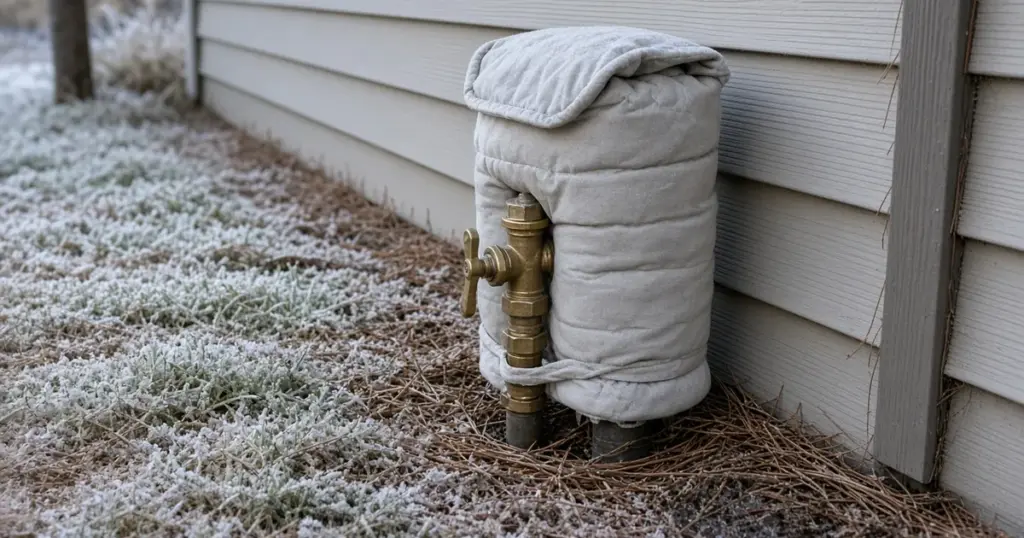
In colder parts of the country, winterizing a sprinkler system is an annual ritual: shut off the water, blow compressed air through every line, and leave it dry until spring. In East Texas, the question is less clear-cut. Winters around Huntsville are generally mild, many lawns still need occasional water, and buried pipe is rarely at risk. But hard freezes do happen, and when they do, they can crack a backflow assembly or burst an exposed pipe overnight.
So do you need to winterize? For most homes in Walker County, the answer is “partly.” This guide explains what is actually at risk, what protection makes sense, and when a fuller shutdown is worth it.
What Freezing Actually Damages
Water expands as it freezes. When water trapped inside a rigid component freezes, it can crack the part. The components most at risk are the ones exposed to air:
- The backflow assembly. Pressure vacuum breakers and reduced pressure assemblies sit above ground, often in exposed spots, and are made with brass bodies, bonnets, and small internal parts that crack.
- Exposed pipe leading to and from the backflow assembly.
- Above-ground anti-siphon valves, where present.
- Drip components such as filters and regulators installed above ground.
- Well equipment and piping on rural properties.
Buried lateral and main lines are much less exposed because soil insulates them. In a typical East Texas freeze, buried pipe at proper depth is rarely the problem. TCEQ standards call for pipe to be covered by at least six inches of select backfill where the manufacturer does not specify a depth, which helps.
Three Levels of Winter Protection
Level 1: Basic protection (most homes, every winter)
- Turn off automatic watering before freezing nights, or rely on a freeze sensor. Running sprinklers in freezing weather ices sidewalks and driveways.
- Insulate the backflow assembly with an insulated cover or wrap designed for it, and insulate exposed pipe.
- Know where your irrigation shutoff valve is, so you can close it quickly if a part cracks.
Level 2: Pre-freeze isolation (before a hard freeze)
When forecasts call for a hard freeze, especially an extended one:
- Close the irrigation isolation valve that supplies the backflow assembly.
- Drain the backflow assembly according to the manufacturer’s instructions, often by opening the test cocks and loosening specific fittings so water can escape.
- Leave the assembly drained until the freeze passes.
- Restore water carefully afterward, closing test cocks and slowly reopening the supply.
Draining the assembly removes the water that would otherwise freeze and crack it. Our existing article on protecting irrigation and backflow from East Texas freezes walks through insulation and drain-down steps in more detail.
Level 3: Full winter shutdown (some properties)
A full shutdown, with water off and the system drained through the winter, makes sense when:
- The property sits empty for long stretches, such as a lake house or a vacant rental.
- The system has a lot of exposed or shallow pipe.
- The owner prefers to water manually during winter dry spells.
Blowing out lines with compressed air is common in colder climates. In East Texas, it is rarely necessary for buried pipe, and done improperly it can damage components. If you are considering it, have a professional do it.
Do Not Forget Watering Needs
Shutting the system down does not mean the lawn needs no water. Dormant warm-season grass still benefits from occasional watering during long dry spells, and overseeded ryegrass needs regular watering. Our guide on watering a dormant lawn in winter explains how much is enough. If you overseeded, see overseeding with ryegrass.
Controller Settings for Winter
- Use seasonal adjust to reduce run times sharply, or switch to manual watering.
- Keep the rain sensor active. A combined rain and freeze sensor adds protection. See rain and freeze sensors.
- Replace the backup battery in controllers that use one, so a winter power outage does not erase settings.
After a Freeze
Do not just turn the system back on. Inspect the backflow assembly for cracks, drips, and a bonnet that has lifted. Look at exposed pipe and valves. Then restore water slowly and watch for leaks. A cracked backflow assembly cannot simply be put back in service; it needs to be repaired or replaced and then tested by a licensed tester.
Rental, Vacation, and Vacant Properties
Properties that sit empty in winter deserve extra attention. Nobody is there to notice a cracked backflow assembly spraying water, and a break can run for days. For rentals near Sam Houston State University in Huntsville, lake homes, and houses between owners, a fuller shutdown with the irrigation supply closed and the backflow assembly drained is often the safest approach. If the owner wants the lawn watered during dry spells, a remote-capable controller and a plan for someone to check the property after hard freezes help a lot.
A Winter Checklist
- Insulate the backflow assembly and exposed pipe before the first hard freeze.
- Set the controller for winter or switch to manual watering.
- Make sure you know how to close the irrigation shutoff.
- Drain the backflow assembly before a hard freeze if appropriate.
- Inspect everything after a freeze before running the system.
- Plan spring start-up tasks; the year-round maintenance calendar lists them.
When to Call a Pro
Call a professional if you are not sure how to drain your backflow assembly, if you want a full winter shutdown for a property that sits empty, if a freeze has cracked the assembly or a pipe, or if water is running and you cannot stop it. Repairs and testing of backflow assemblies require licensed professionals. See our services page for winter preparation and our emergency service page for urgent freeze damage.
Frequently Asked Questions
Do I need to blow out my sprinkler lines in East Texas?
Usually not. Buried lines are insulated by soil, and East Texas freezes rarely reach them. Protecting the above-ground backflow assembly and exposed pipe is the priority.
Is a towel or blanket enough to protect my backflow preventer?
It is better than nothing for a brief, light freeze, but a purpose-made insulated cover is more reliable, and draining the assembly is the safest option for a hard freeze.
Can I leave my system on automatic all winter?
Many people do, with a reduced schedule and a working freeze sensor. Others prefer manual watering. Either way, protect exposed components.
Get Ready Before the Next Freeze
If you want help insulating, draining, or shutting down your system for winter, call 346-586-6060 or request a visit.