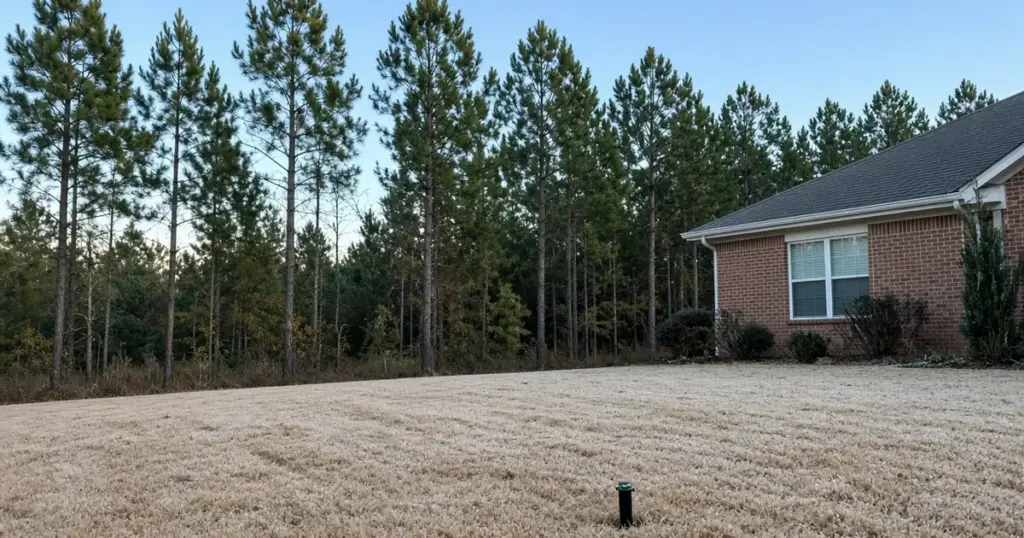
When warm-season grass goes brown in winter, many homeowners assume it needs nothing until spring, while others keep the sprinklers running on a fall schedule. Neither extreme is ideal. A dormant lawn is resting, not dead, and the roots and crowns are still alive. They need a little moisture during long dry spells, but much less than in the growing season.
This article explains what dormancy means for St. Augustine, Bermuda, and Zoysia lawns in the Huntsville, TX area, how to decide when to water, and how to do it without creating icy sidewalks or encouraging disease.
What Dormancy Means
Warm-season grasses slow down as soil and air temperatures drop. Bermuda usually goes fully brown and dormant during cold weather. Zoysia also browns. St. Augustine may hold some color in mild winters, especially in protected spots, and brown in colder ones. In all three, growth largely stops and water use drops sharply.
During dormancy:
- Leaves use very little water.
- Roots and crowns are still alive and can dry out if the soil gets very dry.
- Evaporation is low because of cooler temperatures and shorter days.
- Winter rain often covers most of the lawn’s needs.
Signs a Dormant Lawn Needs Water
Brown color is normal in winter, so it is not a useful signal. Instead:
- Check soil moisture. Push a screwdriver or probe into the soil. If it is hard to push in and the soil feels dry several inches down, it may be time to water.
- Track rainfall. A long stretch without meaningful rain is the main trigger.
- Watch for wind and sun exposure. Areas near pavement, on slopes facing the sun, or in sandy patches dry out first.
- Look at shrubs and beds. If evergreen shrubs look stressed, the soil is dry for the lawn too.
How to Water a Dormant Lawn
Water occasionally, not on a schedule
For many lawns, turning off automatic schedules and watering manually during extended dry spells works better than any fixed winter program. When you do water, water enough to moisten the root zone, then let the soil dry again.
Use the controller’s manual or seasonal settings
If you prefer to keep an automatic program, reduce it heavily with the seasonal adjust feature and make sure the rain sensor is active. Our post on how to set a sprinkler controller explains how to change programs and run zones manually.
Water in the late morning on mild days
In summer, early morning is best. In winter, a mid-to-late morning start on a mild, sunny day gives water time to soak in and surfaces time to dry before evening, which reduces icing risk if temperatures drop at night.
Mind the clay layer
Sandy topsoil over clay absorbs water slowly once it reaches the clay. Shorter cycles with soak time between them help water penetrate rather than puddle. The lawn and soil irrigation guide explains the local soil profile.
Freezes: When Not to Water
Never let sprinklers run when temperatures are at or near freezing. Water on driveways, sidewalks, and streets can turn to ice, and ice on plants can damage them. Turn off automatic schedules before a forecast hard freeze, and consider a freeze sensor that stops watering automatically.
Some turf specialists note that moist soil holds heat better than very dry soil, so if the weather has been dry, watering a day or more before a forecast freeze, early enough for surfaces to dry, may help protect turf. Just be sure the system is off by the time temperatures drop.
The bigger winter risk to the system itself is damage to the backflow assembly and exposed pipe. Our existing article on protecting irrigation and backflow from East Texas freezes covers insulation and shutoff steps.
Winter Disease Considerations
Cool, wet conditions encourage certain fungal diseases, particularly in St. Augustine. Keeping a dormant or semi-dormant lawn wet with frequent watering increases that risk. Water only when the soil is dry, avoid evening watering, and fix leaks or low spots that stay soggy. Our post on fall sprinkler adjustments covers the transition from summer to winter watering and disease prevention.
Overseeded Lawns Are Different
If you overseeded Bermuda with ryegrass for winter color, the ryegrass is actively growing and needs regular water through winter, especially while it establishes. That is a different schedule from a dormant lawn. Plan for it separately.
Using Winter to Prepare for Spring
Winter is a quiet time for the system, which makes it a good time for maintenance:
- Replace broken heads and fix leaks you noticed in fall.
- Locate and raise buried valve boxes.
- Check controller programming and replace the backup battery if it uses one.
- Plan upgrades such as drip conversions or a smart controller.
The year-round sprinkler maintenance calendar lays out what to do each season.
When to Call a Pro
Call a professional if you see freeze damage to the backflow assembly or exposed pipe, if a zone runs on its own or will not shut off, if wet spots persist through dry winter weather, which can indicate a leak, or if you want help setting up a winter program or freeze sensor. In Huntsville and across Walker County, winter is also a good time to schedule non-urgent repairs before the spring rush. See our services page and our emergency service page if a freeze leaves water running.
Frequently Asked Questions
Should I water my lawn in winter if it is brown?
Only during extended dry spells, when the soil is dry several inches down. Brown color alone is normal for dormant warm-season grass.
Is it safe to leave my sprinkler system on automatic all winter?
It can be, if the schedule is greatly reduced and a rain and freeze sensor is working. Many homeowners prefer to turn automatic watering off and water manually when needed.
Can watering before a freeze help my lawn?
Moist soil may handle cold better than very dry soil, so a watering well ahead of a freeze can help. Make sure the system is off and surfaces are dry before temperatures fall.
Get Your System Ready for Winter
If you want help setting a winter schedule or protecting your system from freezes, call 346-586-6060 or request a visit.