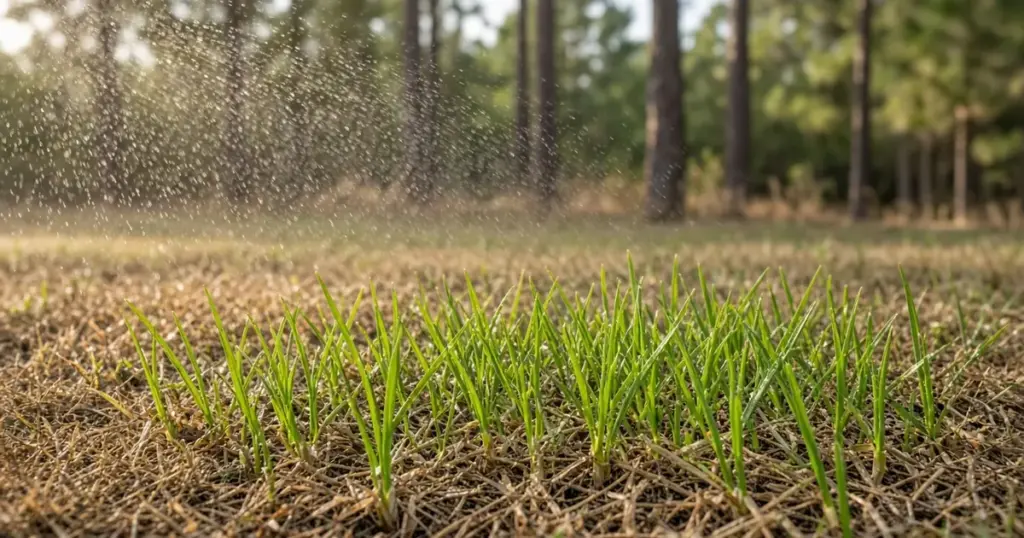
A brown Bermuda lawn in January is perfectly healthy, but not everyone wants to look at it. Overseeding with ryegrass in fall gives a green lawn through winter, and it is a common choice for front yards, sports fields, and commercial landscapes. It also flips the usual irrigation calendar upside down. Just as most lawns are cutting back on water, an overseeded lawn needs frequent watering to get the seed established.
This guide explains how to set up your sprinkler system for overseeding in the Huntsville, TX area, from germination through the spring transition back to Bermuda.
Is Your Lawn a Good Candidate?
Overseeding with ryegrass is typically done on Bermuda lawns, which go fully dormant and tolerate the competition well when managed properly. St. Augustine is generally not a good candidate, because its dense, coarse turf does not accept seed well and the competition can weaken it. Zoysia lawns are also less commonly overseeded. If you are not sure, a local turf professional or county extension office can advise. Our lawn and soil irrigation guide covers the differences between local grass types.
Prepare the System Before Seeding
Ryegrass seed needs consistent moisture on the surface for germination, which means your system must deliver even, gentle coverage. Before you spread seed:
- Run every zone and walk it. Look for broken heads, clogged nozzles, and misaligned spray.
- Fix coverage gaps. Dry spots will show up as bare patches in the new ryegrass.
- Check head height. Scalping the Bermuda before overseeding can leave heads sitting higher than the turf, while heads buried in thatch will block spray. See why sprinkler head height matters.
- Confirm the rain sensor works, since fall rain can do some of the work for you.
- Know your controller. You will need multiple short start times per day for a few weeks.
If any heads will not rise, check our guide on sprinkler heads that won’t pop up before seeding.
Germination Watering: Light and Frequent
During germination, the goal is to keep the top layer of soil and the seed consistently moist, not soaked.
- Use several short cycles per day rather than one long one. Many controllers allow multiple start times per program.
- Keep run times short enough to moisten the surface without runoff or puddles that wash seed away.
- Water during daylight hours, when the surface dries fastest. Avoid leaving the seedbed wet overnight for long periods.
- Pay attention to wind and sun. Exposed areas dry faster and may need slightly more.
This phase usually lasts until the seed has germinated and the new grass is visibly established across the lawn. Watch the lawn rather than the calendar.
A simple way to check is to kneel down and look closely at a few spots across each zone, including corners and the edges near pavement. If the seed is swelling and sprouting evenly, the schedule is working. If one area is still dry seed while another has bright green sprouts, adjust that zone or hand-water the dry area for a few days.
A note on rotors versus sprays
Spray zones apply water quickly, so short cycles work well. Rotor zones apply water more slowly and may need longer cycles to moisten the surface evenly. If your lawn has both, set their programs separately.
Tapering Off After Establishment
Once the ryegrass is up and growing:
- Reduce the number of daily cycles gradually.
- Lengthen individual cycles slightly to encourage deeper rooting.
- Move toward watering every few days rather than daily, depending on weather.
- Let rain count. Turn off cycles after significant rain.
By the time the ryegrass has been mowed a few times, it can usually move to a schedule closer to a normal established lawn, adjusted for cool-season growth.
Winter Watering for Ryegrass
Ryegrass is actively growing through the cool months, unlike dormant Bermuda, so it needs regular moisture during dry spells. Cool weather means low evaporation, so the amount is much less than summer turf needs. Probe the soil before watering.
Freezes still matter. Turn off automatic watering before freezing nights to avoid icing walks and stressing turf, and protect your backflow assembly; see protecting irrigation and backflow from freezes.
The Spring Transition
As temperatures warm, ryegrass and Bermuda compete. To help the Bermuda come back strong:
- Gradually reduce watering in spring so the ryegrass declines as the Bermuda greens up.
- Lower mowing height at the appropriate time to open the canopy for Bermuda.
- Avoid keeping the lawn constantly wet, which favors ryegrass and disease.
Then return the system to a normal warm-season schedule. The year-round maintenance calendar covers spring start-up tasks.
Common Overseeding Irrigation Mistakes
- One long daily cycle. It floods the surface and washes seed into low spots.
- Ignoring coverage gaps. Bare stripes and corners show up immediately.
- Overwatering after establishment. This invites disease and shallow roots.
- Forgetting to turn the extra start times off, so the lawn stays on a germination schedule for weeks longer than needed.
- Watering on freezing mornings.
Water Use and Local Rules
Overseeding uses more water in fall than leaving Bermuda dormant. If drought restrictions are in effect from your water provider, watering for new seed may be limited. In the City of Huntsville, drought stages can limit irrigation days and hours, so check the city’s current plan before you seed.
When to Call a Pro
Call a professional if you need your system tuned before overseeding, if coverage gaps keep showing up as bare patches, if you need help programming multiple start times, or if a zone will not run consistently. A coverage check before seeding is far easier than fixing patchy ryegrass afterward. We help homeowners across Huntsville and Walker County prepare for seasonal changes like this. See our services page and our sprinkler repair page.
Frequently Asked Questions
How often should I water newly seeded ryegrass?
Several short cycles per day until germination and establishment, then taper to less frequent, longer cycles. Exact timing depends on weather, soil, and your system.
Can I overseed St. Augustine with ryegrass?
It is generally not recommended. St. Augustine does not accept seed well, and the competition can weaken it.
Will overseeding hurt my Bermuda?
Managed properly, Bermuda tolerates winter overseeding. The key is a good spring transition: reduce watering and mow appropriately so the Bermuda can recover.
Get Your System Ready to Overseed
If you are planning to overseed and want your system tuned first, call 346-586-6060 or request a visit.