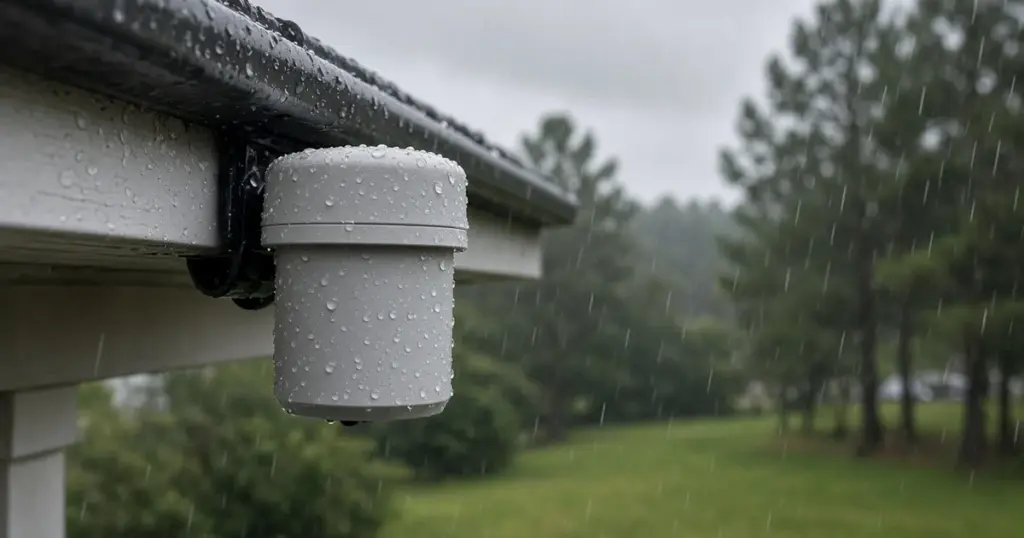
Few things look worse than sprinklers running in a downpour. It wastes water, it makes neighbors wonder, and it can saturate a lawn that was already soaked. A rain sensor is a small, inexpensive device that prevents it, and in Texas, it is often required.
This guide explains how rain and freeze sensors work, what state rules say about them, where to install one on a typical Walker County property, how to test it, and what to check when it stops working.
What Rain and Freeze Sensors Do
A rain sensor connects to your controller and interrupts scheduled watering after a set amount of rain. When it dries out, watering resumes automatically. Most work in one of two ways:
- Expanding disks. Absorbent disks swell when wet and press a switch that interrupts watering. As they dry, they shrink and release the switch.
- Collection cups or electronic sensors that detect water in other ways.
A freeze sensor interrupts watering when the temperature drops near freezing. Many products combine rain and freeze sensing in one unit. Freeze shutoff matters here because running sprinklers on a freezing morning can ice driveways and sidewalks, coat plants in ice, and stress turf.
Sensors can be wired or wireless. Wireless sensors use a receiver mounted near the controller and need occasional battery replacement.
What Texas Requires
Under the Texas Commission on Environmental Quality’s landscape irrigation rules, new automatically controlled irrigation systems must include rain or moisture shut-off technology, and repairs that replace an existing controller must add it too. Fourteen far West Texas counties are excluded; Walker County and its neighbors are not among them. TCEQ’s Questions and Answers for Irrigators states the requirement and notes that the device must be installed according to the manufacturer’s recommendations.
State rules do not require freeze sensors, but some local codes do, so check with your water provider or irrigator.
Choosing a Location
Where you mount the sensor determines whether it works. Good placement:
- Open to the sky. It must catch rain the way your lawn does. Avoid eaves, overhangs, and tree canopies.
- Out of sprinkler spray. If your own sprinklers hit it, it will shut the system off after every cycle.
- Reachable for testing and maintenance, but not where it will be knocked off.
- Representative of the yard. On a property with heavy pine cover, find the most open spot practical.
- Within range of the receiver for wireless models.
Gutters, fence posts, and the edge of a roofline away from overhangs are common choices.
Setting the Rain Threshold
Many sensors let you choose how much rain triggers a shutoff. Lower settings shut off sooner; higher settings wait for more rain. Consider your soil. Sandy loam drains quickly, so a light shower may not do much, while clay areas stay wet longer. Start in the middle of the range and adjust based on how the lawn responds after rain.
How to Test a Rain Sensor
Testing takes a few minutes and should be part of your spring check:
- Start a zone manually from the controller.
- Activate the sensor. Press the test button if it has one, or wet the disks or collection area with a hose or spray bottle.
- Watch the zone. It should shut off within a short time, depending on the model.
- Check the controller display. Many controllers show a sensor icon or message when the sensor is active.
- Let it dry and confirm watering is allowed again.
If nothing happens, see the troubleshooting section below.
Common Rain Sensor Problems
The sensor bypass switch is on
Most controllers have a switch or setting that ignores the sensor. It is often left in bypass after service. Check that first.
Wiring problems
Wired sensors connect to dedicated sensor terminals on most modern controllers. Older controllers sometimes wire the sensor into the common line. Loose, corroded, or cut wires stop the sensor from working. If you are replacing the controller, our guide to replacing an old sprinkler controller covers sensor wiring.
Dead batteries in wireless models
Weak batteries can cause lost communication. Replace them on the manufacturer’s recommended schedule.
Worn or dirty disks
Expanding disks lose their responsiveness with age and debris. Replacement disks are available for many models.
Bad placement
A sensor under a tree or overhang may never get wet enough. One in the spray path will shut off watering every time.
Rain Sensors and Smart Controllers
Smart controllers that use weather data can skip watering based on forecast or measured rain. Some homeowners use both a smart controller and a physical sensor, so the sensor responds to what actually fell on the property. Our existing post on whether smart sprinkler controllers are worth it in Huntsville covers the tradeoffs, and the controllers and smart irrigation guide explains how sensors integrate with each type of controller.
Seasonal Notes for Local Weather
- Hurricane season: Tropical systems can bring days of rain. A working sensor saves water and prevents saturating the soil further.
- Winter: A combination rain and freeze sensor helps on cold mornings. For other winter protection, see protecting irrigation and backflow from freezes.
- Fall: As fronts bring more regular rain, a sensor helps the system cut back automatically. The year-round maintenance calendar includes sensor tests in its checklist.
When to Call a Pro
Call a professional if your sensor does not respond to testing and you have ruled out the bypass switch, if you need a sensor installed on an older controller that lacks sensor terminals, if you are replacing a controller and need to meet the state requirement, or if you want to add a freeze sensor or switch to a wireless model. A technician can install and test it correctly. See our services page for sensor installation and upgrades, or our sprinkler repair page for controller and wiring problems.
Frequently Asked Questions
Do I need a rain sensor if my controller is old?
If you replace the controller, Texas rules require rain or moisture shut-off technology. Even if you keep your current controller, adding a sensor is an easy way to stop watering in the rain.
How long does a rain sensor keep the sprinklers off?
Until it dries out, which depends on the model, the amount of rain, sun, wind, and temperature. Many models have an adjustable vent or setting that affects drying time.
Can a rain sensor also stop watering during freezes?
Combination rain and freeze sensors can. A rain-only sensor will not respond to cold.
Get Your Sensor Working
If your sprinklers run in the rain or you need a sensor installed, call 346-586-6060 or request service. We install and test rain and freeze sensors for homes throughout Huntsville and Walker County.