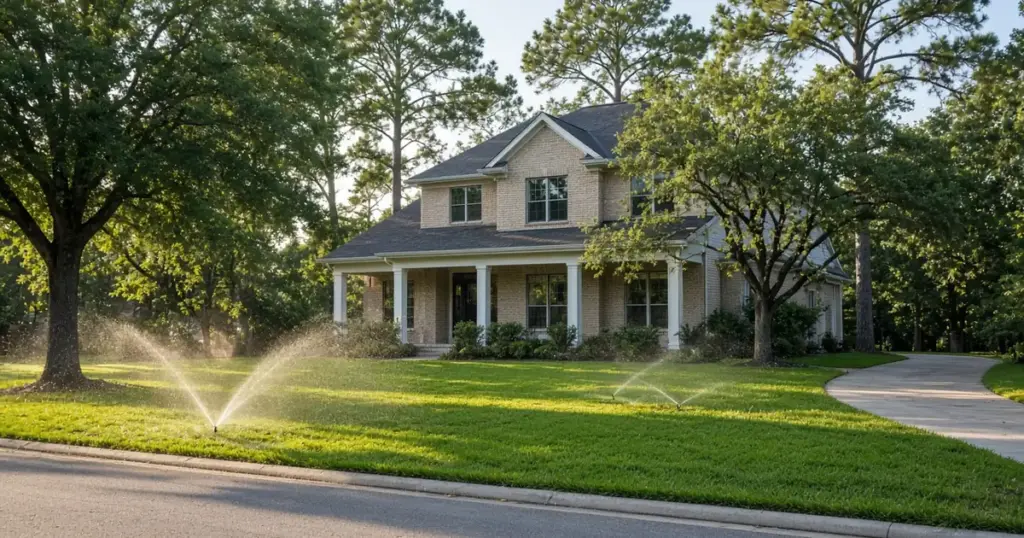
Drive through Conroe and you will see every stage of a sprinkler system’s life. There are brand-new subdivisions where the builder’s system is still on its first controller, established neighborhoods where systems have been patched for years, and larger properties on the edges of town with long pipe runs and wells. Each comes with its own typical problems.
Conroe is the seat of Montgomery County, south of Huntsville along Interstate 45, and many of its homes share the same basic conditions as the rest of the region: hot summers, humid air, sandy soil over clay, and the occasional freeze. This guide covers what Conroe homeowners tend to run into with their irrigation and how to approach repairs.
Builder-Installed Systems in Newer Subdivisions
Many Conroe homes were built with an irrigation system included. Those systems are often perfectly serviceable, but they are frequently designed around getting sod established quickly rather than long-term efficiency. Common traits:
- One or two programs for everything. Lawn, beds, sun, and shade may all run on the same schedule.
- Spray heads in beds instead of drip, soaking siding and mulch.
- Mixed nozzles on a zone, which leads to uneven watering.
- Heads set at the original grade that sink as the yard settles.
- Controllers left on the installer’s schedule for years.
None of those are emergencies, but they explain why many newer lawns have both dry corners and soggy strips. Simple fixes such as matching nozzles, separating programs, and resetting head heights often help a lot. Our existing article on why sprinkler head height matters explains the height issue, which is especially common in yards a few years after construction.
Compacted Soil Around New Homes
Construction traffic compacts soil, and new sod is often laid over a thin layer of topsoil on top of it. Water applied quickly runs off before it soaks in, especially on slopes. Shorter, repeated cycles with soak time between them help. Core aeration can help too, as long as heads are flagged first so the machine does not crush them.
HOA Expectations
Many Conroe neighborhoods have homeowners’ associations with landscape standards. A brown lawn can lead to a letter, while a lawn kept green by overwatering can lead to fungus and a high bill. The goal is a system that delivers even coverage so the lawn stays healthy without excess water. Check your HOA’s rules before changing visible components such as converting front beds to drip, though drip is usually invisible under mulch.
Who Supplies Your Water Matters
Conroe-area homes may be served by the City of Conroe or by one of the many municipal utility districts and other water providers in Montgomery County. Each provider can have its own watering schedules, drought stages, and backflow testing program. That means your neighbor across a district line might be on a different watering schedule than you. Check with your provider for:
- Current watering days and hours, if any restrictions are active.
- Backflow testing requirements and how often tests are due.
- Whether permits are needed for new irrigation connections.
State rules from the Texas Commission on Environmental Quality set the minimum standards everywhere. The backflow prevention and testing guide explains those standards and assembly types.
The Repairs Conroe Homes Need Most
- Broken and sunken heads from mowing crews, settling, and traffic near driveways.
- Clogged nozzles from sand and debris after line repairs.
- Valve problems such as zones that will not start or stop.
- Leaks at swing joints and fittings, which take a lot of stress in new, settling soil.
- Wiring cuts from fence installations, landscaping, and utility work.
- Controller resets after storms and power outages.
- Backflow assembly damage after hard freezes.
If a head simply will not rise, see sprinkler head won’t pop up for step-by-step checks. For a broader look at diagnosis by symptom, read the sprinkler troubleshooting guide.
Commuter Schedules and Smart Controllers
Many Conroe residents commute, which makes it hard to watch the system run. A controller with app control lets you run zones from your phone while you walk the yard on a weekend morning, and weather-based adjustment keeps the schedule reasonable when you are busy. Rain sensors are required on new systems and controller replacements under state rules, and they keep the system from running during the summer storms that roll through.
Lake Conroe Properties
Homes near Lake Conroe face slopes toward the water, wind exposure, and in some cases part-time occupancy. Those deserve their own discussion; see our guide to irrigation for Lake Conroe homes.
A Seasonal Checklist for Conroe Yards
- Spring: Walk every zone, fix broken heads, test the rain sensor, and set a spring schedule.
- Summer: Water early, split long runs into cycles, and check zones every couple of weeks.
- Fall: Cut back as temperatures drop to reduce fungus risk; see fall sprinkler adjustments.
- Winter: Protect the backflow assembly before hard freezes and turn off automatic watering on freezing nights.
When to Call a Pro
Call a professional when water runs continuously, when a zone stays dead after you check the controller, when you suspect a leak from a rising water bill, when a backflow assembly needs testing or repair, or when you want a builder system reworked for better coverage. In Texas, irrigation work for hire must be done by or under a licensed irrigator. We work in Conroe and across the surrounding area, from Huntsville and Walker County down through Montgomery County. Our guide to Huntsville and the surrounding East Texas towns compares conditions across the region. See our service areas page to confirm coverage and our sprinkler repair page for the repairs we handle.
Frequently Asked Questions
Why does my new Conroe lawn have dry spots even though the sprinklers run often?
Uneven coverage from mixed nozzles, sunken heads, or heads blocked by growing plants is a common cause. Running the zone longer just overwaters the rest. Fixing coverage is the better answer.
Do I have to follow city watering restrictions if I am in a MUD?
You follow the rules of whoever supplies your water. If your provider is a utility district, check its drought plan and schedule.
Should I convert my bed zones to drip?
Often, yes. Drip keeps water off siding and leaves and uses less water. It needs its own zone with a filter and pressure regulator.
Sprinkler Help in Conroe
If your Conroe system needs a repair or a tune-up, call 346-586-6060 or request service online. We will help you get even coverage without wasting water.