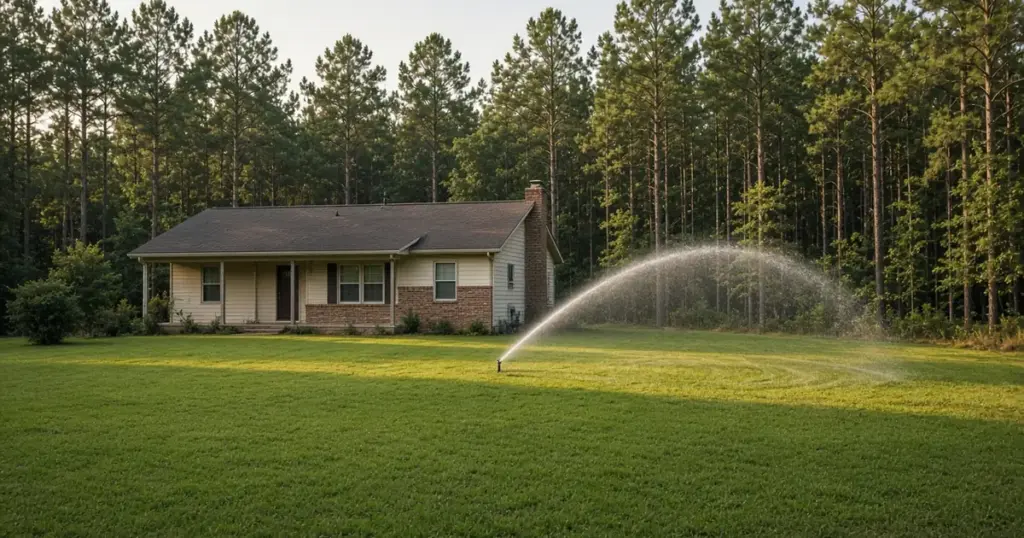
Willis sits in a spot that blends several kinds of property. It lies along Interstate 45 between Huntsville and Conroe in Montgomery County, close to the east side of Lake Conroe, with established in-town homes, newer subdivisions, and rural acreage all within a short drive. If you own one of those properties, your sprinkler system is probably dealing with a mix of pine shade, sandy soil, and summer heat, and possibly a private well.
This guide covers the irrigation issues that come up most often for Willis homeowners and how to handle them.
Because Willis sits between two larger cities, many homeowners here also get conflicting advice: what works for a small lot in Conroe may not suit a wooded acre outside Willis, and the reverse is true too. The sections below focus on matching the system to the property you actually have. For how Willis compares with other towns in the area, see our guide to Huntsville and the surrounding East Texas towns.
Three Kinds of Willis Properties
Established in-town lots
Older lots tend to have mature trees, systems that have been repaired several times, and in some cases a mix of pipe materials and head brands. Roots and settling are the main enemies. Heads tilt, pipes crack, and zones that once worked well start leaving dry patches. Our existing article on how pine and hardwood roots damage irrigation lines covers what to watch for.
Newer subdivisions
Builder-installed systems are common in newer neighborhoods. They often need fine-tuning: separating lawn and bed programs, matching nozzles within zones, and resetting heads as the yard settles. Compacted soil around new construction also means water runs off quickly unless run times are split into shorter cycles.
Rural acreage
On larger properties outside town, irrigation may run on a private well or a rural water system. Long main lines, larger zones, and pump capacity become important. See our guide to well-water irrigation systems for pressure, filtration, and backflow considerations that apply just as well south of the county line.
Pine Shade and Needle Drop
Many Willis yards sit under pines. Shade lowers water demand for turf beneath the trees, while needle drop creates its own issues:
- Needles clog spray heads and collect in valve boxes.
- A thick needle layer can hold water at the surface or shed it, depending on how matted it is.
- Grass under heavy shade grows thin, which is often mistaken for a watering problem.
Separating shaded areas onto their own zones, with shorter run times, is one of the most effective changes for these yards. If re-zoning is not practical right away, at least check whether the shaded part of a mixed zone stays wet long after the sunny part dries, and trim run times until the shade is no longer soggy, then hand-water any sunny edges that need it. Clearing needles from heads and boxes a few times a year prevents a lot of clogs.
Sandy Soil and Leaks
Sandy topsoil drains quickly, which is good for avoiding puddles but means leaks often go unnoticed. Water from a cracked lateral can disappear into the sand or travel along the clay layer below before surfacing somewhere unexpected. Watch for:
- A zone that gradually loses pressure.
- Heads that sputter or spit air at start-up.
- A strip of greener grass along a pipe route.
- A water bill or well pump that runs more than it should.
The sprinkler leak repair guide explains how to confirm and fix a leak.
Water Providers and Rules
Willis homes may be served by the City of Willis, a utility district, a water supply corporation, or a private well. Each public provider sets its own watering schedules and backflow testing requirements on top of state rules. If you are on public water, check with your provider before a hot summer about any drought stages, and keep your backflow test current. For more on testing, read what happens during an irrigation backflow test.
If you are on a well, backflow protection still matters because the well supplies your household water. TCEQ guidance also calls for a reduced pressure assembly in certain situations, including properties served by an on-site sewage facility when the irrigation system is connected to a potable supply. Your irrigator can tell you what applies.
Common Willis Repairs
- Clogged heads from sand and pine needles.
- Tilted or buried heads from roots and settling.
- Lateral leaks that hide in sandy soil.
- Valve and solenoid failures, often during peak summer use.
- Cut wires from fencing and landscaping on new and rural properties.
- Pump pressure issues on well systems.
- Freeze damage to exposed backflow assemblies and above-ground piping.
A Practical Seasonal Routine
- Spring: Clear needles, run every zone, check for broken heads and leaks, test the rain sensor.
- Summer: Water early, use cycle-and-soak, and watch shaded versus sunny zones separately.
- Fall: Cut back run times and frequency as temperatures drop.
- Winter: Insulate the backflow assembly before hard freezes and shut off automatic watering on freezing nights.
The year-round maintenance calendar has the full checklist.
When to Call a Pro
Call a professional if you suspect a leak you cannot find, if a zone stays dead after controller checks, if a well pump starts cycling when the system is off, if you need backflow testing, or if a freeze has damaged above-ground parts. Rural properties with long lines and wells benefit especially from a technician who can isolate problems quickly. We serve Willis along with Huntsville, Walker County, and nearby Montgomery County communities. See our service areas page and our sprinkler repair page for details.
Frequently Asked Questions
Why is the grass under my pines so thin even though the sprinklers run?
Heavy shade and root competition limit grass growth regardless of water. Overwatering shade can make it worse. A separate shade zone with shorter run times and realistic expectations usually helps.
How often should I clear pine needles from my sprinkler heads?
Check heads and valve boxes a few times a year, especially in spring and after heavy needle drop in fall and winter.
Does a well-fed sprinkler system need a backflow preventer?
If the irrigation system connects to plumbing that supplies your home, yes, backflow protection is important. The right type depends on your property.
Sprinkler Repair in Willis
For help with a Willis irrigation system, call 346-586-6060 or book a visit online. We will find the problem and get your yard watered evenly.