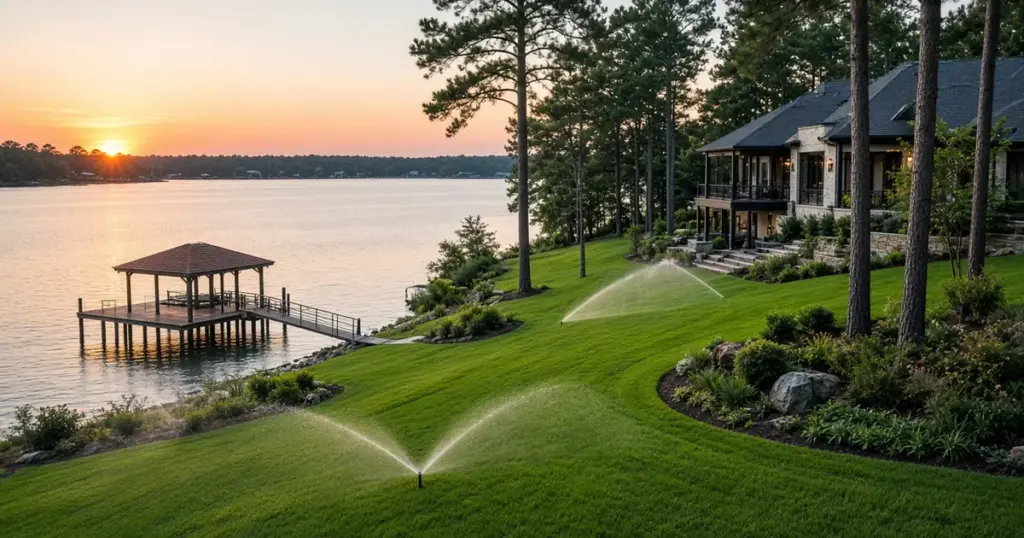
Lake Conroe lies on the West Fork of the San Jacinto River, south of Huntsville, TX, with neighborhoods and waterfront homes around Willis, Montgomery, Conroe, and the communities in between. Many lake properties have landscaped yards, manicured lawns, and HOA standards to meet. They also deal with slopes toward the water, wind across the lake, and owners who split time between the lake and elsewhere.
This guide covers the irrigation practices that matter most for Lake Conroe properties, from design and scheduling to leak protection and backflow requirements.
Common Challenges on Lake Conroe Lots
Slopes and runoff
Lots that slope to the shoreline lose water downhill. Runoff carries soil, mulch, and fertilizer toward the lake and leaves upper areas dry.
Overspray
Waterfront homes often have extensive hardscape: driveways, walkways, patios, pool decks, and docks. Heads that spray these surfaces waste water and leave stains. Texas standards for new installations require heads at least 4 inches from hardscape and directed away from it. Our guide to stopping overspray and runoff explains adjustments.
HOA expectations
Many neighborhoods around the lake have landscaping standards. Healthy, even turf and well-kept beds are often expected, which puts a premium on good coverage.
Part-time use
Second homes and weekend properties can go days or weeks without anyone noticing a broken head or stuck valve.
Wind and exposure
Open water lets wind build, distorting spray and drying turf on exposed lots.
Design Priorities
- Zone by exposure and slope. Separate sunny and shady areas, and the top and bottom of slopes.
- Use matched-precipitation heads in each zone.
- Choose lower-rate nozzles on slopes and where runoff is a problem.
- Convert narrow strips and foundation beds to drip.
- Install a smart controller with weather adjustment and remote access. Our existing article on whether smart sprinkler controllers are worth it weighs the benefits.
- Add a flow sensor and master valve for leak protection, which lets the controller shut the system down if a break is detected.
Scheduling Around the Lake
- Water early in the morning when wind is calmer and evaporation is lower.
- Use cycle-and-soak on slopes and clay.
- Adjust seasonally, cutting back in fall and winter.
- Skip watering after rain with a working rain sensor or smart controller.
Working With HOA Landscaping Standards
If your neighborhood has an HOA, check its landscaping rules before changing your system or plantings. Some associations specify turf types, bed treatments, or maintenance standards, and some require approval for visible changes. Irrigation improvements usually help you meet those standards: even coverage keeps turf uniform, and drip keeps beds healthy without spraying walls and walks. If the HOA maintains common areas near your lot, coordinate so their irrigation and yours are not watering the same strip twice.
Backflow Requirements
Irrigation systems connected to public water require an approved backflow prevention assembly. TCEQ rules require testing by a licensed tester after installation, repair, replacement, or relocation, with results provided to the water provider, and many providers require periodic testing. Properties with septic systems where irrigation connects to potable water need a reduced pressure principle assembly under TCEQ guidance. Check with your water provider for its testing schedule.
Protecting the Lake
Runoff from lawns can carry fertilizer and sediment into the lake. Good irrigation helps protect water quality:
- Keep water on the lawn, not on hardscape or the shoreline.
- Avoid overwatering, especially before heavy rain.
- Maintain buffer plantings along the shoreline where practical.
- Sweep fertilizer and grass clippings off driveways and walks so irrigation and rain do not wash them toward the water.
Seasonal Checklist
- Spring: Run every zone, fix winter damage, set the spring schedule.
- Summer: Watch coverage and adjust for heat; check monthly.
- Fall: Reduce watering, clean nozzles, check for root and storm damage.
- Winter: Protect backflow assemblies and exposed pipe from freezes.
Communities Around Lake Conroe
We serve properties around the lake and nearby. See our pages on sprinkler repair in Conroe, Willis, and Montgomery for local details. The East Texas service area guide covers the full region, including Huntsville and Walker County.
Docks, Bulkheads, and Waterfront Edges
The last stretch of lawn before the water is often the hardest to keep healthy. It may be steep, close to a bulkhead, exposed to wind, and surrounded by decking. Spray heads here tend to hit wood and concrete or blow out over the water. Practical options include strip nozzles aimed inland, drip lines under mulch in planted borders, or replacing a narrow strip of turf with shoreline-friendly plantings that need little irrigation once established. Whatever you choose, keep the waterfront zone on its own program so it can be tuned separately from the rest of the yard.
Keeping Records for Second Homes
For properties you visit only part of the year, keep a short file with the controller model and programs, a zone map, backflow test dates, and the contact information for whoever services the system. If a neighbor or property manager calls about water running in the yard, that file makes it much easier to talk them through closing a valve or pausing the controller.
When to Call a Pro
Call a professional if your lake system has persistent dry spots, overspray onto hardscape, runoff toward the water, frequent leaks, or a controller you cannot manage remotely. A licensed irrigator can redesign problem areas, upgrade equipment, and set up monitoring. See our service areas page and our irrigation installation page.
Frequently Asked Questions
How do I keep my Lake Conroe lawn green without wasting water?
Use matched heads, efficient nozzles, cycle-and-soak, and a smart controller, and fix overspray and leaks promptly.
Can I monitor irrigation at my lake home while I am away?
Yes. Smart controllers with flow sensing let you check and adjust the system remotely and catch leaks.
Does my lake home need annual backflow testing?
Requirements depend on the assembly type, hazard level, and water provider. Testing is always required after installation or repair.
Lake Conroe Irrigation Service
For help with irrigation at your Lake Conroe property, call 346-586-6060 or request service.