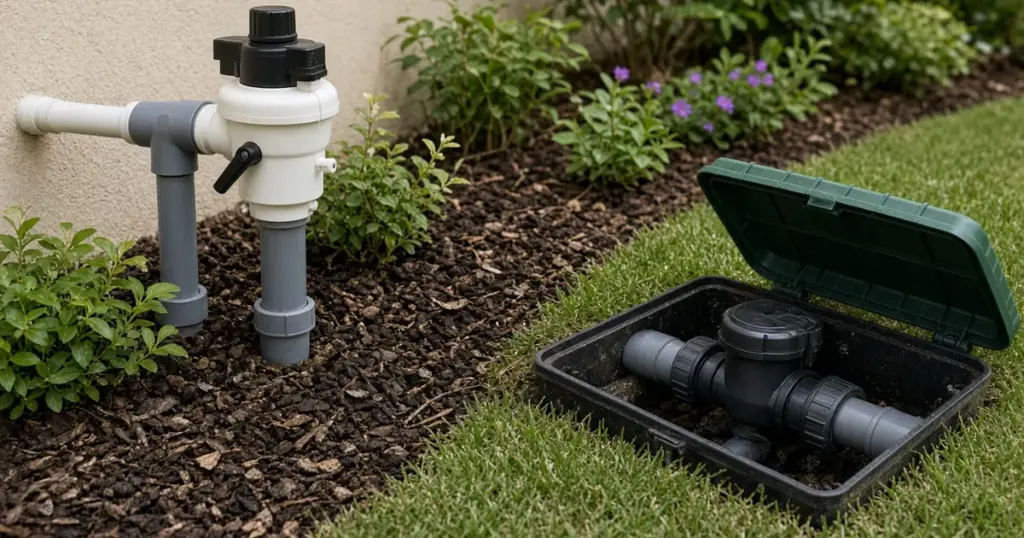
Sprinkler valves come in two broad styles that look and install quite differently. Inline valves sit underground in a valve box, in line with the pipe. Anti-siphon valves sit above ground, usually in a row near the house, and combine a zone valve with a built-in vacuum breaker. Both open and close a zone when the controller signals, but they handle backflow protection, freezing, and maintenance differently.
If you are replacing a valve, adding a zone, or trying to understand a system you inherited with a home in Huntsville, TX, knowing which type you have, and why, helps you make better decisions. This guide explains the differences.
Inline Valves
What they are
Inline valves are installed below grade, typically in a valve box. Water enters one side and exits the other, in line with the pipe. Several inline valves are often grouped in a manifold in one or two boxes.
Backflow protection
Inline valves do not provide backflow protection on their own. Systems with inline valves rely on a separate backflow prevention assembly, such as a pressure vacuum breaker, a reduced pressure principle assembly, or a double check assembly where allowed, installed upstream of all the zone valves. Our guide to PVB vs. RPZ vs. double check compares those assemblies.
Pros
- Hidden from view in valve boxes.
- Less exposed to freezing and impact.
- One backflow assembly protects the whole system.
Cons
- Harder to find if boxes get buried. See how to find buried sprinkler valves.
- Boxes can flood in clay soils or after heavy rain. See flooded sprinkler valve box.
Anti-Siphon Valves
What they are
Anti-siphon valves combine a zone valve with an atmospheric vacuum breaker. They must be installed above the highest head on the zone so the vacuum breaker works properly. They are usually mounted on risers near the house or the water source.
Backflow protection
The built-in vacuum breaker is intended to prevent back-siphonage on that zone. Whether anti-siphon valves satisfy backflow requirements for a particular system depends on Texas rules, the property’s hazard level, and your water provider. Many systems in Texas use a separate testable backflow assembly instead. If you have anti-siphon valves, ask a licensed irrigator whether your setup meets current requirements before making changes.
Pros
- Easy to access and service.
- Simple to see which valve serves which zone.
Cons
- Exposed to freezing, impact, and sun.
- Must be installed above all downstream heads, which limits placement.
- Not suitable for every hazard level or every water provider’s rules.
- Visible above ground.
Side-by-Side Comparison
| Feature | Inline valve | Anti-siphon valve |
|---|---|---|
| Location | Below grade, in valve box | Above grade, on risers |
| Backflow protection | Requires separate assembly | Built-in vacuum breaker |
| Freeze exposure | Lower | Higher |
| Ease of access | Requires opening box | Easy |
| Installation height rule | None for the valve itself | Above highest downstream head |
Common Problems by Type
Inline valves
- Stuck open from debris or worn diaphragms. See sprinkler valve diaphragm replacement.
- Corroded wire splices in flooded boxes.
- Lost valves under soil and turf.
Anti-siphon valves
- Cracked bodies or caps from freezing.
- Leaks at the vacuum breaker cap, sometimes from debris or wear.
- Impact damage from mowers and foot traffic.
- Spitting water from the breaker when the zone starts, which can be normal briefly but persistent leaking is not.
Both types can fail to shut off; our existing post on a sprinkler zone that won’t shut off covers the common causes.
How to Tell Which Type You Have
Walk around the house and look near the water source and the controller. A row of valves standing above ground on pipe risers, each with a cap on top and a solenoid on the side, is almost certainly a set of anti-siphon valves. If you see no valves above ground except a single backflow assembly, your zone valves are probably inline valves in boxes somewhere in the yard. Some older or modified systems have a mix of both, often because a zone was added later. Note the brand and model printed on the valve before buying parts.
Replacing a Valve
When a valve fails, the simplest option is usually to replace it with the same type and size. Considerations:
- Match the pipe size and connection type.
- Keep the same type unless there is a reason to change; switching from anti-siphon to inline valves typically means adding a separate backflow assembly.
- Choose a valve with a manual bleed and flow control for easier testing and adjustment.
- Use waterproof connectors on the solenoid wires.
Changing Systems
Converting a system from anti-siphon valves to inline valves with a single backflow assembly is a bigger project. It can make sense when valves are freeze-damaged repeatedly or when backflow requirements call for a testable assembly. Any new or relocated backflow assembly must be tested by a licensed tester under TCEQ rules.
Freeze Considerations in East Texas
Above-ground anti-siphon valves are more exposed in hard freezes than buried inline valves. If you have anti-siphon valves, insulate them and know how to shut off and drain them when a hard freeze is forecast.
When to Call a Pro
Call a professional if you are not sure what type of valves or backflow protection you have, if anti-siphon valves keep cracking in freezes, if you want to convert to inline valves, or if a valve will not open or close properly. The valves and wiring guide covers related topics. We repair and replace valves for homes across Huntsville and Walker County. See our irrigation installation page and our sprinkler repair page.
Frequently Asked Questions
What is the difference between an anti-siphon valve and an inline valve?
An anti-siphon valve sits above ground and includes a built-in vacuum breaker. An inline valve sits below ground and relies on a separate backflow assembly.
Can I replace an anti-siphon valve with an inline valve?
Yes, but the system then needs a separate backflow assembly that meets requirements. A licensed irrigator can advise on the right setup.
Why does my anti-siphon valve spit water when the zone starts?
A brief spurt as the breaker seats can be normal. Persistent leaking suggests debris or a worn part.
Valve Repair and Replacement
For help with sprinkler valves, call 346-586-6060 or schedule service.