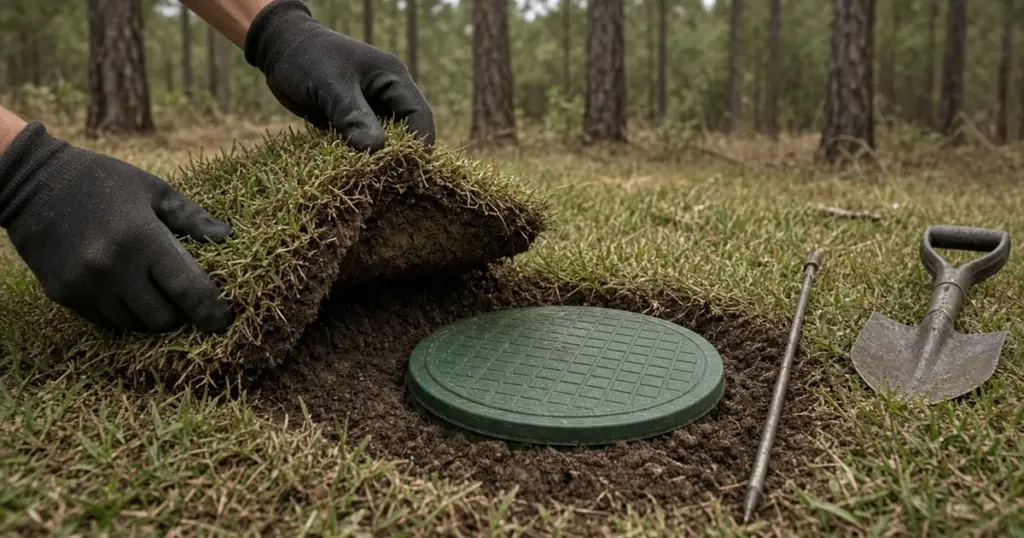
It happens in a lot of yards: a zone acts up, you know the fix involves the valve, and you have no idea where the valve is. Maybe the previous owner never mentioned it, maybe sod was laid over the box, or maybe a landscaping crew buried it under a fresh layer of mulch. Either way, you cannot repair what you cannot find.
This guide covers where valves usually are, the clues that point to them, and the tools professionals use when the simple methods fail. It is especially relevant in older Huntsville, TX neighborhoods and established Walker County properties, where yards have often been relandscaped more than once since the system went in.
Where Sprinkler Valves Usually Are
Installers tend to follow a few patterns, and knowing them narrows the search.
- Near the backflow assembly. Many systems have valves grouped in a manifold not far from where the water supply enters the irrigation system.
- Near the water meter or house connection, especially on systems where the main line is short.
- Along the side of the house, often near a hose bib or the controller location.
- In beds rather than open lawn, where boxes are less likely to be hit by mowers.
- Near the zone they control, on larger properties where valves are spread out.
Valves are usually in plastic valve boxes with green or black lids, either round or rectangular. Older or quick installations sometimes have valves buried directly in soil with no box at all, which makes them much harder to find.
Some systems use above-ground anti-siphon valves near the house, which are easy to spot. If you see a row of valves sticking up, those are your zone valves.
Clues That Point to a Valve
Follow the wires
Each valve has two wires that run back to the controller. Look at where the wire bundle exits the wall or controller and which direction it heads. Wires usually follow the main line or take the most direct route to the manifold.
Follow the main line
The main line runs from the backflow assembly to the valves. If you can see where the pipe leaves the backflow assembly and which direction it goes, the valves are somewhere along that path.
Look for zone patterns
Valves often sit near the first heads of their zone or at a point between zones. Run each zone and note where the heads closest to the water source are.
Look for lid shapes under turf
Walk the likely areas slowly. A buried box sometimes shows as a slightly different texture in the grass, a faint rectangle or circle of thinner or greener turf, or a spot that sounds or feels hollow when pressed.
Probe gently
A long screwdriver or thin probe pushed gently into the soil can find a buried lid. Probe carefully so you do not puncture pipe or wire.
Listen for the Valve
This trick helps a lot. Have someone run the zone from the controller while you walk the likely area. When a valve opens, it often makes a click from the solenoid and a rush or hum of water. In a quiet yard, you can sometimes hear it through a buried lid. Turning the zone on and off a few times while you listen narrows the search.
Check Records
- As-built drawings. Professionally installed systems often come with a plan showing valve locations. Check closing documents or ask the installer.
- Previous service invoices. A past repair note might mention where a valve was.
- Photos. Old real estate listing photos or your own photos from before landscaping sometimes show valve lids.
Tools Professionals Use
When simple methods fail, technicians have options:
- Valve locators send a signal down the station wire, and a receiver traces it to the valve. This is the most reliable way to find a buried valve with intact wiring.
- Wire tracers follow the wire path through the yard, which also helps find cut wires.
- Metal detectors can sometimes detect solenoid components or wire connectors, though results vary.
Our article on leak detection and repair technology describes some of the equipment used for diagnosis.
Once You Find It
- Expose the box carefully and clear soil from the lid.
- Raise the box to grade if it was buried, so it stays findable.
- Mark the location. A sketch with measurements from fixed points, such as the corner of the house, a fence post, or the backflow assembly, is invaluable later.
- Label the wires and valves by zone number.
- Check the valve’s condition while you have it exposed: look for leaks, cracked bodies, and corroded splices.
Once the valve is exposed, you can continue diagnosing. Our posts on why one sprinkler zone will not turn on and the sprinkler valves and wiring guide explain the next steps.
Preventing Lost Valves
- Keep valve boxes at grade when relandscaping.
- Tell landscapers where boxes are before they spread mulch or lay sod.
- Keep a simple map with your home documents.
- Replace broken lids so boxes do not fill with soil.
When to Call a Pro
Call a professional if you have tried the clues above and still cannot find the valve, if the valve appears to be buried directly in soil with no box, if you suspect a cut wire is making the valve impossible to trace electrically, or if you find the valve and it needs replacement. A valve locator can find most buried valves quickly, which saves your lawn from exploratory digging. See our sprinkler repair page for valve repairs and our services page for other work, including system mapping during inspections. Valve problems like a zone that will not stop are covered in the troubleshooting guide.
Frequently Asked Questions
Why would a sprinkler valve be buried without a box?
Some installations skipped valve boxes, or boxes broke and were filled in. TCEQ rules require a valve box as a rigid enclosure for valves that need subsurface protection, but older or unprofessional installations may not have followed that.
Can I find a valve with a metal detector?
Sometimes. Solenoids and wire connectors contain metal, but readings can be weak. A valve locator that follows the station wire is more reliable.
How do I know which valve controls which zone?
Run each zone from the controller and watch or listen at the valve manifold, then label each valve. Opening a valve’s bleed screw also shows which heads it feeds.
Need Help Finding a Valve?
If your valves have gone missing under sod or mulch, call 346-586-6060 or book a service visit. We locate, repair, and map valves for homeowners across Huntsville and Walker County.