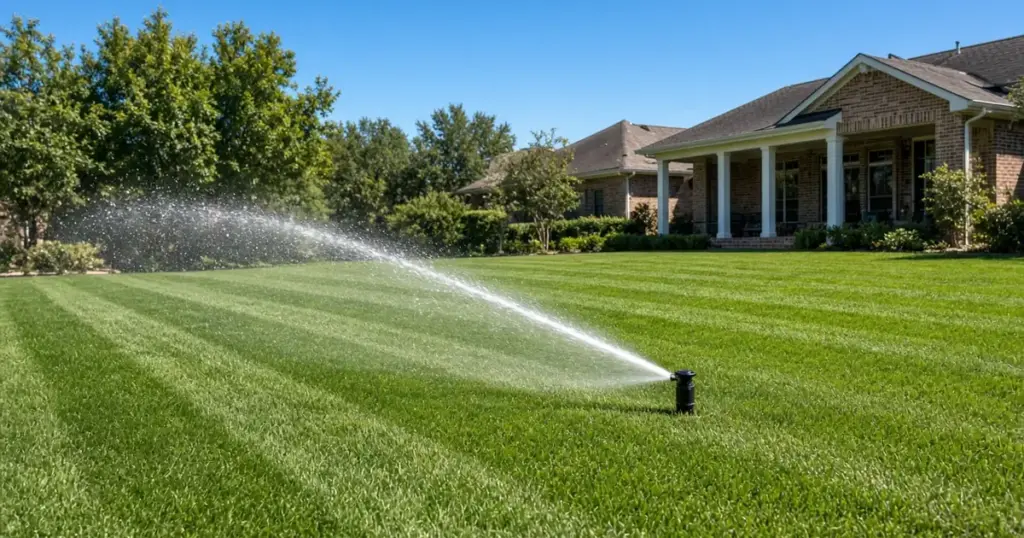
Bermuda grass is built for the kind of sun East Texas delivers. It thrives in open, full-sun yards, spreads quickly to fill in bare spots, handles foot traffic well, and bounces back from stress. It is a favorite for sunny lawns, athletic fields, and properties where the lawn gets heavy use.
Bermuda is also forgiving of imperfect watering, up to a point. It will go dormant in a drought and green up again when water returns. But a Bermuda lawn that is watered lightly and often grows shallow roots, thins in the heat, and invites weeds. This guide explains how to water Bermuda well in the Huntsville, TX area, where summers are long and many yards sit on sandy loam over clay.
How Bermuda Grows
Bermuda spreads by both above-ground runners and underground rhizomes, and it can root deeply when conditions encourage it. That deep rooting is the key to drought tolerance, and irrigation habits have a lot to do with whether it happens.
Bermuda also has a strong need for sun. In shade, it thins out regardless of how much water it gets. If part of your Bermuda lawn is under trees, the thinning there is probably a light issue rather than a water issue. Our guide to watering shady lawns under trees covers those areas separately.
The Core Principle: Deep and Infrequent
Watering deeply and less often encourages Bermuda roots to grow down toward the moisture. Frequent shallow watering keeps the top inch moist and roots stay near the surface, where they dry out fast on a hot afternoon.
In practice:
- Water until the root zone is moist. Use a soil probe or long screwdriver an hour after watering to see how deep the water went.
- Let the surface dry between waterings. The lawn should show mild signs of thirst before the next cycle.
- Adjust frequency, not just run time, as weather changes.
Many turf guides use roughly an inch of water per week in peak summer, including rain, as a starting point for warm-season grass. Your lawn’s actual needs depend on soil, exposure, and weather, so measure and watch rather than relying on a fixed number.
Reading Bermuda’s Signals
Bermuda tells you when it needs water:
- Color shifts from bright green to a duller, grayish green.
- Footprints remain visible after walking across the lawn.
- Blades fold or curl in the afternoon heat.
- Soil is dry several inches down.
When you see these signs across a zone, it is time to water. If you see them in just one spot, check sprinkler coverage first. Our existing post on preventing lawn brown spots covers how to find coverage gaps.
Working With Sandy Loam Over Clay
The sandy top layer absorbs water quickly, but once water reaches the clay, it slows down. If you apply water faster than the clay accepts it, it runs off, especially on slopes. That is where cycle-and-soak comes in:
- Divide the total run time into two or three shorter cycles.
- Space them with a soak period between, often an hour or so.
- Check soil depth after the final cycle.
The lawn and soil irrigation guide explains why this layered soil profile is so common around here and how it affects scheduling.
Spray Zones vs. Rotor Zones
Bermuda is often grown in larger open areas, which are commonly watered by rotors. Rotors apply water more slowly than spray heads, so rotor zones need longer run times to apply the same depth. Spray zones apply water quickly and are more prone to runoff on clay, which makes cycle-and-soak especially useful there.
Do not compare zones by minutes alone. A catch-cup test shows how much water each zone actually applies so you can set run times based on depth, not habit.
Seasonal Changes
Summer
Peak demand. Water early in the morning to reduce evaporation, and adjust frequency during heat waves. Watch for drought restrictions from your water provider; in Huntsville, the city’s drought plan can limit watering days and hours when a stage is declared.
Fall
Bermuda slows down as temperatures drop. Cut back gradually. Our guide to fall sprinkler adjustments explains how.
Winter
Bermuda goes fully dormant and brown in cold weather. It needs only occasional water during extended dry periods. See watering a dormant lawn in winter. If you want winter color, Bermuda is the usual choice for overseeding with ryegrass, which changes the winter schedule entirely.
Spring
As Bermuda greens up, gradually increase watering along with rising temperatures. Spring is also the time to check every zone for winter damage.
Drought and Dormancy
Bermuda can go dormant during drought and recover when water returns. That makes it a good fit for homeowners who prefer to reduce watering during restrictions. To help it recover well:
- Keep traffic light on dormant turf.
- Avoid heavy fertilization during drought.
- Resume watering gradually when allowed.
Common Bermuda Watering Mistakes
- Daily short cycles that keep roots shallow.
- Evening watering that leaves turf wet overnight.
- Same run time for spray and rotor zones.
- Ignoring runoff on clay and slopes.
- Trying to grow Bermuda in shade and adding water to compensate.
When to Call a Pro
If your Bermuda lawn has persistent dry patches, runoff that does not stop with cycle-and-soak, or zones that apply water very unevenly, a professional coverage check can help. Mismatched heads, poor spacing, or pressure problems are common culprits. We serve homeowners across Huntsville and Walker County. See our sprinkler repair page for adjustments and repairs and our irrigation installation page for re-zoning or upgrading heads.
Frequently Asked Questions
How often should I water Bermuda grass in summer?
It depends on soil, sun, and weather, but deep watering a few times a week, adjusted to the lawn’s signals, works better than daily light watering for most yards.
Will Bermuda come back after a drought?
Bermuda often recovers from drought dormancy when water returns, though severe or prolonged drought can still cause damage.
Why is my Bermuda thin under trees?
Bermuda needs full sun. In shade it thins regardless of watering. Consider a more shade-tolerant grass or groundcover there.
Get Your Bermuda Lawn Watered Right
For help setting a Bermuda-friendly schedule or fixing coverage problems, call 346-586-6060 or request a visit.