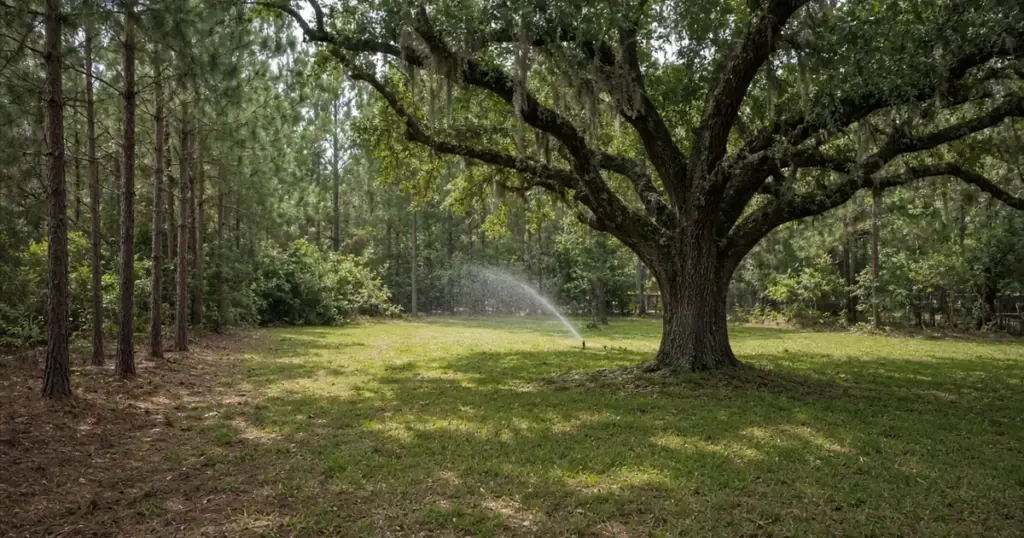
Huntsville, TX sits in the Piney Woods, and many yards here are shaded by tall pines, oaks, and other trees for at least part of the day. Shade changes everything about how a lawn uses water. Grass in shade grows more slowly, uses less water, and dries more slowly after rain or irrigation. At the same time, tree roots compete for whatever moisture is available. The result is a confusing mix: some shady areas stay soggy and diseased, while others under dense canopy stay dry and thin.
Watering a shady lawn on the same schedule as the sunny parts of the yard is one of the most common reasons it struggles. This guide explains how to adjust irrigation for shade, how to work with tree roots rather than against them, and when it makes sense to stop trying to grow grass in a spot altogether.
How Shade Changes Water Use
Lawns in full sun lose water quickly through evaporation and transpiration. In shade, both slow down. Cooler temperatures, less direct sunlight, and less wind mean the soil stays moist longer.
That has two consequences:
- Shady areas need less irrigation than sunny areas.
- Overwatered shade invites disease. Grass that stays wet in humid, shaded conditions is prone to fungal problems.
Tree Roots and Competition
Trees draw large amounts of water from the soil. Under a dense canopy, especially close to the trunk, roots can dry the soil even when irrigation runs. Pines and many hardwoods have extensive shallow root systems that spread well beyond the dripline.
Roots also affect the irrigation system itself, lifting and cracking pipe and shifting heads. Our existing article on tree roots damaging irrigation lines explains how to handle that.
Signs Your Shady Lawn Is Watered Wrong
Too much water
- Moss or algae on bare soil.
- Mushrooms and soft, spongy turf.
- Disease patches in humid weather.
- Soil that stays wet a day or more after watering.
Too little water (or too much competition)
- Thin, wilted grass close to trunks.
- Hard, dry soil under the canopy.
- Bare patches that do not respond to more water.
How to Water Shady Areas Better
1. Put shade on its own zone
The single most effective step. If shaded and sunny areas share a zone, any schedule is a compromise. Separating them lets you water each correctly. TCEQ design standards for new systems call for zoning by plant type, microclimate, and other site factors, and shade is a classic microclimate difference.
2. Reduce run time and frequency
Start with noticeably less water than sunny zones get. Check the soil a few inches down a day after watering and adjust.
3. Water in the morning
Morning watering gives shady turf the best chance to dry before evening. Avoid evening watering in shade.
4. Check coverage
Low branches, shrubs, and trunks block spray. Raise or move heads, trim low limbs, or switch to heads that clear obstructions.
5. Watch seasonal changes
Deciduous trees leaf out in spring and drop leaves in fall, so shade changes through the year. Pines shade year-round. Adjust schedules with the seasons.
Grass Choice for Shade
Warm-season grasses differ in shade tolerance:
- St. Augustine is generally considered the most shade-tolerant of the common warm-season lawn grasses. See watering St. Augustine grass.
- Zoysia tolerates moderate shade, depending on variety. See how to irrigate zoysia.
- Bermuda needs full sun and thins quickly in shade. More water will not fix it. See watering Bermuda grass.
If Bermuda is struggling under trees, the solution is a different grass or groundcover, not more irrigation.
When to Stop Growing Grass
In deep shade or close to trunks, grass may never thrive. Alternatives:
- Mulch beds around trees, which also protect roots and trunks from mowers.
- Shade-tolerant groundcovers watered by drip.
- Shade-loving ornamental plants.
Reducing turf in deep shade also reduces the number of heads that roots can damage.
Equipment Choices
- Rotary nozzles or low-precipitation heads help water soak in slowly under trees.
- Drip works well for beds around trees.
- Soil moisture sensors can keep shady zones from running when the soil is still moist.
A Simple Test for Shady Zones
To find the right schedule for a shaded area, try this over two or three weeks:
- Cut the shady zone’s run time well below the sunny zones’ run times.
- A day after watering, probe the soil a few inches down in several spots, including near and away from tree trunks.
- If the soil is still moist, skip the next scheduled watering.
- If it is dry close to the trunks but moist farther out, the trees are taking the water near the trunk. Consider mulch there instead of turf.
- Adjust run time a little at a time and recheck.
Keep notes so you can repeat the process each spring, when canopies fill in, and again in fall.
Pine Needles and Debris
Falling needles block spray and clog heads. Clear them from around heads regularly, and check valve boxes for buildup. Raking needles off thin turf also lets light reach the grass.
When to Call a Pro
Call a professional if you want shady areas separated into their own zones, if roots are damaging lines, if heads are blocked by trunks and branches, or if you are converting shady turf to drip-watered beds. The lawn and soil irrigation guide covers related topics. We help homeowners across Huntsville and Walker County adjust systems for shade. See our sprinkler repair page and our irrigation installation page.
Frequently Asked Questions
Does grass in shade need less water?
Generally, yes. Shaded turf uses less water and dries more slowly, so it needs shorter or less frequent watering than sunny areas.
Why does my grass die under my trees even though I water it?
The grass may not be getting enough light, or tree roots may be taking most of the water. More irrigation rarely solves a light problem.
What grass grows best in shade in East Texas?
St. Augustine is generally considered the most shade-tolerant common warm-season lawn grass, with some zoysia varieties also performing in moderate shade.
Get Your Shady Lawn on the Right Schedule
For help adjusting zones for shade, call 346-586-6060 or request a visit.