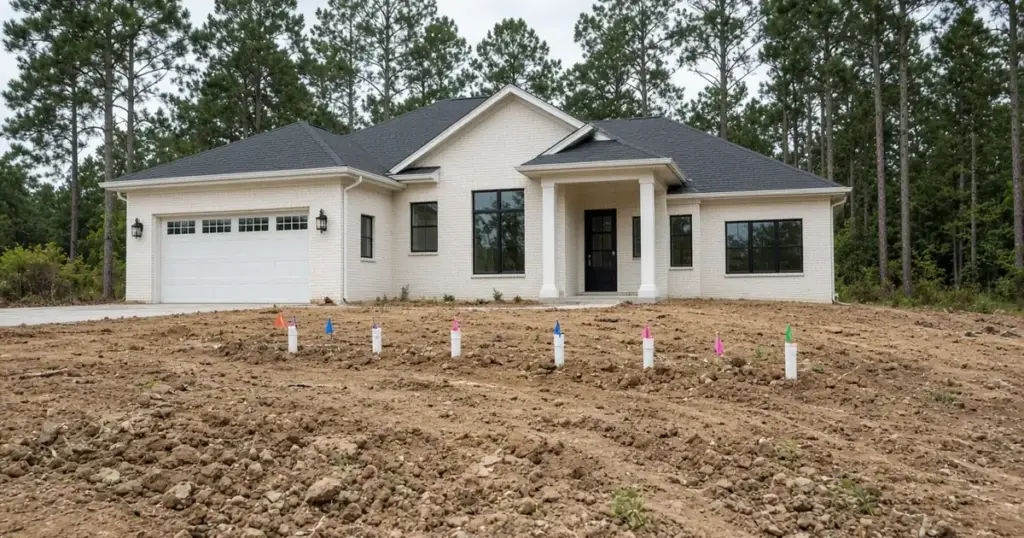
Building a new home is the best chance you will ever get to put in an irrigation system the right way. There are no mature trees to dig around, no existing pipe to work with, and no finished driveway to tunnel under, at least not if you plan ahead. Coordinate with the builder early, and the system can be designed around the landscape rather than squeezed into it later.
This guide explains how to plan irrigation for a new construction home in Huntsville, TX or elsewhere in Walker County, including timing, sleeves, design choices, and what to do once the sod goes down.
Timing: When Irrigation Fits Into the Build
Irrigation work usually happens near the end of construction, after final grading and before sod and landscaping. But a few decisions need to be made much earlier:
Before concrete is poured
Sleeves are pieces of larger pipe laid under driveways, sidewalks, and patios before concrete is poured. Irrigation pipe and wire can later be pulled through them. Without sleeves, reaching beds and lawn on the far side of hardscape means boring under concrete or running pipe the long way around. Ask the builder to install sleeves wherever irrigation will need to cross.
Before final grading
The irrigator needs to know the final grade to set heads and plan drainage. Installing too early can leave heads too high or buried after grading.
Before landscaping
Beds, trees, and turf areas should be planned before the system is designed so zones match plant types.
Questions for Your Builder
- Is irrigation included, and if so, who designs and installs it?
- Will sleeves be installed under drives and walks?
- Where will the water meter and irrigation tap be?
- Where will the controller be mounted, and is there an outlet?
- What landscaping and sod are included?
- Who handles backflow testing and paperwork?
If irrigation is included in the builder’s package, ask for the design. Builder-grade systems sometimes use minimal zones that mix lawn and beds. Upgrading the design before installation is easier than redoing it later.
Design Priorities
Zoning by plant type and exposure
TCEQ design standards for new systems call for separating zones by plant type, microclimate, topography, and soil. Keep lawn and beds separate, sun and shade separate where practical, and slopes on their own zones.
Matched heads
Use matched-precipitation heads within each zone. Our existing article comparing spray heads, rotors, and rotary nozzles explains the choices.
Hardscape setbacks
Texas standards require heads to be at least 4 inches from hardscape and directed away from it, and prohibit above-ground spray in narrow strips under 48 inches wide bordered by pavement on two or more sides. New subdivisions often have narrow side yards and parkway strips where drip is the better choice.
Controller and sensors
New automatic systems in most of Texas must include a rain or moisture shut-off device. A smart controller adds weather adjustment and remote access.
Backflow prevention
The water provider and property type determine the required assembly. TCEQ rules require testing by a licensed tester after installation, with results provided to the water provider. If the home has a septic system and irrigation connects to potable water, TCEQ guidance calls for a reduced pressure principle assembly.
Soil After Construction
Construction compacts soil. Heavy equipment, foot traffic, and stored materials leave dense layers that resist water. Many lots also end up with subsoil spread over the surface during grading. Compacted, disturbed soil causes runoff and poor root growth. Consider soil preparation before sod: loosening compacted areas and adding organic matter where appropriate.
Installing the System
The installation process for new construction follows the same steps as any new system. Our guide to the new sprinkler system installation process walks through design, installation, testing, and handoff. For an overview of costs, see irrigation installation cost factors.
Watering New Sod
New sod needs frequent, light watering for the first weeks to establish roots, then a gradual shift to deeper, less frequent watering. The schedule for new sod is very different from the long-term schedule. Our guide to new sod watering in Texas explains the transition.
Coordinating With Landscapers
On a new build, the irrigator, the landscaper, and the builder all work in the same space within a few weeks. Share the irrigation plan with the landscaper so trees and beds are not placed on top of valve boxes or main lines, and so planting holes do not cut through newly installed pipe. Ask the landscaper to flag any changes to bed shapes before planting; a bed that grows a few feet may need a head moved or a drip line extended. A short meeting on site between the trades saves rework later.
After the First Few Months
- Check head heights after soil settles.
- Run a coverage check and adjust arcs.
- Switch from the establishment schedule to a normal schedule.
- Keep the zone map and paperwork.
Choosing an Installer
Irrigation installation for others in Texas must be done by or under a licensed irrigator. If the builder subcontracts irrigation, you can ask for the irrigator’s license information. Our article on hiring a licensed irrigator in Texas explains how to verify a license.
When to Call a Pro
Call a licensed irrigator as early as possible in the building process, ideally before concrete is poured, so sleeves and the irrigation tap can be planned. Also call if your new home’s builder-installed system waters unevenly, mixes lawn and beds, or sprays the house. The installation and upgrade guide covers the full range of options. We design and install systems for new homes around Huntsville and Walker County. See our irrigation installation page and our services page.
Frequently Asked Questions
When should irrigation be installed on a new home?
Usually after final grading and before sod and landscaping, with sleeves placed under hardscape before concrete is poured.
What are irrigation sleeves?
Larger pipes laid under driveways and walks before concrete is poured, so irrigation pipe and wire can be run through them later.
Is the builder’s sprinkler system good enough?
It depends on the design. Ask for the zone layout and head types. Upgrading the design before installation is easier than changing it later.
Plan Irrigation for Your New Home
To plan irrigation for a new build, call 346-586-6060 or request a consultation.