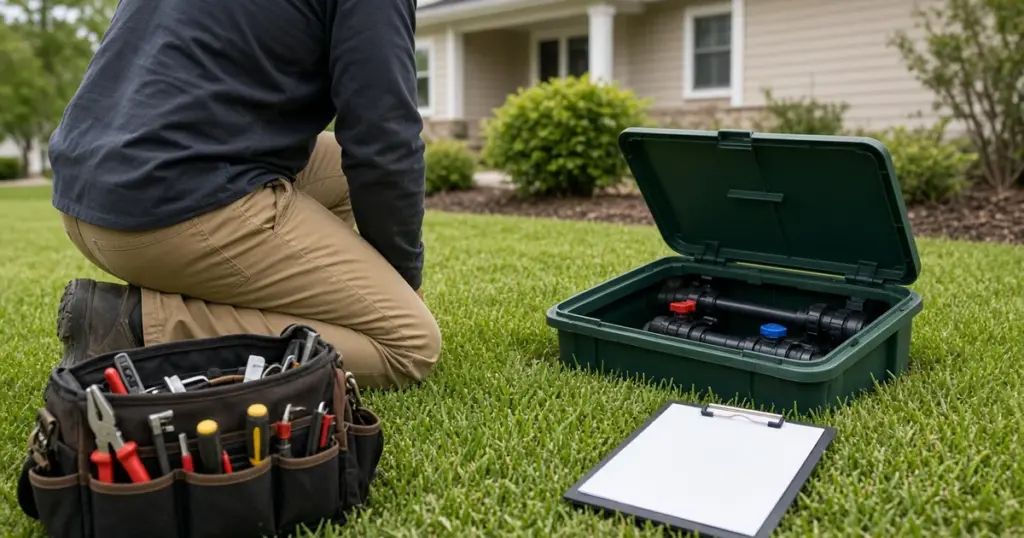
In Texas, irrigation is a licensed trade. Anyone who sells, designs, installs, maintains, alters, repairs, or services an irrigation system for someone else generally needs a license from the Texas Commission on Environmental Quality, or must work under the supervision of a licensed irrigator. The licensing program exists because poorly designed or installed irrigation wastes water and can create backflow risks to drinking water.
If you are hiring someone to install, upgrade, or repair your sprinkler system in Huntsville, TX or anywhere in Walker County, knowing how licensing works helps you choose a qualified professional. This guide explains what to check, what to ask, and what a good proposal includes.
What a Licensed Irrigator Does
Licensed irrigators are trained in irrigation design, installation standards, water conservation, and backflow prevention. TCEQ rules set minimum standards for things like head spacing, zoning, hardscape setbacks, rain or moisture shut-off devices, wire splicing, pipe depth, and backflow protection. A licensed irrigator is responsible for meeting those standards on the work they perform or supervise.
Other related licenses include irrigation technicians, who work under a licensed irrigator, and backflow prevention assembly testers, who test backflow assemblies. TCEQ’s licensing page describes the license types and provides access to license information.
Homeowner Exemption
Texas law exempts homeowners working on their own property from the licensing requirement in certain circumstances. Texas Occupations Code Chapter 1903 sets out the exemptions, and exempt work must still meet the standards. If you hire someone else, that person needs the appropriate license.
How to Verify a License
- Ask for the license information. A licensed irrigator should provide it readily.
- Check with TCEQ. Use the tools linked from TCEQ’s licensing page to confirm the license is current.
- Confirm who will do the work. If technicians will perform the work, confirm they work under a licensed irrigator.
- For backflow testing, confirm the tester holds a backflow prevention assembly tester license.
Questions to Ask Before Hiring
- How will you design the zones, and why?
- What head and nozzle types will you use in each area?
- What controller and rain or moisture sensor will be installed?
- What backflow assembly will be installed, and who tests it?
- Will you pull any required permits?
- What warranty do you offer on parts and labor?
- How will trenches and turf be restored?
- Will I receive a zone map and maintenance information?
For a new system, our guide to the new sprinkler system installation process explains what each stage should include.
What a Good Proposal Includes
- Scope of work with zones, head types, and equipment.
- Controller and sensor model.
- Backflow assembly type and testing.
- Pipe and wire details.
- Restoration of turf and landscape.
- Price with what is included and excluded.
- Timeline.
- Warranty terms.
Compare proposals on design and equipment, not just price. A lower bid with fewer zones or mismatched heads can cost more in water and repairs later. Our article on irrigation installation cost factors explains what drives the differences.
Understanding Warranties
Warranties vary widely. Some cover parts only, others include labor; some last a season, others longer. Ask what is covered, for how long, and what voids the warranty, such as damage from mowers, freezes, or work by others. Get the terms in writing. Manufacturer warranties on equipment like controllers and valves may be separate from the installer’s workmanship warranty.
Red Flags
- No license information or reluctance to provide it.
- No design details, just a total price.
- Mixing lawn and beds on the same zones without explanation.
- No mention of a rain or moisture sensor on a new automatic system.
- No plan for backflow testing.
- Pressure to sign immediately.
Comparing More Than One Bid
For larger projects, getting two or three proposals is common. To compare them fairly, make sure each covers the same areas, includes a controller with a rain or moisture shut-off device, specifies the backflow assembly and testing, and describes restoration. If one bid has far fewer zones than another, ask why. Ask each contractor to walk you through their design; how clearly they explain it tells you a lot about how carefully they planned it.
Repairs and Maintenance
Licensing applies to repairs and maintenance for others too, not just new installations. For routine service, ask the same basic questions: who is licensed, what will be done, and what is included. Regular inspections catch problems early; our existing article on why regular sprinkler inspections matter explains what they cover.
Backflow Testing
Backflow assemblies must be tested by a licensed tester after installation, repair, replacement, or relocation, and results go to the water provider. Many irrigators hold both licenses or work with a licensed tester. See what happens during a backflow test.
Local Permits
Some cities require permits for certain irrigation work. Inside Huntsville city limits, irrigation taps and backflow replacements have appeared on city permit records. Ask your irrigator whether a permit applies to your project.
Getting the Most From the Relationship
A good irrigator will explain recommendations, give you options, and leave you with documentation you can use. Keep the zone map, equipment list, warranty, and backflow test report together. If you plan future upgrades, such as adding zones or converting beds to drip, a contractor who knows your system can do it more efficiently.
When to Call a Pro
Call a licensed irrigator for any new installation, major upgrade, or repair you do not want to do yourself, and for backflow testing. The installation and upgrade guide covers the options. We provide licensed irrigation services for homes and businesses in Huntsville and Walker County and are happy to answer questions about our licensing. See our irrigation installation page and our services page.
Frequently Asked Questions
Do sprinkler installers need a license in Texas?
Generally, yes. Irrigation work for others requires a TCEQ license or supervision by a licensed irrigator.
Can I install my own sprinkler system?
Texas law provides a homeowner exemption in certain circumstances, but exempt work must still meet state standards.
How do I check an irrigator’s license?
Ask for the license information and verify it through the tools linked from TCEQ’s licensing page.
Work With a Licensed Professional
To talk with a licensed irrigator about your project, call 346-586-6060 or request an estimate.