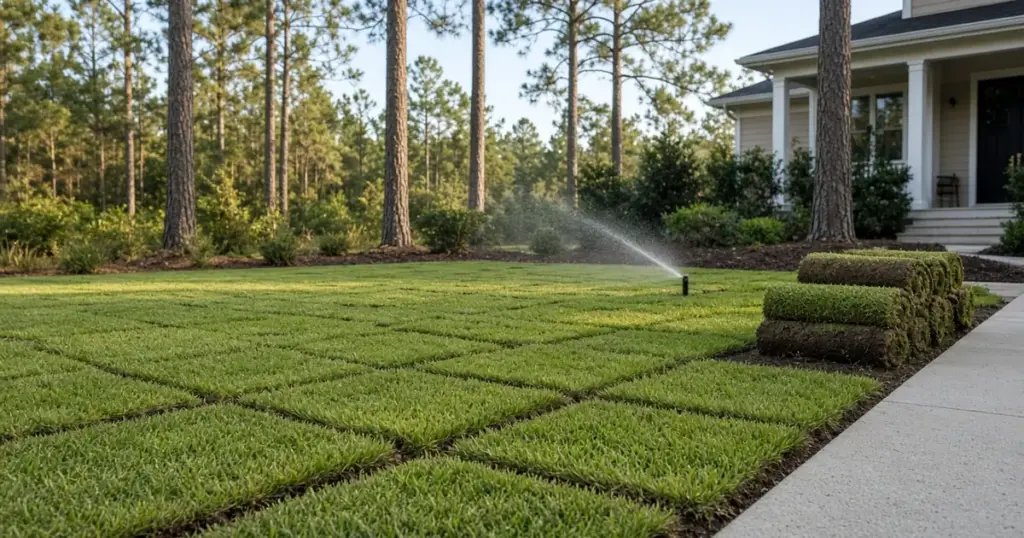
New sod looks like a finished lawn the day it is laid, but underneath, it is a thin mat of roots sitting on top of soil it has not yet grown into. For the first few weeks, it depends entirely on you to keep it alive. Too little water and it shrinks, browns at the seams, and fails to root. Too much and it rots, invites disease, and roots shallowly. Getting the watering right during establishment is the most important thing you can do for a new lawn.
This guide walks through a practical watering approach for new sod in East Texas, including Huntsville, TX and Walker County, where warm temperatures, humidity, and layered soils all play a part. It covers the common warm-season grasses: St. Augustine, Bermuda, and zoysia.
Before the Sod Arrives
Prepare the soil
Loosen compacted soil, especially on new construction lots where equipment has packed it down. Rake it smooth and level. Lightly moisten the soil before laying sod so roots contact damp soil, not dry dust.
Check the irrigation system
Run every zone and confirm full coverage before the sod goes down. Fix broken heads, adjust arcs, and reset heads to the new grade. Our guide on irrigation for new construction homes covers timing on new builds.
Plan a separate program
Set up an establishment program on the controller, separate from your normal schedule. That makes it easy to switch back later.
Stage 1: The First Days
Goal: keep the sod and the soil directly beneath it moist at all times.
- Water immediately after laying, enough to soak through the sod into the top of the soil.
- Water several times a day in short cycles, especially in hot weather, so the sod never dries out.
- Check by lifting a corner. The soil beneath should be moist. If it is dry, water more; if it is muddy, water less.
- Pay attention to edges and seams, which dry first.
Stage 2: Rooting
Goal: encourage roots to grow into the soil.
After the first stretch, when the sod begins to resist being lifted, roots are starting to grow into the soil.
- Reduce frequency and lengthen each cycle gradually.
- Let the surface dry slightly between waterings, so roots grow down looking for moisture.
- Keep checking under a corner or with a probe.
Stage 3: Transition
Goal: move toward a normal, deep and infrequent schedule.
When the sod is firmly rooted and does not lift, shift to watering a few times a week, deeply, and let the soil dry between waterings. This is the schedule that builds a drought-tolerant lawn.
The timing of each stage depends on the grass type, the season, and the weather. Watch the sod rather than the calendar.
Grass-Specific Notes
- St. Augustine is the most common choice for many Huntsville yards. It establishes well with consistent moisture. See watering St. Augustine grass.
- Bermuda roots quickly in full sun and transitions to deep watering readily. See watering Bermuda grass.
- Zoysia grows more slowly, so it may take longer to root fully.
Soil Considerations
Sandy topsoil dries quickly, so sod laid on sand may need more frequent watering early on. Where clay is close to the surface, water drains slowly, so overwatering is a risk. Our guide to sandy loam over clay explains why water behaves differently across a yard.
Sprinkler Settings for New Sod
- Use multiple short start times during the first stage.
- Water early in the morning for the main cycle, with additional short cycles as needed during heat.
- Avoid long evening watering, which leaves sod wet overnight in humid weather.
- Use cycle-and-soak if water runs off before soaking in.
- Leave the rain sensor active so the system skips cycles after storms, but check the sod yourself in the first days, since a light shower may not be enough to keep it moist.
Watering Restrictions and New Sod
If drought restrictions are in effect, check whether your water provider allows exceptions for new landscaping. Do not assume an exception exists. The City of Huntsville’s published drought plan sets out its stages, so check current notices. If restrictions are severe, consider delaying installation.
Signs of Trouble
Underwatering
- Gaps opening between pieces.
- Browning edges.
- Sod that feels dry and lightweight.
Overwatering
- Soggy, squishy sod.
- Mushrooms or a sour smell.
- Yellowing and slow rooting.
Humidity and Disease
East Texas humidity slows drying, which helps new sod stay moist but also raises the risk of fungal disease if it stays wet for long periods. As soon as the sod begins to root, cut back on frequent cycles and shift the main watering to early morning. Our existing article on watering your Huntsville lawn in humid weather explains how humidity changes scheduling.
Shade and Sun Within the Same Lawn
New sod laid across both sunny and shady areas will dry at different rates. Sunny areas near pavement and south-facing walls often need extra attention, while shaded areas may stay damp. If those areas are on separate zones, set different run times. If they share a zone, hand-water the sunny edges during the first week rather than overwatering the whole zone.
Mowing and Traffic
Keep traffic off new sod until it roots firmly. Mow for the first time when the grass needs it and the sod does not shift underfoot, and do not remove more than a third of the blade height. Reduce watering slightly before mowing so the soil is firm.
When to Call a Pro
Call a professional if the irrigation system does not cover the new sod evenly, if heads need to be raised or moved after grading, if you need an establishment program set on the controller, or if dry strips appear despite watering. The lawn and soil irrigation guide covers long-term care. We help homeowners across Huntsville and Walker County prepare systems for new sod. See our irrigation installation page and our sprinkler repair page.
Frequently Asked Questions
How often should I water new sod in Texas?
In the first days, water often enough to keep the sod and soil beneath it moist, which may mean several short cycles a day in heat. Then reduce frequency as roots grow.
How do I know when new sod has rooted?
Gently lift a corner. If it resists and you can see roots in the soil, it is rooting.
Can I overwater new sod?
Yes. Soggy sod can rot and root poorly. Check moisture under a corner and adjust.
Get Your System Ready for New Sod
For help preparing your irrigation for new sod, call 346-586-6060 or request a visit.