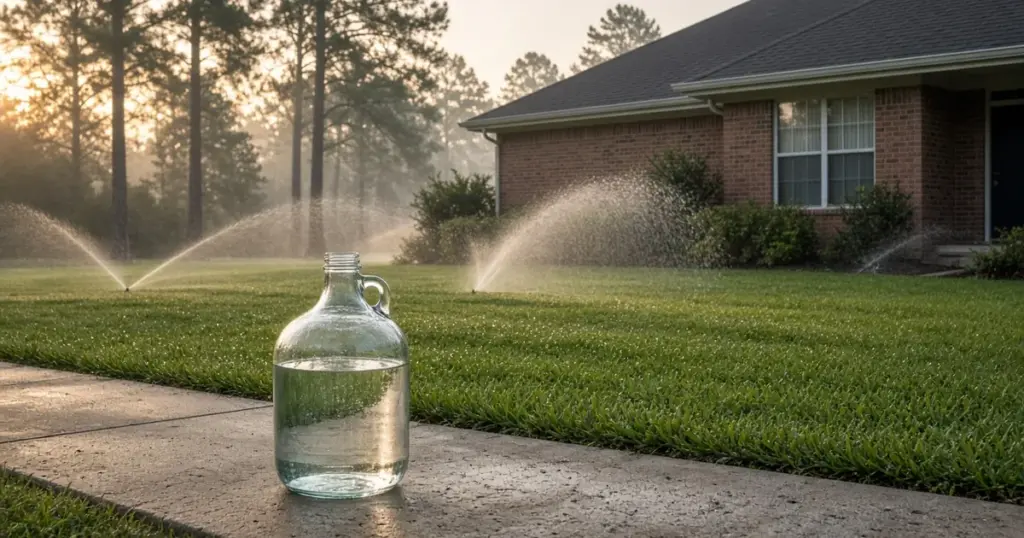
Ask how much water a sprinkler system uses and the honest answer is that it depends entirely on the system. The number of zones, the type of heads, the pressure, the run times, and how many days a week the system runs all change the total. Two neighboring homes in Huntsville, TX can use very different amounts of water for irrigation, even with similar lawns.
Instead of relying on a general number, it is better to measure your own system. This guide shows two simple ways to figure out how much water each zone uses, how to estimate your weekly total, and how to bring usage down without sacrificing the lawn. It applies to homes on city water and, with some adjustments, to well-supplied properties in Walker County.
Why Usage Varies So Much
- Head type. Spray heads apply water faster than rotors or rotary nozzles, but rotor zones run longer.
- Number of heads per zone.
- Nozzle sizes and pressure. Higher pressure increases flow through most nozzles.
- Run times and frequency.
- Leaks and broken heads, which can add a lot of hidden use.
- Season. Summer schedules use far more than winter ones.
Method 1: Use the Water Meter
This is the most accurate way to measure what each zone actually uses.
- Make sure no other water is being used in or around the house.
- Read the meter and write down the number.
- Run one zone manually for a set time, such as 10 minutes.
- Read the meter again.
- Subtract to find how much water the zone used during that time.
- Divide by the minutes to get the zone’s flow rate.
Repeat for each zone. Multiply each zone’s flow rate by its scheduled run time, then by the number of watering days per week, and add all zones together to get your weekly irrigation use.
Our guide to using the water meter to test for leaks explains how to read the meter.
Method 2: Add Up Head Flow Ratings
Every nozzle has a flow rating published by the manufacturer, usually in gallons per minute at a given pressure. Add up the ratings for every head on a zone to estimate the zone’s flow. This method is less accurate than the meter, since actual pressure and wear change the flow, but it is useful for planning.
Example Calculation
Here is the structure of the math. Fill in your own measurements for each zone:
| Zone | Flow (gallons per minute) | Run time (minutes) | Days per week | Weekly gallons |
|---|---|---|---|---|
| A | your measurement | your setting | your days | flow × minutes × days |
| B | your measurement | your setting | your days | flow × minutes × days |
Add the weekly gallons for every zone to get the total. Comparing that total with your water bill shows how much of your use goes to irrigation.
Where the Water Goes
Not all of the water a system uses ends up where it helps the lawn. Common losses include:
- Overspray onto walks and streets.
- Runoff from clay soils and slopes.
- Misting and drift from high pressure.
- Evaporation during hot or windy watering.
- Leaks and broken heads.
- Watering after rain without a working rain sensor.
How to Use Less Water
- Fix leaks and broken heads first.
- Measure application rates with a catch-cup test and set run times by depth, not habit.
- Use cycle-and-soak on clay and slopes.
- Water early in the morning.
- Adjust seasonally. Cut back in fall and winter.
- Use a rain sensor or smart controller.
- Fix high pressure with pressure-regulating heads.
- Convert beds to drip.
Our existing article on watering your Huntsville lawn in humid weather explains how to schedule for local conditions. The lower water bill guide covers more ways to improve efficiency.
Reading Your Water Bill
Your water bill shows total use for the billing period, usually in gallons or in units of a thousand gallons, along with the meter readings. Compare summer bills with winter bills, when irrigation is minimal; the difference gives a rough idea of how much goes to the lawn. Some utilities bill sewer charges based on winter water use, so efficient summer watering may not affect the sewer portion, but it still lowers the water portion. If a bill jumps without a change in your schedule, check for leaks before assuming the weather is to blame.
Water Restrictions and Usage
When the City of Huntsville declares a drought stage, watering days and hours may be limited. Knowing how much each zone uses helps you plan a schedule that fits the allowed days while giving the lawn what it needs.
Well Systems
If your irrigation runs on a well, there is no utility meter to read. You can estimate flow with a flow meter installed on the irrigation line or by adding nozzle ratings. Usage matters for well systems too: running zones that demand more than the well delivers causes pump short cycling.
Tracking Use Over Time
Keep a simple record of zone flow rates and run times. When something changes, such as a jump in the bill or a zone that suddenly uses more, you will have a baseline to compare against. Smart controllers with flow sensors can track usage automatically.
When to Call a Pro
Call a professional if your water bill is higher than you expect, if some zones use much more water than others of similar size, if you suspect a leak, or if you want a full irrigation audit with recommendations. We help homeowners across Huntsville and Walker County measure and reduce irrigation use. See our services page and our sprinkler repair page.
Frequently Asked Questions
How can I tell how much water my sprinklers use?
Run each zone for a set time with all other water off and read the meter before and after. The difference is that zone’s use.
Do rotors use less water than spray heads?
Rotors apply water more slowly, but rotor zones run longer. Total use depends on the design and schedule.
Why is my water bill so high in summer?
Irrigation demand peaks in summer heat. Leaks, overspray, and long run times can add to it.
Get a Water Use Checkup
For help measuring and cutting irrigation water use, call 346-586-6060 or request a visit.