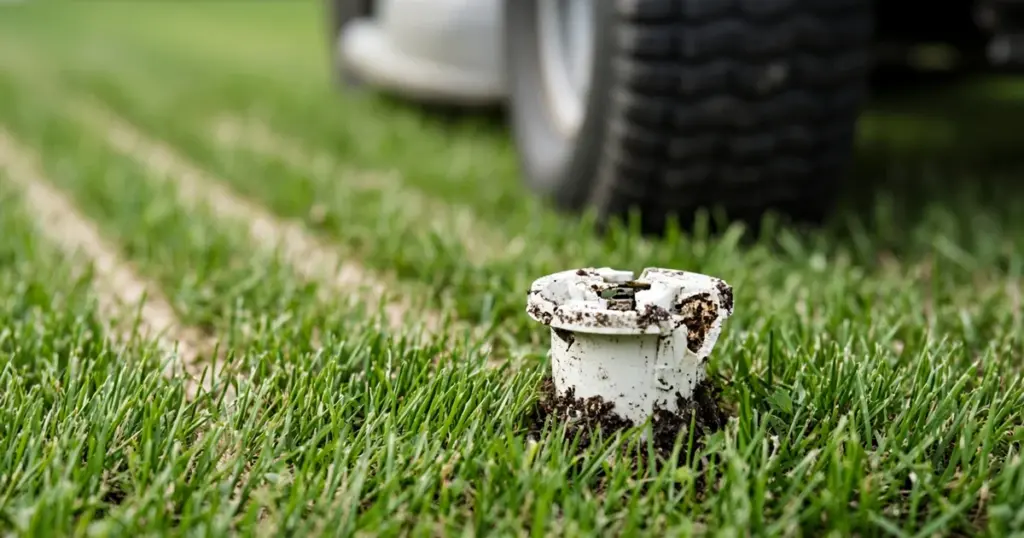
Mowers and sprinkler heads share the same ground, and the mower usually wins. A head that sits a little too high gets clipped by the deck. A head that tilts gets caught by a wheel. A head next to a bed edge gets chewed by a string trimmer. Heads near driveways get crushed by tires. Over a season, these small collisions add up to broken caps, cracked bodies, stuck risers, and dry spots in the lawn.
Most mower damage is preventable with correct head height, a few placement changes, and good communication with whoever mows the lawn. This guide explains how, with notes for lawns in Huntsville, TX and Walker County.
How Mowers Damage Heads
- Deck strikes on heads that sit above the turf.
- Wheel impacts that crack heads or push them sideways.
- Trimmer line chewing caps and nozzles along edges.
- Edger blades cutting heads and shallow pipe near walks and beds.
- Riser damage when a mower passes while the system is running.
- Scalping on uneven ground that exposes heads.
Signs of Mower Damage
- Cracked or missing caps.
- Broken or chewed nozzles.
- Heads that tilt or sit crooked.
- Risers that stick up and do not retract.
- Geysers from a broken head.
- Dry spots around a head that no longer sprays properly.
If a head will not rise properly, see sprinkler head won’t pop up.
Prevention Step 1: Set Heads at the Right Height
Heads should sit flush with the soil surface, with the cap level with the grade, not above it. A head set too high is the most common reason for mower strikes. A head set too low gets buried by turf and soil and sprays into the grass. Our existing article on why sprinkler head height matters explains how to set heads correctly.
How to adjust height
- Dig around the head.
- For heads on swing joints or flexible pipe, raise or lower the body.
- For heads on rigid risers, replace the riser with one of the right length.
- Backfill and compact around the head so it stays straight.
Prevention Step 2: Keep Heads Straight
A tilted head sticks up on one side, inviting strikes. Straighten heads and compact soil around them. Swing joints let heads flex when hit and are less likely to break than rigid risers.
Prevention Step 3: Use Taller Pop-Up Heads Where Needed
Short pop-up heads in tall turf have trouble clearing the grass, which tempts people to raise them. Instead, use a taller pop-up height so the head can sit flush while the nozzle still clears the turf.
Prevention Step 4: Protect Heads Near Edges
- Set heads back from walks and drives. Texas standards require heads on new installations to be at least 4 inches from hardscape.
- Mark heads along edges with flags during the first few mowings after installation or repair.
- Use edging or a mulch strip along beds so trimmers stay away from heads.
Prevention Step 5: Communicate With the Mowing Crew
- Walk the yard with the crew and point out heads, especially those near edges.
- Ask them not to mow while the system is running.
- Ask them to report broken heads rather than leave them.
- Set the schedule so zones do not run during the usual mowing time.
Prevention Step 6: Fix Low Spots and Scalped Areas
Uneven ground leads to scalping and exposed heads. Fill low spots, level the area around heads, and reset heads to the new grade.
Repairing Mower Damage
Many mower-damaged heads can be repaired quickly:
- Broken nozzle: Replace the nozzle.
- Cracked cap: Replace the head or cap, depending on design.
- Stuck riser: Clean or replace the internal parts.
- Cracked body: Replace the head.
Our guide to replacing a broken sprinkler head walks through the steps. Match the replacement to the other heads on the zone.
Aeration and Other Lawn Equipment
Aerators, dethatchers, and heavy equipment can damage heads too. Our article on lawn aeration and sprinkler heads explains how to protect the system during lawn care work.
Driveways and Parking Areas
Heads along driveways and curbs face tires as well as mowers. Cars that cut corners or park with a wheel on the grass crush heads and crack the pipe beneath them. Where this happens repeatedly, consider moving the head back from the edge, replacing the turf strip with a drip-watered bed or hardscape, or adding a visual cue, such as a small border, that keeps drivers off the grass.
Choosing Durable Heads
When replacing heads in high-traffic areas, consider heads with sturdier caps and bodies. In areas where heads are hit repeatedly, it may be better to move them or switch to a different design, such as converting narrow strips to drip.
A Quick Monthly Walk
During the mowing season, take a few minutes once a month to run each zone while you walk the yard. Look for heads that tilt, spray crooked, or sit higher than the grass around them. Fix them before the next mowing. A small monthly habit like this catches most mower damage while it is still a cheap nozzle replacement instead of a broken riser and a geyser.
When to Call a Pro
Call a professional if many heads are damaged, if heads keep getting hit despite height adjustments, if a broken head has caused a leak in the line, or if you want heads moved away from edges. A technician can reset heights, install swing joints, and replace damaged heads. The sprinkler troubleshooting guide covers related symptoms. We repair heads for homes across Huntsville and Walker County. See our sprinkler repair page and our services page.
Frequently Asked Questions
How high should my sprinkler heads be?
The top of the head should be flush with the soil surface, not above it. Choose a pop-up height that clears the grass when running.
Why do mowers keep breaking my sprinkler heads?
Heads set too high, tilted, or too close to edges are common causes. Correcting height and placement reduces damage.
Can a broken sprinkler head cause a leak?
Yes. A broken head can spray water uncontrolled or allow water to flow when the zone runs, wasting water and causing soggy spots.
Fix Mower-Damaged Heads
If mowers keep breaking your heads, call 346-586-6060 or schedule a repair.