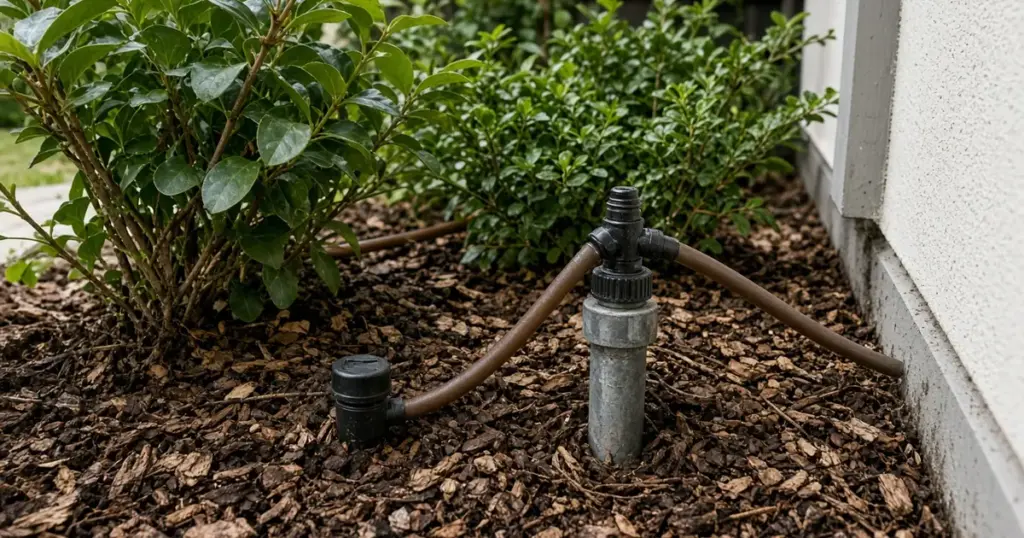
Many flower beds and shrub borders are watered by the same spray heads used on lawns. Those heads were never ideal for beds. They wet leaves, blast mulch, soak walls and windows, and lose a good share of their water to wind and evaporation. Converting the zone to drip delivers water at the root zone instead, often using less water and producing healthier plants.
This guide explains when conversion makes sense, what it involves, and how to schedule a converted zone for beds in Huntsville, TX and across Walker County.
Signs a Bed Zone Should Be Converted
- Siding, windows, or fences stay wet after the zone runs.
- Mulch gets washed away or displaced.
- Leaves stay wet and plants show fungal leaf spots.
- Shrubs have grown and now block the spray, leaving dry areas behind them.
- Water runs onto walks or the driveway.
- The bed is narrow, bordered by pavement or walls. For new systems, Texas standards prohibit above-ground spray in landscapes under 48 inches wide with pavement on two or more sides.
If the zone waters both lawn and beds, it is a candidate for re-zoning, with the beds converted to drip on their own valve.
Two Approaches to Conversion
Approach 1: Convert at the spray heads
Conversion kits replace spray heads with fittings that connect to drip tubing. Each former head location becomes a supply point for drip lines.
Pros: Uses the existing valve and pipe. Less digging.
Cons: The existing layout dictates where supply points are. Filtration and pressure regulation still need to be addressed, either at each point or with kits that include them.
Approach 2: Convert at the valve
A filter and pressure regulator are installed after the zone valve, and new drip supply line runs through the bed. Unused spray heads are capped below grade.
Pros: Clean, purpose-built drip zone with proper filtration and pressure regulation in one place.
Cons: More work up front, including running new supply tubing.
For many beds, converting at the valve produces the most reliable result. Our guide to drip irrigation for flower beds and shrubs explains how a drip zone is laid out.
Key Steps in a Conversion
- Map the bed and plants. Note sizes and water needs.
- Confirm the zone serves only beds. If it also waters lawn, the lawn portion must be separated.
- Add filtration. Drip emitters clog easily; a filter is essential.
- Add pressure regulation. Drip operates at much lower pressure than spray heads.
- Cap unused heads properly. Remove the head and cap the riser or fitting below grade so it does not leak or become a trip hazard.
- Lay supply tubing and emitters or inline drip line.
- Install flush caps at the ends of runs.
- Cover with mulch, leaving emitters accessible for checks.
- Test and adjust. Run the zone and check every plant.
Choosing Emitters or Drip Line
Two common layouts work for converted beds. Point-source emitters are installed at each plant and suit beds with widely spaced shrubs or containers. Inline drip line, tubing with emitters built in at regular intervals, suits densely planted beds, groundcovers, and hedges, where it is laid in rows or loops across the bed. Many beds combine the two.
Whichever you choose, keep similar plants on the same zone where possible. A bed of drought-tolerant natives and a bed of thirsty annuals have very different needs, and the TCEQ design standards for new systems call for separating zones by plant type and microclimate for exactly that reason.
Backflow Considerations
If the drip products include chemically treated components, such as a root inhibitor, TCEQ guidance treats the system as a health hazard for backflow purposes, which can affect the required backflow assembly. Ask your irrigator what your products contain and whether your current assembly is appropriate. The backflow prevention and testing guide covers assembly types.
Scheduling After Conversion
A converted zone needs a completely new schedule. Drip applies water slowly, so run times are longer than for spray, sometimes much longer. Do not leave the old spray schedule in place.
- Start with an estimate based on emitter flow and plant needs.
- After a cycle, dig near a few plants to see how far moisture spread.
- Adjust until the root zone is moist but not soggy.
- Put the drip zone on its own program so lawn changes do not affect it. Our post on how to set a sprinkler controller explains how to create separate programs.
Maintaining the New Zone
Drip needs a little regular attention: cleaning the filter, flushing lines, checking emitters, and moving emitters outward as plants grow. Our article on drip irrigation problems and maintenance covers what to watch for.
Benefits You Can Expect
- Dry walls, windows, and walkways.
- Less leaf disease from wet foliage in humid weather.
- Mulch that stays in place.
- Water delivered where roots are, with less lost to evaporation.
- More flexibility under watering restrictions, since drought plans sometimes treat drip differently from spray. In the City of Huntsville’s published 2019 plan, for example, Stage 1 allows drip irrigation at any time.
Conversion Mistakes to Avoid
- Skipping the filter or regulator.
- Leaving a lawn head on the drip zone.
- Using the old spray schedule.
- Leaving uncapped heads that leak.
- Too few emitters for large shrubs.
The irrigation installation and upgrades guide explains how conversions fit into broader system improvements.
When to Call a Pro
Call a professional if the bed zone also waters lawn and needs to be split, if you want a new valve and dedicated drip zone, if you are unsure what filtration and pressure regulation the zone needs, or if your backflow assembly may need to change. A licensed irrigator can design the conversion and set the schedule. See our irrigation installation page and our services page.
Frequently Asked Questions
Can I convert just part of a zone to drip?
Mixing drip and spray on the same zone is not recommended because they apply water at very different rates. Convert the whole zone or split it.
Do conversion kits work?
They can for simple beds, but they still need filtration and pressure regulation. Converting at the valve often gives more reliable results.
Will drip save water?
Drip usually delivers water more efficiently than spray in beds because less is lost to evaporation, wind, and overspray. Actual savings depend on the design and schedule.
Ready to Convert Your Beds?
If your beds are getting sprayed instead of watered, call 346-586-6060 or request an estimate. We convert and install drip zones for homes across Huntsville and Walker County.