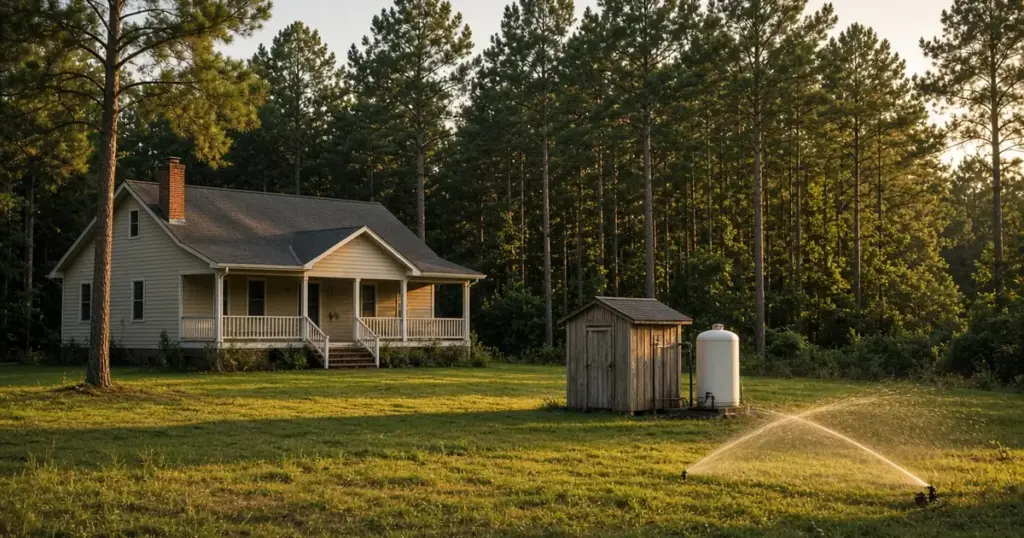
New Waverly sits in southern Walker County along Interstate 45, a short drive south of Huntsville and close to the Sam Houston National Forest. Many properties here are larger than typical city lots, with wooded edges, long driveways, and homes served by private wells or rural water systems. Irrigation on these properties tends to be simpler in some ways and more complicated in others.
This guide covers the sprinkler and irrigation issues that come up most for New Waverly homeowners and what to do about them.
Rural Water: Wells and Water Supply Systems
Many New Waverly-area homes rely on a private well or a rural water provider rather than a city system. That shapes everything about irrigation.
On a private well
- Pump capacity sets the limit. Each zone should be sized so the pump can supply it without struggling. Oversized zones lead to weak heads and a pump that runs hard.
- Pressure tank cycling. Irrigation demand can cause the pump to start and stop frequently, which stresses equipment. Zone sizing and run times both matter.
- Sediment and iron. Well water may carry sand or minerals that clog nozzles and drip emitters and stain surfaces.
- No bill to warn you about leaks. A pump that runs when nothing is on is one of the few signs of a leak.
Our existing guide to well-water irrigation systems in Walker County covers pressure, filtration, and backflow basics in detail.
On a rural water system
Rural water providers set their own rules for backflow testing and, during droughts, outdoor watering. Check with yours for current requirements.
Septic Systems and Backflow
Many rural homes use on-site sewage facilities. TCEQ guidance lists that situation, when the irrigation system is connected to a potable water supply, among the conditions calling for a reduced pressure principle assembly. If your property has a septic system and your irrigation backflow device is a different type, ask a licensed irrigator to review it. Irrigation heads and lines should also be kept away from septic drain fields so watering does not interfere with the system. The backflow prevention and testing guide explains assembly types and testing.
Forest-Edge Yards
Properties near the national forest and other wooded areas tend to have:
- Heavy shade on parts of the lawn, which lowers water needs there.
- Pine needle and leaf drop that clogs heads and fills valve boxes.
- Tree roots that lift and crack pipe. See how pine and hardwood roots damage irrigation lines.
- Wildlife damage, since rodents can chew drip lines and wire, and in some rural areas digging animals disturb heads and shallow pipe.
Separating shady and sunny areas onto different zones, clearing debris regularly, and protecting exposed tubing all help. On wooded lots it is also worth deciding which areas really need irrigation. Natural woodland edges and native plantings often do fine without it once established, and leaving them off the system saves water, pump wear, and repairs. Focus irrigation on the lawn and beds you actually use and see from the house.
Long Runs and Scattered Valves
On larger lots, valves are often spread out rather than grouped near the house, and main lines can run a long way. That means more places for leaks to hide and more places for wiring to be damaged by fencing, trenching, or equipment. When something stops working, finding the right valve can be the first challenge. Our guide on how to find buried or lost sprinkler valves helps.
Common New Waverly Repairs
- Clogged heads and emitters from sand, needles, and well sediment.
- Leaks in long main lines, sometimes found only through pump behavior.
- Weak zones that exceed pump capacity.
- Wiring faults over long distances.
- Root damage near mature trees.
- Freeze damage to above-ground backflow assemblies, well equipment, and exposed pipe.
- Controller resets after rural power outages.
Seasonal Routine for Rural Properties
- Spring: Walk every zone, clean heads and filters, and check the backflow assembly and well equipment for winter damage.
- Summer: Watch pump behavior during irrigation, and water early to reduce evaporation.
- Fall: Clear leaves and needles from heads and valve boxes, and cut back watering as temperatures drop.
- Winter: Insulate above-ground backflow assemblies and well piping before hard freezes, and turn off automatic watering on freezing nights.
Saving Water on a Well
Even though well water does not come with a monthly bill, it does come with pump wear and electricity use, and wells have limits. Efficient irrigation protects your supply:
- Use drip in beds instead of spray.
- Fix leaks promptly.
- Adjust heads so they do not water woods, pasture, or pavement.
- Use a rain sensor or smart controller so the system does not run during or after rain.
When to Call a Pro
Call a professional if your pump runs when the irrigation is off, if zones are weak and you suspect they are oversized for the pump, if the backflow assembly is damaged or does not match your property’s needs, if you cannot find a valve or wire fault, or if a freeze has damaged above-ground parts. Rural systems benefit from someone who understands both irrigation and well equipment interactions. We serve New Waverly and surrounding Walker County communities. See our service areas page and our sprinkler repair page. For other nearby towns, see our guide to Huntsville and the surrounding East Texas towns.
Frequently Asked Questions
How do I know if my sprinkler zones are too big for my well pump?
Signs include weak heads at the end of zones, a pump that runs continuously during irrigation, and pressure that drops noticeably when a zone starts. A flow and pressure check can confirm it.
Does my septic system affect what backflow device I need?
It can. TCEQ guidance calls for a reduced pressure principle assembly when the irrigation system is connected to a potable supply on a property with an on-site sewage facility. Ask a licensed irrigator to check your setup.
Why do my sprinkler heads clog so often?
Sand, pine needles, and sediment from well water are common causes. Filters, regular cleaning, and fixing any line breaks that let soil in all help.
Sprinkler Help in New Waverly
For help with a rural irrigation system in New Waverly, call 346-586-6060 or request service online.