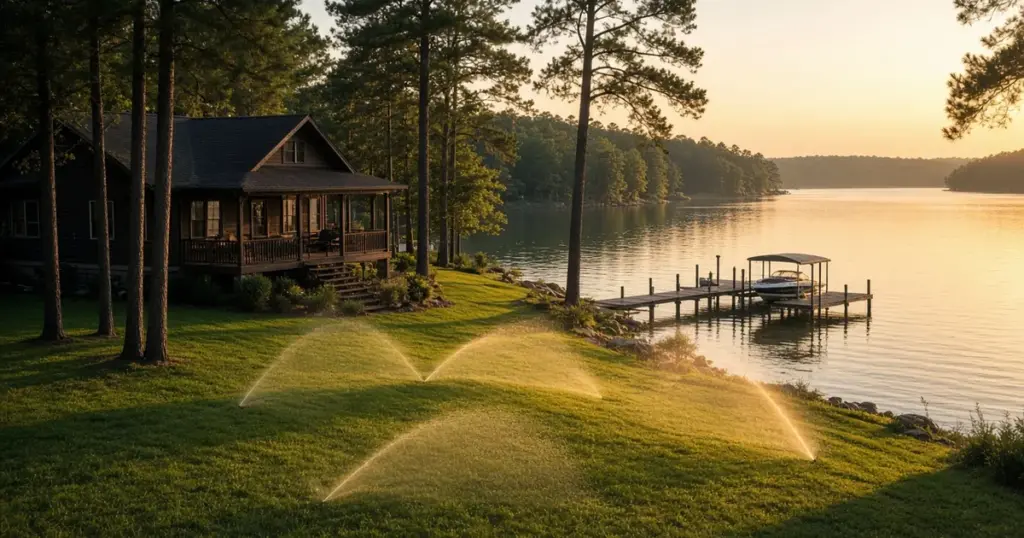
Onalaska sits on the west shore of Lake Livingston in Polk County, east of Huntsville across the lake. Many homes here are lakefront or near the water, with a mix of full-time residents, retirees, and weekend owners. Irrigation systems around the lake face sandy soils, slopes toward the water, wind off the lake, and long stretches when nobody is home to notice a problem.
We provide sprinkler and irrigation repair in Onalaska as part of our service area extending from Huntsville, TX and Walker County. This guide covers local conditions, common repairs, and what lake homeowners can do to keep systems running.
Lakeside Conditions That Affect Irrigation
Sandy soils
Sandy soil drains quickly, which means lawns dry out faster in summer heat. Frequent, moderate watering may be needed, but overwatering simply washes water past the roots. Matching run times to soil is important.
Slopes toward the water
Lots that slope to the shoreline shed water quickly. Cycle-and-soak scheduling and correctly aimed heads reduce runoff and keep water from carrying soil and fertilizer toward the lake.
Wind
Open water lets wind build. Spray heads lose water to drift, and patterns get distorted. Low-angle nozzles, rotary nozzles, and early-morning watering help.
Part-time occupancy
When a home sits empty for weeks, a stuck valve or broken head can run unnoticed. Smart controllers with alerts, flow sensors, and a pre-departure check reduce that risk. Our article on smart controller Wi-Fi problems helps keep remote monitoring reliable.
Water supply
Some properties are on public water systems; others rely on wells. Wells add pump and filtration considerations. Our existing article on well water irrigation systems covers those.
Common Repairs for Onalaska Properties
- Broken heads from mowers, foot traffic, or settling in sandy soil.
- Clogged nozzles from sand or well sediment.
- Leaks on lines running down slopes or near docks and walks.
- Valves that stick open or closed.
- Controller replacement and smart controller setup.
- Backflow assembly repair and testing.
- Freeze damage to exposed components during cold snaps.
For how each type of repair is handled, see our homeowner’s guide to sprinkler repair.
Before You Leave the Lake House
A short checklist before an extended absence:
- Run every zone and look for problems.
- Set the controller for expected weather, or use a smart controller you can adjust remotely.
- Confirm the rain sensor works.
- Consider closing the irrigation supply during long absences in winter.
- Leave contact information with a neighbor if possible.
Backflow Requirements
Systems connected to public water need an approved backflow prevention assembly. TCEQ rules require testing by a licensed tester after installation, repair, replacement, or relocation, and some providers require periodic testing. Many lake properties have septic systems; TCEQ guidance calls for a reduced pressure principle assembly when irrigation is connected to potable water on a property with an on-site sewage facility.
Shoreline and Dock Areas
The strip of lawn nearest the water is often the hardest to irrigate well. It may be steep, exposed to wind, and close to docks, bulkheads, and walkways. Heads in this area should be set back from hardscape and aimed away from it, and the zone should be programmed separately from flatter lawn areas so it can run in shorter cycles. In some cases, replacing turf near the shoreline with drip-watered beds or native plantings is the simplest way to stop runoff.
Protecting the Lake
Irrigation habits matter more near the water. Aim heads away from the shoreline and hardscape, avoid watering before heavy rain, and use cycle-and-soak on slopes. Overwatering can carry fertilizer and soil toward the lake. A well-tuned system protects both the lawn and the water.
Seasonal Notes for Lake Homes
- Spring: Inspect for winter damage and reset schedules.
- Summer: Water early and watch for wind drift and sandy dry spots.
- Fall: Cut back watering as temperatures drop.
- Winter: Protect exposed components and consider shutting the supply during long absences.
Choosing Equipment for Lakeside Yards
Equipment choices can make a lake system more forgiving:
- Rotary nozzles apply water more slowly than standard sprays, which helps on slopes and in sandy soil, and their heavier streams resist wind better.
- Pressure-regulating heads reduce misting when pressure is high.
- Check valves in heads at the bottom of slopes reduce low-head drainage.
- Drip in beds keeps water off walks, siding, and decks.
- Flow sensors and master valves can shut down a zone automatically when a break is detected, which is especially valuable when nobody is home.
These upgrades can usually be added to an existing system one zone at a time.
What a Lake Property Inspection Covers
A thorough inspection typically includes a check of the controller and sensors, a run of every zone while watching heads and coverage, a look at valve boxes for leaks or debris, a check of the backflow assembly for damage, and a review of the schedule against your soil, slope, and how often the home is occupied. You get a list of any problems found and recommended fixes, so you can decide what to address before the season starts.
Nearby Communities
We also serve Trinity to the north, Coldspring and Pointblank to the south, and other communities around the lake. See sprinkler repair in Trinity for the north end of the lake and irrigation for Lake Livingston properties for more lake-specific advice.
When to Call a Pro
Call us if a zone will not shut off, if water is running from the ground, if heads clog repeatedly, if your controller shows faults, or if freeze damage is suspected. For part-time homes, a pre-season or pre-departure inspection is a practical way to avoid surprises. Check our service areas page to confirm coverage and our sprinkler repair page for repair details. The East Texas service area guide describes all the towns we serve.
Frequently Asked Questions
Do you serve homes all around Lake Livingston?
We serve many communities around the lake, including Onalaska, Trinity, Coldspring, and Pointblank. Call with your address to confirm.
Why does my lakefront lawn dry out so fast?
Sandy soil drains quickly, and wind increases evaporation. Adjusted run times, better nozzles, and early watering help.
Can you set up remote monitoring for my lake house?
We can install and configure smart controllers and related sensors so you can monitor and adjust watering remotely.
Schedule Service in Onalaska
Call 346-586-6060 or request service for your Onalaska property.