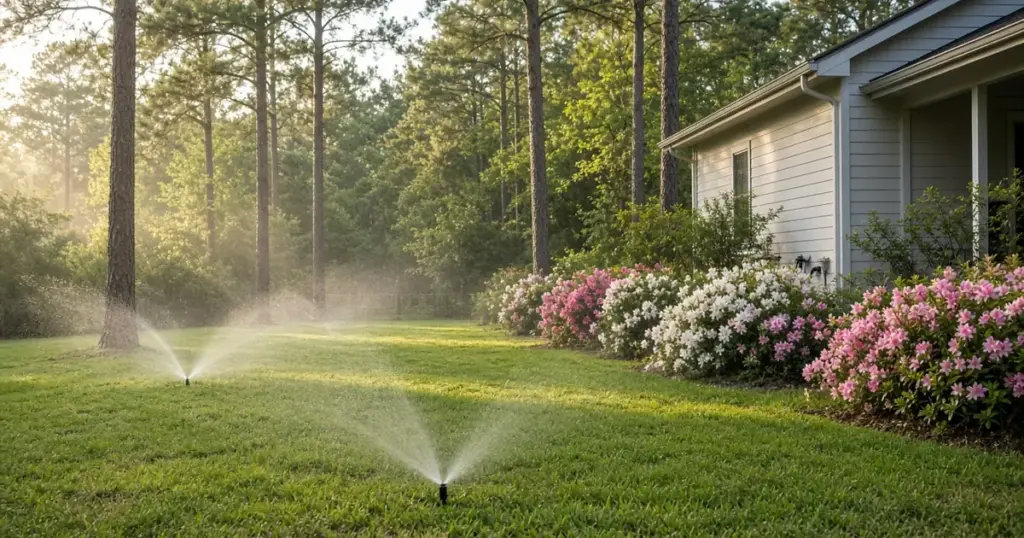
In East Texas, many sprinkler systems never fully shut down for winter, but most sit idle or run very little from late fall until the lawn starts greening up. Spring is when the system goes back to work, and it is the best time to find and fix whatever went wrong over the winter. A freeze may have cracked a backflow assembly. A mower may have broken a head in the fall. A controller may have lost its programs in a winter outage. Catching these before the heat arrives saves water and keeps the lawn from starting the season behind.
This checklist walks through a spring startup in a logical order. It is written for homes in Huntsville, TX and across Walker County, where spring arrives early and summer heat follows quickly.
When to Start Up
Wait until the risk of hard freezes has passed and the lawn is beginning to green up. Warm-season grasses do not need much water until they are actively growing. Starting too early wastes water on a dormant lawn; starting too late can let new growth dry out during a warm, dry spell.
Step 1: Inspect the Backflow Assembly
The backflow assembly is the most freeze-exposed component. Before opening the water:
- Look for cracks, bulges, or popped test cocks.
- Remove insulated covers used over the winter.
- Check that test cocks are closed.
- Make sure shutoff valves are in the correct position.
If you see damage, stop and call for repair. Our guide to checking sprinklers after a hard freeze explains what to look for. A repaired or replaced assembly must be tested by a licensed tester under TCEQ rules.
Step 2: Open the Water Slowly
- Set the controller to off so no zone starts.
- Open the irrigation supply valve slowly, a little at a time.
- Open the backflow assembly shutoffs slowly, following the order recommended for your assembly.
- Watch and listen for leaks at the assembly and exposed pipe.
Opening valves quickly can cause a pressure surge that damages components.
Step 3: Check the Controller
- Date and time, including AM/PM.
- Programs: start times, run times, and watering days.
- Backup battery, if your controller uses one.
- Rain sensor: test it.
- Smart controller: confirm it is online and settings are correct.
Step 4: Run Each Zone
Run each zone manually for a few minutes and walk the yard. Look for:
- Broken or missing heads.
- Heads that do not pop up or retract.
- Clogged nozzles with weak or distorted spray. See clogged sprinkler nozzles and filter screens.
- Heads aimed at pavement or walls.
- Geysers or bubbling that suggest a leak.
- Zones that do not run.
Flag problems as you go.
Step 5: Fix What You Found
- Replace broken heads and nozzles.
- Straighten tilted heads and reset height.
- Clean nozzles and screens.
- Adjust arcs and radius.
- Repair leaks before the season gets busy.
Step 6: Check Valve Boxes
Open valve boxes and look for water, debris, and damaged wiring. Clean out soil and insects. Check splices.
Step 7: Check Drip Zones
- Clean the filter.
- Flush lines by opening end caps.
- Check emitters at each plant.
- Move emitters as plants have grown.
Step 8: Set the Spring Schedule
Spring schedules should be lighter than summer. Use your controller’s seasonal adjust feature to start at a lower percentage and increase as temperatures rise. See how to use seasonal adjust.
Step 9: Measure Coverage
Spring is a good time for a catch-cup test, before peak demand. Use it to set run times by depth.
Step 10: Record What You Did
Note repairs, schedule settings, and anything to watch. Over a few years, these notes show patterns and help with budgeting.
Why Order Matters
The sequence above is deliberate. Inspecting the backflow assembly before opening the water prevents a cracked part from flooding the area. Setting the controller to off before pressurizing keeps a zone from starting while you are still checking for leaks. Running zones before adjusting the schedule ensures run times are based on a working system rather than one with broken heads that waste water. Following the same order each year also makes it easier to compare notes from one spring to the next.
Tools That Help
- A flat-blade screwdriver for adjusting nozzles and radius screws.
- A small trowel for clearing grass around heads.
- Flags or marking paint to note problems as you walk zones.
- Catch cups or straight-sided cans for coverage tests.
- Your controller manual or the manufacturer’s app.
Common Spring Surprises
| Surprise | Likely cause |
|---|---|
| Water spraying from backflow assembly | Freeze damage |
| Controller blank | Power, GFCI, or transformer |
| One zone will not run | Wire, solenoid, or valve |
| Many weak heads | Debris or pressure loss from a leak |
| Wet spot with zones off | Main line leak |
Professional Spring Inspections
A professional inspection covers all of these steps and adds pressure checks, valve diagnostics, and coverage analysis. Our existing article on why regular sprinkler inspections matter describes what a thorough inspection includes. The year-round maintenance calendar covers the rest of the year.
Spring Weather in East Texas
Spring here can swing from cool and rainy to warm and dry within days, and heavy storms are common. Keep the rain sensor active, check the lawn before adding water, and be ready to adjust as the season changes. Early spring often needs little irrigation; late spring can feel like summer.
When to Call a Pro
Call a professional if the backflow assembly is damaged, if zones will not run, if you find leaks, if the controller needs replacement or reprogramming, or if you would rather have a technician handle the startup. We provide spring startups and inspections for homes across Huntsville and Walker County. See our services page and our sprinkler repair page.
Frequently Asked Questions
When should I turn my sprinklers back on in spring?
After the risk of hard freezes has passed and the lawn begins to green up.
Do I need to have my backflow tested every spring?
Testing is required after installation, repair, replacement, or relocation, and your water provider may require periodic testing. Check your provider’s schedule.
Why is my sprinkler system leaking after winter?
Freeze damage to the backflow assembly or exposed pipe is a common cause. Inspect before opening the water fully.
Schedule a Spring Startup
For a professional spring startup, call 346-586-6060 or request service.