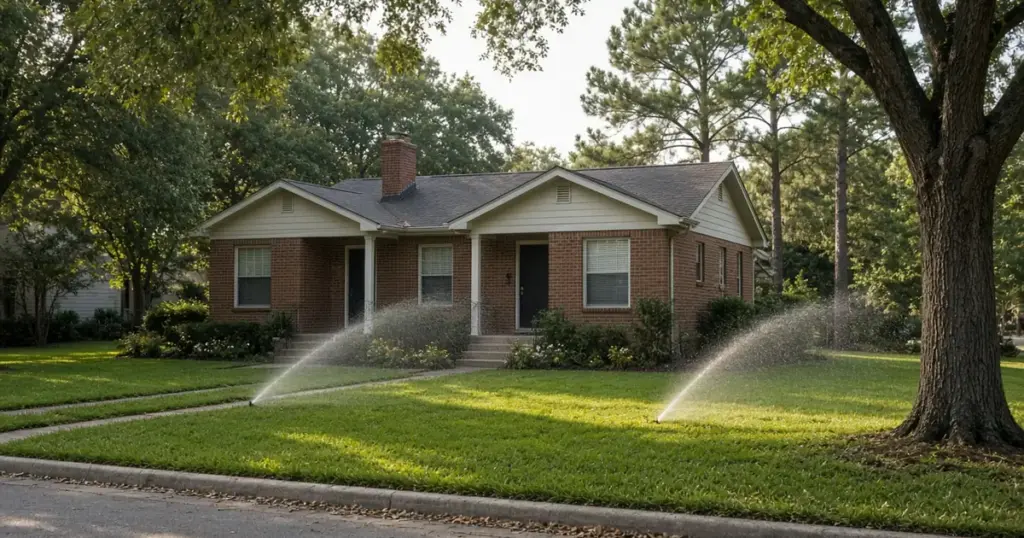
Huntsville, TX is home to Sam Houston State University, and the neighborhoods around campus include a large number of rental houses, duplexes, and small multifamily properties. For owners and property managers, irrigation on these properties comes with its own set of challenges. Tenants change often, some do not know the system exists, and few will notice a broken head or a zone that runs too long. A problem that would get fixed in a week at an owner-occupied home can run all semester at a rental.
This guide covers practical ways to keep irrigation working on rental properties near campus and elsewhere in Huntsville and Walker County, from inspections and controller choices to tenant communication and seasonal timing.
Common Problems on Rental Properties
Unnoticed leaks
Tenants often do not see the yard while sprinklers run, especially if the system waters early in the morning. A broken head or cracked lateral can waste water for weeks. If the owner pays the water bill, that waste lands on the owner.
Controller tampering or confusion
Tenants may turn the controller off, change the schedule, or leave it on manual. Some unplug it to use the outlet.
Vehicle and foot traffic damage
Parking on the lawn, moving furniture, and heavy foot traffic break heads near drives and walks.
Turnover gaps
Between leases, a property may sit empty. If the system keeps running and something breaks, no one is there to see it.
Watering restriction compliance
If the City of Huntsville declares a drought stage, watering days and hours may be restricted. Rental controllers need to be set accordingly. See Huntsville drought watering stages.
Practical Solutions
1. Schedule regular inspections
A professional inspection at least once or twice a year, plus one at each turnover, catches problems early. Our existing article on why regular sprinkler inspections matter explains what a thorough inspection covers.
2. Use a smart controller with remote access
A smart controller lets the owner or manager see and adjust the schedule from a phone, and many send alerts if the controller goes offline. Our guide to smart controller Wi-Fi problems explains how to keep one connected. Consider where the controller connects; if it uses the tenant’s Wi-Fi, it can go offline when tenants change.
3. Add leak protection
A flow sensor and master valve can detect high flow and shut the system down automatically. See flow sensors and master valves.
4. Lock or secure the controller
A locking cabinet for outdoor controllers or a clear label asking tenants not to change settings reduces tampering.
5. Protect heads near parking
Move heads away from drive edges, use sturdier heads, or convert narrow strips along drives to drip or non-irrigated landscaping.
Keeping Irrigation Simple
On rental properties, simpler often works better. Fewer zones, heads set back from drives and walks, drip in beds, and low-maintenance landscaping all reduce the number of things that can break or be misused. When upgrading or repairing, consider whether a small strip of turf along a driveway is worth irrigating at all, or whether mulch and hardy plants would serve better. Every head removed from a high-traffic area is one less repair later.
Tenant Communication
A short note in the lease or move-in packet helps:
- What the system waters and when.
- Who to call if they see water running, a broken head, or a soggy area.
- What not to touch, such as the controller and backflow assembly.
- Parking rules to protect the lawn and heads.
Simple instructions with a phone number get problems reported sooner.
Turnover Checklist
At each turnover:
- Run every zone and look for broken heads, leaks, and dry spots.
- Check the controller settings and date/time.
- Confirm the rain sensor works.
- Inspect the backflow assembly.
- Update smart controller Wi-Fi if needed.
- Note any repairs for the property file.
Seasonal Timing Around the Academic Year
Many leases near campus follow the academic calendar, which means turnovers often happen in late spring or summer, right as irrigation demand peaks. Scheduling an inspection between tenants, before the hottest months, is efficient. A fall check after the semester starts catches damage from move-in traffic.
Backflow Responsibilities
The City of Huntsville’s customer service agreement places responsibility for installing, testing, and maintaining required backflow devices on the customer, along with keeping records. For rental owners, that typically means the owner arranges testing. TCEQ rules require testing by a licensed tester after installation, repair, replacement, or relocation, and results are provided to the water provider.
Who Pays the Water Bill?
Whether the owner or the tenant pays for water changes the incentives. When the owner pays, waste from leaks and overwatering comes straight out of the property’s returns, so leak protection and remote monitoring pay off quickly in peace of mind. When tenants pay, they may complain about high bills caused by a system they do not control. Either way, a well-maintained system with a sensible schedule avoids disputes.
Multiple Properties
Owners and managers with several properties benefit from consistency: similar controllers, a standard inspection schedule, and a single record for each property showing zones, valve locations, and repair history. Our homeowner’s guide to sprinkler repair explains common repairs you will see across properties.
When to Call a Pro
Call a professional for turnover inspections, after tenants report water running, when water bills spike, or when you want remote controllers and leak protection installed across a portfolio. We work with owners and property managers in Huntsville and Walker County. See our services page and our sprinkler repair page. The East Texas service area guide covers the communities we serve.
Frequently Asked Questions
Who is responsible for sprinkler repairs at a rental property?
That depends on the lease. Many owners handle irrigation repairs and backflow testing themselves or through a property manager.
How can I stop tenants from changing the sprinkler schedule?
A locking controller cabinet, a smart controller managed by the owner, and clear instructions in the lease all help.
Should rental sprinklers be inspected at each turnover?
It is a good practice. Turnover is a convenient time to catch damage and reset the controller.
Rental Property Irrigation Service
For inspections, repairs, or upgrades on rental properties, call 346-586-6060 or request service.