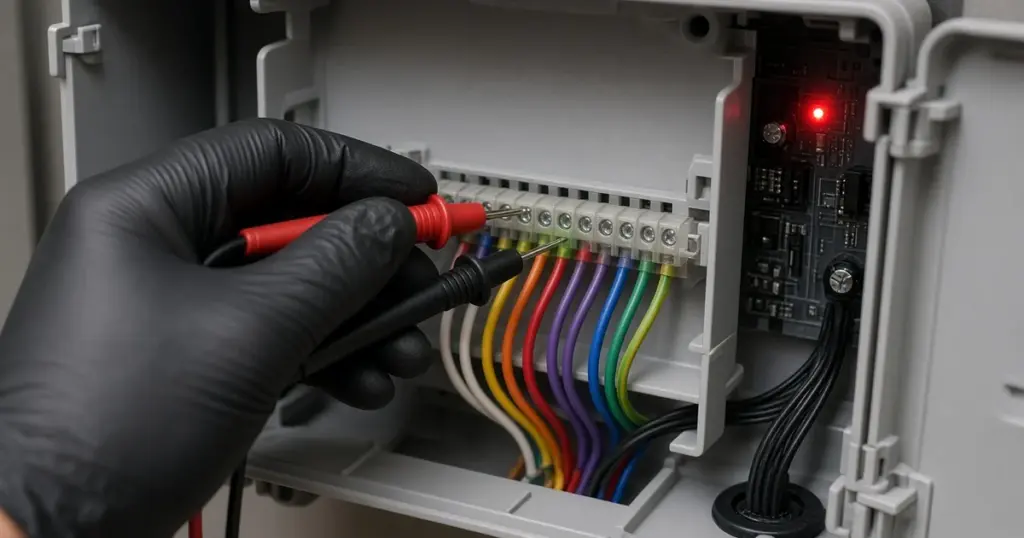
Many modern sprinkler controllers can detect electrical problems on a zone’s circuit. Instead of failing silently, they display a fault message, skip the affected zone, and keep running the others. Older controllers may simply blow a fuse or trip an internal breaker. Either way, the controller is telling you that something between its terminal and the valve’s solenoid is not right.
A zone fault usually points to one of three things: a failed solenoid, damaged wire, or a corroded connection. With a multimeter and a methodical approach, you can often narrow it down. This guide explains how, with notes for systems in Huntsville, TX and Walker County, where wet clay soils and flooded valve boxes are frequent contributors.
What the Controller Is Detecting
Each valve solenoid has a coil with a certain electrical resistance. When the controller sends power to a zone, it expects current within a normal range. If resistance is too low, current spikes, which the controller reads as a short. If the circuit is open, little or no current flows, which some controllers report as an open or no-current fault.
- Short circuit: often a failed solenoid coil, damaged insulation where wires touch, or a splice sitting in water.
- Open circuit: often a cut wire, a failed connection, or a burned-out solenoid.
Tools You Need
- Multimeter that reads resistance (ohms).
- Screwdriver for the controller terminals.
- Notebook to record readings.
Step 1: Read the Controller
Note which zones show faults. One zone suggests a problem on that circuit. Several zones at once suggest a shared problem, such as the common wire or a splice that serves several valves.
Step 2: Test at the Controller
- Turn off or unplug the controller.
- Disconnect the zone wire from its terminal.
- Measure resistance between the zone wire and the common wire.
- Compare with the solenoid manufacturer’s typical range, or with a zone that works correctly.
Very low reading: Likely a short in the solenoid or wiring.
Very high or no reading: Likely an open circuit.
Normal reading: The field wiring and solenoid may be fine; the controller output could be the issue.
Step 3: Test at the Valve
Go to the valve box for the faulty zone. Disconnect the solenoid leads from the field wires and measure the solenoid directly. Our article on testing and replacing a sprinkler solenoid explains this in detail.
- Solenoid reads abnormally: Replace it.
- Solenoid reads normally: The problem is in the field wire or splices between the controller and the valve.
Step 4: Inspect Splices
Look at every splice in the valve box. Corroded, unsealed, or submerged connections are a common source of faults. Replace them with direct-burial waterproof connectors. Our guide to sprinkler wire repair covers splicing.
If the box is often flooded, address the cause too; see flooded sprinkler valve box.
Step 5: Trace the Wire
If the solenoid and splices are fine but the circuit still reads wrong, the wire is damaged somewhere between the controller and the valve. Look for recent digging, edging, or aeration along the wire path. A wire tracer can locate breaks quickly.
Step 6: Check for Pinched Wire at the Controller
Do not overlook the controller end. Wires can be pinched by the cabinet door, chewed by insects or rodents, or corroded where they enter through a damp wall. Inspect the last few feet of the wire bundle as it enters the controller.
Step 7: Rule Out the Controller
If the field wiring and solenoid test normal, move the zone wire to a known good terminal temporarily. If the zone works there, the original controller output may be damaged.
Recording Your Readings
Write down the resistance reading for every zone, even the ones that work. That baseline is valuable: next time a zone faults, you can compare its reading against what it measured when healthy, and against its neighbors. A simple table works:
| Zone | Reading at controller | Reading at solenoid | Notes |
|---|---|---|---|
| 1 | |||
| 2 |
Keep it with your controller programs. Over time, a solenoid whose reading drifts may be nearing failure.
Working Safely
Sprinkler valve circuits run on low voltage, but the controller itself is plugged into or wired to household power. Unplug or switch off the controller before working on terminals, and leave any hardwired high-voltage connections to someone qualified for electrical work. Keep the cabinet dry and closed when you finish.
Shorts Affecting Multiple Zones
When several zones fault at once, look for:
- A damaged common wire or a common splice in water.
- A shared splice in a valve manifold.
- A wire bundle cut in one place, often during digging.
- Water intrusion into the controller cabinet.
Preventing Zone Faults
- Use waterproof connectors on every splice.
- Keep valve boxes draining with gravel and good grading.
- Bury wire properly, at least six inches deep for new installations per TCEQ guidance, and along pipe routes where possible.
- Mark wire paths before digging.
- Replace aging solenoids before they fail if several are original to an older system.
Related Symptoms
Zone faults often show up alongside other complaints. A zone that will not turn on may have no fault message on older controllers. Our existing post on why one sprinkler zone won’t turn on covers non-electrical causes. The valves and wiring guide ties these topics together.
When to Call a Pro
Call a professional if you cannot locate the fault, if multiple zones fault at once, if the controller keeps blowing fuses, if wires run under hardscape, or if you are not comfortable using a multimeter. Technicians use wire tracers and other tools to find faults without unnecessary digging. We troubleshoot controller and wiring faults for homes across Huntsville and Walker County. See our sprinkler repair page and our services page.
Frequently Asked Questions
What does a short circuit message on my sprinkler controller mean?
It usually means the controller detected abnormally high current on a zone, often from a failed solenoid or damaged wire.
Can I keep using my system with one zone faulted?
Most controllers skip the faulted zone and run the others. Repair the fault so that zone does not go without water.
Why do my sprinkler wires keep corroding?
Splices that are not waterproof, or that sit in flooded valve boxes, corrode quickly. Use direct-burial connectors and improve drainage.
Track Down That Fault
If your controller shows a zone fault, call 346-586-6060 or schedule a repair.