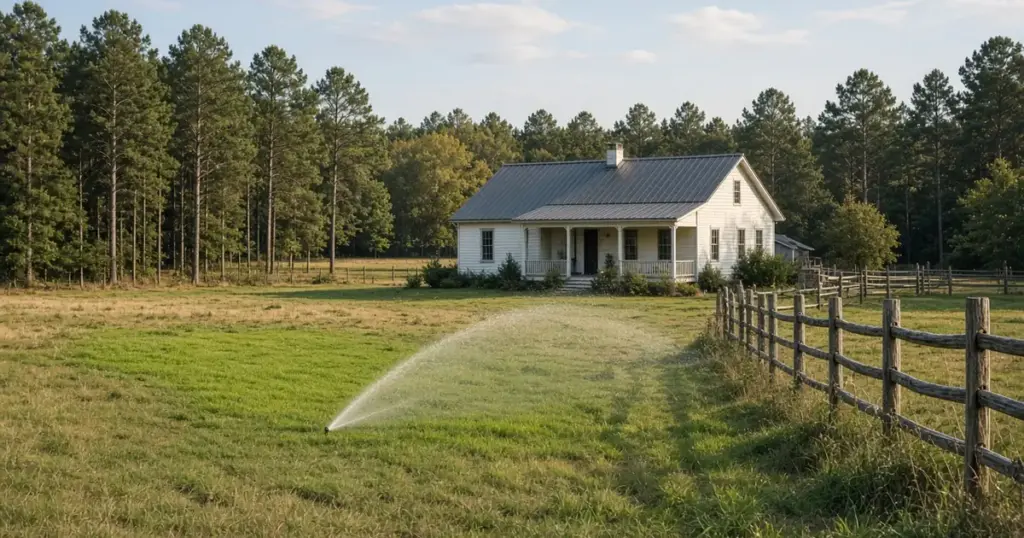
Dodge is a small rural community in Walker County, east of Huntsville, surrounded by pasture, woods, and homes on larger tracts of land. Irrigation here is often a mix of lawn systems near the house, drip for gardens and beds, and occasionally watering for orchards or livestock areas. Many properties rely on private wells, and distances between the water source, controller, and zones can be long.
We provide sprinkler and irrigation repair in Dodge as part of our service area around Huntsville, TX. This guide covers the issues that come up most on rural Walker County systems and what owners can do to keep them running.
Rural System Characteristics
Wells and pumps
A well-supplied system depends on the pump, pressure tank, and pressure switch working together. If a zone demands more water than the well can provide, the pump may cycle on and off rapidly, which shortens its life. Sediment and minerals can clog heads and valves. Our existing article on well water irrigation systems in Walker County explains these issues.
Long runs
Long pipe runs lose pressure, and every fitting along the way is a potential leak. Finding a leak on a long run takes patience, and sometimes equipment.
Spread-out equipment
The controller might be in a barn or shop, with valves scattered across the property. Wire runs are long and easy to damage during fence building, post-hole digging, and other work.
Mixed uses
Rural properties sometimes combine lawn irrigation with garden drip, livestock water lines, or hose bibs on the same supply. Knowing which lines belong to the irrigation system matters for both repair and backflow protection.
Common Repairs
- Pump start relay problems that keep the system from running at all. Our guide to a sprinkler system that won’t turn on at all covers the top-down diagnosis.
- Wire breaks from digging and fence work.
- Leaks on long runs from roots, settling, or equipment.
- Clogged nozzles and valves from well sediment.
- Valves stuck open from debris.
- Freeze damage to exposed piping near wells and equipment.
- Controller replacement in outbuildings exposed to heat and pests.
See our homeowner’s guide to sprinkler repair for how each repair is approached.
A Rural Owner’s Checklist
- Listen to the pump during each zone. Rapid cycling is a warning sign.
- Check the pressure gauge on the tank, if present.
- Clean the irrigation filter regularly.
- Walk each zone for leaks and dry spots.
- Keep a map of valve locations and wire paths.
- Protect exposed pipe before hard freezes.
Backflow Protection
If your irrigation connects to a public water system, an approved backflow prevention assembly is required, and TCEQ rules require testing by a licensed tester after installation, repair, replacement, or relocation. On properties with septic systems where irrigation is connected to potable water, TCEQ guidance calls for a reduced pressure principle assembly. If irrigation draws only from a private well, requirements differ, but protecting the well itself from contamination is still important. Chemical injection, such as fertilizer injectors, raises the hazard level and the protection needed.
Seasonal Notes
- Spring: Inspect pumps, tanks, filters, and every zone.
- Summer: Watch pump performance during peak demand; water early.
- Fall: Reduce watering and check for root and rodent damage.
- Winter: Protect well equipment, exposed pipe, and backflow assemblies from freezing.
Tips for Large Properties
- Group zones by need. Lawns near the house, gardens, and beds should be on separate zones and programs.
- Use drip for gardens and orchards where possible to make the most of well capacity.
- Consider a flow sensor to catch breaks on long runs.
- Stagger zones so the well can recover between them.
- Label valve boxes with zone numbers so anyone working on the system can find the right valve quickly.
- Keep spare parts like common nozzles and a solenoid on hand, since trips to a supply store take longer from rural properties.
Matching Zones to Well Capacity
A well can supply only so much water at a time. When a zone asks for more than the well delivers, pressure drops, heads underperform, and the pump works harder than it should. The fix is usually to match zone size to the well rather than the other way around: fewer heads per zone, lower-flow nozzles, or splitting a large zone into two. A technician can measure what the well and pressure tank deliver during a run and compare it with the flow each zone demands. That comparison often explains weak coverage that no amount of nozzle adjustment would solve.
Controllers in Barns and Shops
Controllers mounted in outbuildings face heat, dust, humidity, insects, and rodents. Keep the cabinet closed, seal wire entry points, and check periodically for nests or chewed wires. If the building has unreliable power or gets very hot in summer, consider moving the controller or choosing a model rated for those conditions. A controller with remote access can also make it easier to manage zones spread across a large property without walking out to the barn.
Neighboring Areas
We also serve Riverside, Huntsville, and other communities around Walker County. See sprinkler repair in Riverside for another rural community nearby.
When to Call a Pro
Call us if the system will not run, if the pump cycles rapidly, if you suspect a leak on a long run, if wires were damaged during property work, or if freeze damage is likely. Large rural systems benefit from a technician with tracing equipment and experience with well-supplied irrigation. Check our service areas page and our sprinkler repair page. The East Texas service area guide describes the full region.
Frequently Asked Questions
Why does my well pump turn on and off while the sprinklers run?
Rapid cycling often means the zone uses more water than the well and tank can supply steadily, or the pressure tank has a problem. Both are worth checking.
Can you find sprinkler wires on a large property?
Yes. Wire tracing equipment helps locate wires and breaks without unnecessary digging.
Do I need a backflow preventer if my irrigation uses a well?
Requirements depend on whether the system connects to a public water supply and whether chemicals are injected. A professional can review your setup.
Schedule Service in Dodge
Call 346-586-6060 or request service for your Dodge-area property.