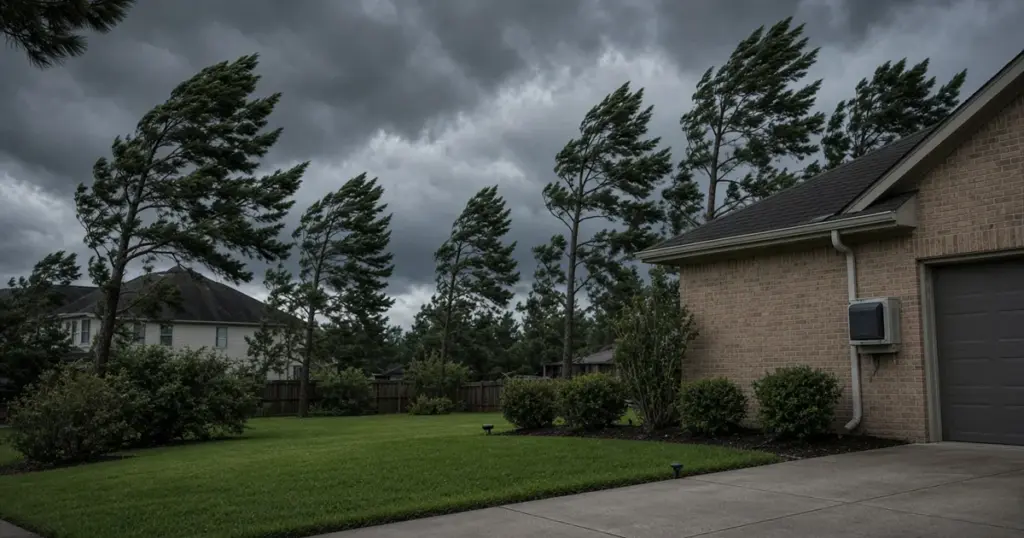
Huntsville, TX sits well inland, but tropical storms and the remnants of hurricanes still bring heavy rain, gusty winds, and power outages to Walker County. The Atlantic hurricane season runs from June 1 to November 30, according to the National Hurricane Center, which overlaps the peak of our irrigation season. A few preparations help your sprinkler system avoid watering a lawn that is already soaked, and get back to normal quickly after the storm passes.
This guide covers what to do before, during, and after a tropical system, from controller settings to post-storm inspections.
Before the Storm
Check the rain sensor
A working rain sensor stops scheduled watering when enough rain has fallen. Test it before the season by pressing the test button, if it has one, or by wetting the sensor and confirming that the controller shows it as active. Our article on rain and freeze sensors explains how they work and how to adjust them.
Set a rain delay
When a storm is forecast, set a rain delay on the controller or pause watering in the app for a smart controller. Do not count on weather-based skipping alone if your controller might lose its internet connection during the storm.
Know your shutoffs
Know where the irrigation supply valve and backflow assembly shutoffs are, in case a pipe is damaged by falling trees or debris.
Record your schedule
Write down or photograph your controller programs. If a power outage resets an older controller, you can restore them quickly.
Secure loose items
Move portable hoses, sprinklers, and timers indoors. Make sure valve box lids are in place.
Trim around heads
Clear branches and shrubs away from heads so storm debris is less likely to damage them.
During the Storm
- Keep the system off. There is no reason to irrigate during heavy rain.
- Avoid working outdoors near electrical equipment or downed lines.
- If a pipe breaks from a falling tree or debris, close the irrigation supply when it is safe to do so.
After the Storm
Wait for the ground to dry
Saturated soil does not need irrigation. Keep the system off until the soil dries, which can take days in clay-heavy yards.
Check the controller
Power outages can reset older controllers to default settings, and smart controllers may need to reconnect to Wi-Fi. Check the date, time, and programs. Our existing article on whether smart sprinkler controllers are worth it covers models that store schedules through outages, and our post on resetting a controller after a power outage explains what to check.
Inspect valve boxes
Heavy rain can flood valve boxes and bury them in mud. If boxes stay full long after the rain, see what a flooded valve box is telling you.
Walk each zone
When the soil has dried, run each zone manually and look for:
- Broken or buried heads.
- Heads knocked out of alignment by debris.
- Leaks from pipe damaged by fallen trees or uprooted roots.
- Clogged nozzles from mud and debris.
Look at the backflow assembly
Check the assembly for damage from debris or falling limbs, and make sure nothing is leaning against it. If it was struck or is leaking, keep the irrigation supply closed until it is repaired and tested.
Check for erosion
Heavy rain can wash soil away from heads, exposing them to damage, or bury them under sediment. Reset heads to proper height.
For flooding specifically, see our guide to sprinkler systems after flooding and heavy rain.
Adjusting the Schedule After Storms
After a soaking rain, lawns often need no irrigation for days or longer. When you restart, use the season’s normal schedule rather than catching up with extra watering. The year-round maintenance calendar covers seasonal schedule changes.
Preparing for Outages
Long power outages after storms are common in East Texas. Controllers with non-volatile memory keep their schedules without power. If your controller has a backup battery, replace it on the manufacturer’s schedule. Check after every extended outage.
Mosquitoes and Standing Water
Heavy rain and saturated lawns are a recipe for standing water, and standing water breeds mosquitoes. Overwatering after a storm makes it worse. Keep irrigation off until the soil dries, empty containers and saucers around beds, and look for low spots near heads where water collects after every cycle. Persistent puddles near a head can also be a sign of a leak or low-head drainage worth fixing.
Commercial and Rental Properties
Property managers often handle many systems at once. Before a storm, set rain delays on every controller and make a list of backflow assembly locations and shutoffs. After the storm, prioritize properties with fallen trees, visible water flow, or exposed equipment. A short checklist for each site keeps inspections consistent and makes it easier to report problems to owners.
Trees and Irrigation Lines
Uprooted or fallen trees can pull up pipe and wire along with their roots. If a tree falls on your property, check irrigation near the root ball before cleanup crews dig or grind stumps. Mark heads and valve boxes in the work area so equipment does not damage them.
When to Call a Pro
Call a professional if a pipe or backflow assembly was damaged, if zones will not run after the storm, if the controller lost its programs and you need help restoring them, or if valve boxes stay flooded. After a widespread storm, many homeowners need help at once, so it helps to call early. We help homeowners across Huntsville and Walker County restore systems after storms. See our emergency service page for urgent damage and our sprinkler repair page for repairs.
Frequently Asked Questions
Should I turn off my sprinkler system before a hurricane?
Setting a rain delay or turning the controller off before a major storm prevents watering during or after heavy rain.
Will a power outage erase my sprinkler schedule?
Some older controllers lose programs during outages. Many newer models store schedules in memory. Check after every extended outage.
How long should I wait to water after a tropical storm?
Wait until the soil dries. In clay soils, that may take several days.
Storm Damage Help
If a storm damaged your sprinkler system, call 346-586-6060 or request service.