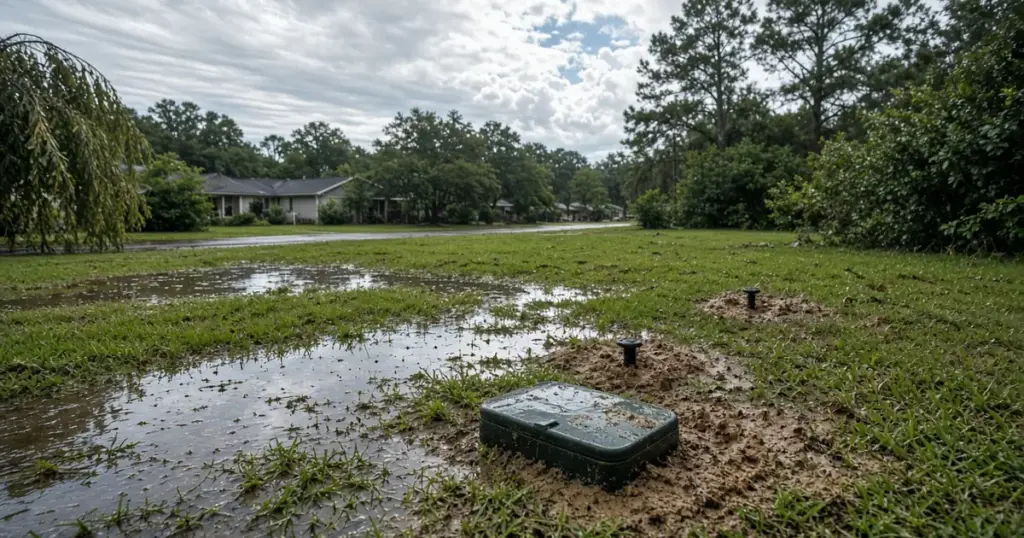
East Texas can go from dry to drenched in a matter of hours. A slow-moving storm, a tropical system, or a week of steady rain can leave yards around Huntsville, TX saturated, low areas under standing water, and valve boxes full to the brim. Sprinkler systems are built to live underground, but floodwater and prolonged saturation still cause problems: corroded wiring, mud in heads and valves, displaced heads, and controllers that took on water or lost power.
This guide explains what to check after flooding or heavy rain, in a sensible order, and how to get the system back to normal without causing new damage. It applies to homes and businesses throughout Walker County.
First: Safety
- Stay away from standing water near electrical equipment, including outdoor controllers and pump equipment.
- Do not touch a controller that is wet or was submerged until power is off.
- Watch for snakes, fire ants, and debris in flooded areas and valve boxes.
Step 1: Keep the System Off
Saturated soil does not need irrigation. Set the controller to off or set a long rain delay. In clay-heavy yards, it can take days or longer for the soil to dry enough to need water. The year-round maintenance calendar has more on seasonal schedule adjustments.
Step 2: Check the Controller
- Indoor controllers usually come through fine unless the building flooded.
- Outdoor controllers may have taken in water. Look for moisture, corrosion, or a blank display once power is safely restored.
- Power outages may have reset older controllers. Check the date, time, and programs.
A controller that was submerged often needs replacement. Before restoring power to an outdoor unit that got wet, let it dry thoroughly and inspect it for corrosion on the terminal strip and circuit board. If you have any doubt, have it checked; a controller is far less expensive than a damaged electrical circuit. Smart controllers may also need to reconnect to Wi-Fi once the router is back online.
Step 3: Inspect Valve Boxes
After heavy rain, many valve boxes fill with water. That alone is not unusual. What matters is what the water leaves behind:
- Mud and silt around valves.
- Corroded wire splices.
- Buried or shifted lids.
Bail out boxes once the ground has drained. If a box stays full long after the rain, see what a flooded valve box is telling you.
Step 4: Check Wiring
Wire splices that are not waterproof can corrode quickly when submerged. After the soil dries, run each zone manually. A zone that will not run, or a controller that reports a fault, may have a corroded splice. Our guide to controller zone faults and shorts walks through tracing the problem.
Step 5: Check Heads
Floodwater and erosion can:
- Bury heads under silt.
- Expose heads by washing soil away.
- Fill heads with mud, clogging screens and nozzles.
- Tilt or dislodge heads.
Run each zone and look at every head. Clean clogged nozzles and screens; our article on clogged sprinkler nozzles and filter screens explains how. Reset heads to proper height.
Step 6: Inspect the Backflow Assembly
If floodwater covered the backflow assembly, have it inspected. Debris can affect the internal parts, and some assemblies are not meant to be submerged. Check for damage and leaks. If the assembly needs repair, TCEQ rules require it to be tested by a licensed tester afterward.
Step 7: Look for Leaks
Saturated soil can shift, and heavy flows can undermine pipes. After the soil dries, run a meter test with all water use off. If the meter moves, close the irrigation supply and see if it stops. Look for persistent soggy areas that do not dry with the rest of the yard.
When to Start Watering Again
Wait until the soil dries to a normal level. Check with a soil probe or screwdriver a few inches down. When you restart, use the normal schedule for the season rather than extra watering. Lawns that sat under water may be stressed; avoid heavy fertilizing until they recover.
Erosion and Grading Problems
Heavy flows can carve channels through beds, wash mulch into the lawn, and pile silt against heads. Once the yard dries, look for areas where the grade changed. Heads that end up too high get clipped by mowers; heads that end up buried get blocked by turf. Reset them to the proper height, and if the same area erodes in every storm, consider whether drainage improvements are needed before the irrigation can work well there.
Mold, Mildew, and Moisture Around the House
Prolonged wet conditions encourage mold and mildew, especially where irrigation spray or drainage keeps walls damp. Once things dry out, make sure heads are not soaking siding or foundations. Our existing article on stopping sprinkler leaks and mold explains how to keep moisture away from the home.
Preparing for the Next Big Rain
- Use waterproof splices in all valve boxes.
- Add gravel under valves to help boxes drain.
- Mount controllers above flood-prone areas.
- Keep a working rain sensor so the system skips watering during wet spells.
- Record your controller programs.
If you know a tropical system is coming, see our guide to hurricane season sprinkler preparation.
When to Call a Pro
Call a professional if the controller was submerged, if several zones will not run, if the backflow assembly was underwater or damaged, if you find a leak, or if heads and valves are packed with mud. After widespread flooding, many systems need help at once, so calling early is wise. We help homeowners across Huntsville and Walker County restore systems after storms. See our sprinkler repair page and our emergency service page.
Frequently Asked Questions
Can floodwater damage my sprinkler system?
Yes. It can corrode wiring, clog heads and valves with silt, damage controllers, and affect backflow assemblies.
How long should I wait to run my sprinklers after heavy rain?
Wait until the soil dries to a normal level. In clay soils, that may take several days.
Should I replace a controller that was underwater?
A submerged controller often needs replacement. Have it checked before restoring power.
Storm and Flood Repairs
If flooding affected your system, call 346-586-6060 or request service.