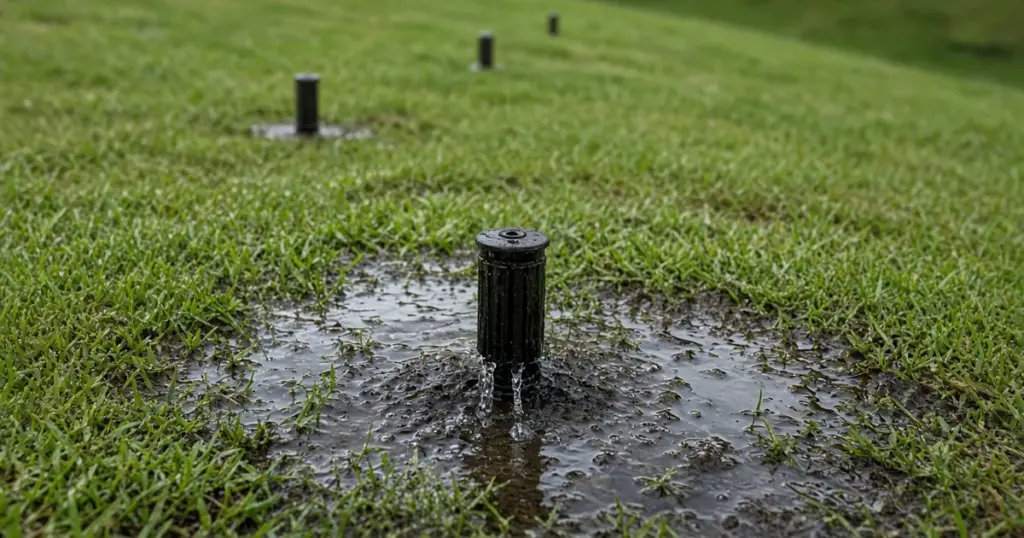
The zone shuts off, every head drops, and then one head at the bottom of the slope keeps trickling water for minutes, sometimes longer. The area around it stays muddy, the grass is greener there than anywhere else, and you are starting to wonder whether something is broken.
Often, nothing is broken at all. What you are seeing is probably low-head drainage, a common and fixable issue on sloped yards. But the same symptom can also come from a valve that is not closing, which is a different problem with a different fix. This article explains how to tell them apart and what to do about each.
What Low-Head Drainage Is
When a zone shuts off, the pipe feeding that zone is still full of water. The valve has closed, so no new water is coming in, but gravity is still at work. On a slope, the water in the pipe drains downhill and escapes through the lowest head or heads on the zone. Once the pipe drains down to the level of that head, the trickle stops.
The amount of water involved depends on the length and diameter of the pipe and the elevation difference across the zone. It is a finite amount every cycle, but it adds up, and it soaks the same spot every time.
Low-head drainage is common in yards with grade changes, including many properties around Huntsville, TX where lots slope toward the street, a creek, or a lake.
Low-Head Drainage vs. a Leaking Valve
The key difference is whether the water eventually stops.
| Symptom | Low-head drainage | Valve not closing fully |
|---|---|---|
| Water flows from low head after shutoff | Yes, then stops | Yes, and keeps going |
| Duration | Minutes, until pipe drains | Continuous, or until next cycle |
| Which heads | Lowest head(s) only | Often lowest heads, but can be several |
| Water meter | Stops moving once drainage ends | Keeps moving with everything off |
| Valve box | Usually dry | May have water or a hissing sound |
The water meter test is the most reliable way to tell. With the irrigation off and no water used in the house, watch the meter’s leak indicator for several minutes. If it is moving, water is still flowing somewhere. If the irrigation side is the culprit, closing the irrigation shutoff will stop the indicator.
If the water does not stop, read our earlier post on why a sprinkler zone will not shut off, because the valve is probably the issue: a torn diaphragm, debris on the seat, or a partly open bleed screw.
Fixes for Low-Head Drainage
Install check valves
The most common fix is a check valve that holds water in the pipe until pressure reaches a certain level. Many spray heads and rotors are available with built-in check valves, and some can be retrofitted with an insert. For heads without that option, inline check valves can be installed under the head.
Tips:
- Start with the lowest head that drains, then check whether the next-lowest begins to drain.
- Use check valves rated for the elevation difference on your zone.
- Keep the brand and model consistent so heads pop up at the same time.
Adjust layout on severe slopes
On steep grades, a zone that runs both uphill and downhill can drain significantly. Sometimes the better long-term fix is splitting the zone or rerouting pipe so less water sits above the lowest head. That is a design change rather than a quick fix, and the irrigation installation and upgrades guide covers when it makes sense.
Look at head height
A head set too low on a slope collects runoff and debris and can make the drainage problem look worse. If yours is sunk below grade, raising it helps. See why sprinkler head height matters.
Why It Is Worth Fixing
Even though low-head drainage is not a broken pipe, it causes real problems:
- Soggy turf and mud around the low head, which can invite fungus in humid weather.
- Erosion if the drainage runs across soil or mulch.
- Wasted water every cycle.
- Air in the line at the next start-up, since the pipe has partly drained. That can cause sputtering heads and a burst of pressure, and in some cases contributes to water hammer.
- Debris drawn into the pipe as it drains and refills.
If a head that is draining also struggles to pop up, debris may be part of the problem. Our article on sprinkler heads that won’t pop up covers how to clean them.
A Simple Diagnostic Routine
- Run the zone for a few minutes, then turn it off at the controller.
- Watch the lowest heads. Time how long water flows.
- Check the water meter after the flow stops.
- If the meter is still, it is drainage. If it is moving, check the valve.
- Note which heads drain so you know where to add check valves.
The sprinkler leak repair guide explains what to do if the meter test suggests a leak elsewhere on the system.
When to Call a Pro
Call a professional if water keeps flowing indefinitely after shutoff, if the meter shows water moving with everything off, if several zones drain heavily, or if you are not sure which check valve fits your heads. A technician can confirm whether the valve is sealing, install the right check valves, and suggest layout changes for steep yards. We handle these repairs in Huntsville and throughout Walker County. Visit our sprinkler repair page or learn about redesign options on our irrigation installation page.
Frequently Asked Questions
Is low-head drainage a sign of a broken sprinkler system?
Not necessarily. It is a normal result of gravity on sloped zones without check valves. It is still worth fixing to prevent soggy spots and wasted water.
Will check valves reduce my water pressure?
A check valve needs some pressure to open, but on a properly designed zone the effect is small. Choose check valves rated for your zone’s elevation change.
Why does the leaking head have greener grass around it?
It gets extra water every time the zone drains, so that spot stays wetter than the rest of the lawn.
Fix That Leaking Head
If one head keeps soaking your yard after every cycle, call 346-586-6060 or request a repair. We will find out whether it is drainage or a valve and fix it the right way.