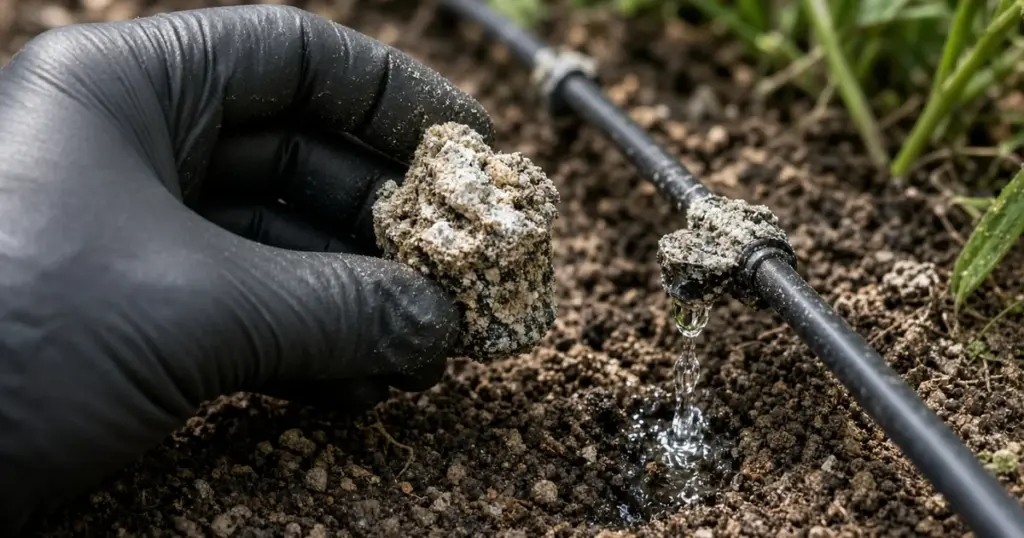
Drip irrigation is quiet and mostly invisible, which is great until something goes wrong. A clogged emitter does not geyser like a broken spray head. A pinhole in a supply line under mulch does not make a puddle you can see from the patio. Plants simply start to wilt or look stressed, or one corner of the bed stays soggy, and it is not obvious why.
This guide covers the most common drip problems, how to diagnose them, and a simple maintenance routine that keeps drip zones reliable in Huntsville, TX and other East Texas landscapes.
How to Inspect a Drip Zone
Because drip is low and slow, you need to look closely:
- Run the zone manually from the controller.
- Wait a few minutes for the lines to fill and pressurize.
- Walk the bed and pull back mulch at a few points.
- Look for emitters that are dripping, wet spots around plants, and dry plants.
- Listen for hissing that could indicate a leak.
- Check the ends of lines to see if water is reaching them.
It also helps to keep a simple sketch of each drip zone showing where supply lines run, where the end caps are, and roughly how many emitters serve each plant group. When something goes wrong months later, that sketch saves a lot of digging through mulch.
Problem 1: Clogged Emitters
Symptoms: Individual plants wilting while neighbors look fine; no wet spot around an emitter after the zone runs.
Causes: Sand, sediment, mineral deposits, algae, and insects can block the small passages inside emitters. On well water, iron and sediment make clogging more likely.
Fixes:
- Check and clean the filter at the head of the zone.
- Flush the lines by opening end caps while the zone runs.
- Replace emitters that stay clogged after flushing.
- Consider a finer filter if clogging keeps happening.
Problem 2: Dry Plants at the End of a Line
Symptoms: Plants near the valve look healthy, plants at the far end of the bed look stressed.
Causes: Lines that are too long for the flow, too many emitters on one zone, a partly clogged filter, low supply pressure, or a leak upstream.
Fixes:
- Check the filter and pressure regulator.
- Look for leaks along the line.
- Split very long runs or add a second supply connection.
- Make sure the total emitter flow does not exceed what the zone can supply.
Problem 3: Blown Fittings and Popped Lines
Symptoms: A geyser or flood in the bed, a fitting or end cap blown off, tubing separated from a connector.
Causes: Missing or failed pressure regulator, or a regulator rated for a lower flow than the zone needs. Household pressure is typically too high for drip components.
Fixes:
- Confirm a pressure regulator is installed and working.
- Replace damaged fittings with the correct size for the tubing.
- Secure tubing with stakes so it does not shift.
Problem 4: Leaks and Punctures
Symptoms: Soggy spots, water pooling under mulch, a zone that runs low on pressure.
Causes: Rakes, shovels, pets, and edging tools puncture tubing. Rodents chew lines. Ultraviolet exposure degrades tubing left uncovered.
Fixes:
- Use a coupling or goof plug designed for the tubing to repair punctures.
- Keep tubing covered with mulch.
- Mark lines before digging in beds.
Problem 5: Too Much Water
Symptoms: Constantly wet soil, yellowing leaves, root rot, algae on the surface.
Causes: Run times copied from a lawn zone, too many emitters for small plants, or a valve that does not fully close.
Fixes:
- Shorten run times and water less often, then check soil moisture.
- Remove or reduce emitter flow for small plants.
- Check whether the valve is leaking through. Our earlier post on why a zone will not shut off explains valve problems.
Problem 6: Zone Will Not Turn On
If no water reaches the drip zone at all, the problem is upstream: the controller, the valve, the solenoid, or the wiring. Low-flow drip zones sometimes need a valve rated for low flow to open and close reliably. See why one sprinkler zone will not turn on for the diagnostic steps.
A Simple Drip Maintenance Routine
- Monthly in the growing season: Run the zone and walk the beds.
- Every few months: Clean the filter screen.
- Twice a year: Flush lines by opening end caps while the zone runs.
- As plants grow: Move emitters outward toward the drip line and add emitters for larger plants.
- Before freezes: Protect above-ground components such as filters and regulators where exposed.
- After landscaping work: Check for cut or moved lines.
Drip on Well Water
Well water can carry sand, iron, and minerals that clog emitters faster. Good filtration at the head of the zone, regular flushing, and periodic emitter checks are especially important. Our existing guide to well-water irrigation systems in Walker County covers filtration and pressure.
Planning Better Drip Zones
Many drip problems start with design: zones that are too large, missing filters, or emitters that do not match plant needs. If you are adding or redesigning a zone, our guide to drip irrigation for flower beds and shrubs covers planning. The irrigation installation and upgrades guide explains how drip fits into the whole system.
When to Call a Pro
Call a professional if drip zones keep clogging or blowing apart, if the zone will not turn on, if plants at the end of lines stay dry despite flushing, or if you suspect a leak you cannot locate. A technician can check pressure, filtration, and valve operation and redesign zones that are overloaded. See our sprinkler repair page for repairs and our irrigation installation page for drip redesigns and new zones.
Frequently Asked Questions
How do I know if a drip emitter is clogged?
Run the zone and check for a wet spot around the emitter after several minutes. No moisture usually means a clog or a break upstream.
Can I use a lawn sprinkler valve for drip?
You can use a standard valve in many cases, but very low-flow zones may need a valve designed for low flow so it opens and closes reliably.
Why do my drip fittings keep popping off?
Pressure is usually too high. Make sure a pressure regulator is installed and working, and that fittings match the tubing size.
Get Your Drip Zone Working
If your drip system has more problems than plants, call 346-586-6060 or request service. We maintain and repair drip irrigation across Huntsville and Walker County.