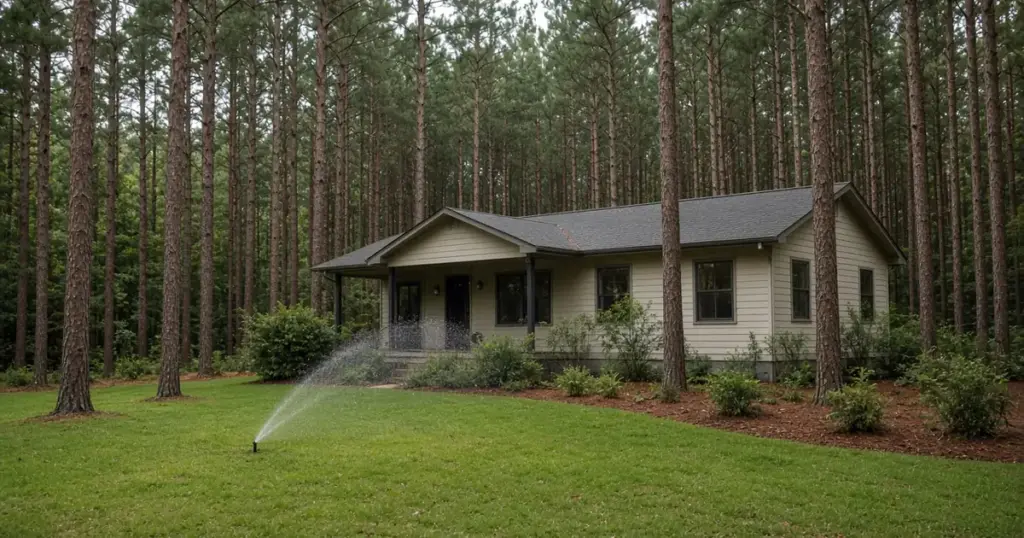
Coldspring is the county seat of San Jacinto County, southeast of Huntsville and close to the southern reaches of Lake Livingston and the Sam Houston National Forest area. Properties here often sit on wooded lots with tall pines, partial shade, and uneven ground. Some homes are in town, others are rural or near the lake, and water sources vary from public systems to private wells.
We provide sprinkler and irrigation repair in Coldspring as part of our service area around Huntsville, TX and Walker County. This guide covers the local conditions that affect irrigation, common repairs, and how to keep a system healthy under the trees.
Wooded Lots and Irrigation
Roots
Pine and hardwood roots spread widely and can crack or lift irrigation pipe and heads. Root damage often shows up as a slow leak, a sunken area, or a head that tilts over time. Our existing article on tree roots damaging irrigation lines explains how to address it.
Shade
Lawns under trees use less water than lawns in full sun, and they dry more slowly after rain or irrigation. Watering shady areas on the same schedule as sunny ones leads to soggy turf and disease. Separate zones and shorter run times help.
Needles and debris
Falling pine needles and leaves block spray, fill valve boxes, and clog nozzles. Our guide to clogged sprinkler nozzles covers cleaning and prevention.
Uneven ground
Wooded lots often have slopes, low spots, and roots near the surface. Heads need regular height and alignment checks.
Common Repairs for Coldspring Properties
- Leaks from root damage.
- Heads blocked or tilted by roots or growing shrubs.
- Clogged nozzles from debris or well sediment.
- Valve problems in boxes filled with needles and soil.
- Wire damage from digging, roots, or animals.
- Controller replacement and programming.
- Backflow assembly repair and testing.
For how each repair is handled, read our homeowner’s guide to sprinkler repair.
Self-Check for Wooded Properties
- Run each zone and look for blocked spray, weak heads, and wet spots.
- Clear needles and debris from around heads and inside valve boxes.
- Check head height and straighten tilted heads.
- Look for raised or sunken areas near trees that may indicate root damage to pipe.
- Check the controller schedule against the season.
Protecting Valve Boxes on Wooded Lots
Valve boxes under trees fill with needles, leaves, and soil faster than boxes in open lawn. Debris can bury solenoids, hide leaks, and let insects and animals move in. A secure lid, a layer of gravel under the valves, and a quick cleanout each spring and fall keep boxes serviceable and make future repairs faster.
Water Sources
Rural and lake-area homes may draw irrigation water from a well. Well systems need attention to filtration, pump cycling, and pressure. Systems connected to a public water supply must have an approved backflow prevention assembly, tested by a licensed tester after installation, repair, replacement, or relocation under TCEQ rules. Homes with septic systems and irrigation connected to potable water need a reduced pressure principle assembly under TCEQ guidance.
Lake-Area Properties
Homes near Lake Livingston face sandy soils, wind, slopes toward the water, and often part-time occupancy. Our page on sprinkler repair in Onalaska covers lakeside issues in more detail, and many of the same points apply to lake homes around Coldspring. For nearby Pointblank, see sprinkler repair in Pointblank.
Seasonal Notes
Spring
Clear debris from heads and valve boxes, check for winter damage, and reset schedules as trees leaf out.
Summer
Water early in the morning. Watch for dry spots in sunny areas and soggy spots in shade.
Fall
Reduce watering as temperatures cool. Leaf and needle drop increases, so check heads and boxes more often.
Winter
Protect backflow assemblies and exposed pipe from hard freezes. Water dormant lawns only during long dry spells.
What to Expect From a Visit
A repair visit starts with a quick conversation about what you have noticed. The technician then checks the controller and its settings, runs each zone, and walks the property. On wooded lots, extra time often goes into clearing debris from valve boxes and checking heads hidden by groundcover or roots. If a leak is suspected, the technician narrows down its location before digging, and if wires or valves are missing from view, tracing equipment helps find them. You get an explanation of what was found and, for larger repairs, a quote before work begins. Once repairs are made, affected zones are run again and the schedule is adjusted if needed.
Planning Ahead for Tree Growth
Trees keep growing, and an irrigation layout that worked well ten years ago may not fit today. As canopies spread, sunny zones become shady and need less water. Roots expand toward wet areas, including irrigation lines. Plan to review zone run times every year or two, and consider moving heads or pipe away from trunks when repairs give you the chance.
Tips for Healthier Lawns Under Trees
- Raise mowing height in shady areas.
- Reduce run times for shaded zones.
- Consider shade-tolerant turf or groundcovers where grass struggles.
- Use drip in beds around trees to water shrubs without soaking trunks.
- Avoid trenching through major root zones when adding irrigation.
When to Call a Pro
Call us if you suspect root damage to pipes, if a zone will not turn on or shut off, if heads clog frequently, if your backflow assembly leaks, or if freeze damage is likely. Wooded properties often benefit from a full inspection to map valves and identify root conflicts. Check our service areas page to confirm coverage and our sprinkler repair page for repair details. The East Texas service area guide describes the full region.
Frequently Asked Questions
Can tree roots break sprinkler pipes?
Yes. Roots can crack, crush, or lift pipe over time. Repairs may involve rerouting pipe around the root zone.
Why is my lawn under the pines always wet?
Shaded areas dry slowly and need less water. Shorten run times or put shaded areas on their own zone.
Do you serve rural properties around Coldspring?
Yes. We serve properties throughout the Coldspring area. Call with your address to confirm.
Schedule Service in Coldspring
Call 346-586-6060 or request service for your Coldspring-area property.