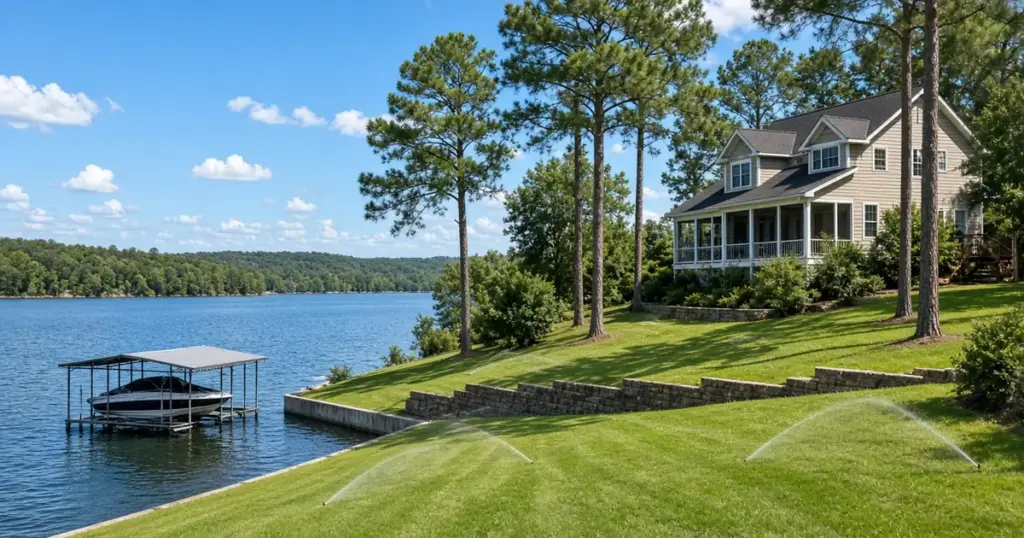
Lake Livingston is a large reservoir on the Trinity River, operated by the Trinity River Authority, with shoreline communities spread across several counties east of Huntsville, TX. Homes around the lake range from full-time residences to weekend cabins and retirement properties. Their landscapes share a common set of challenges: sandy soils that drain quickly, lots that slope toward the water, wind off the open lake, a mix of well and public water supplies, and owners who are not always there to keep an eye on things.
This guide brings together the irrigation advice that matters most for Lake Livingston properties, whether you are in Onalaska, Trinity, Coldspring, Pointblank, or anywhere along the shoreline.
Lakeside Soils and Water Movement
Many lake lots have sandy soil near the surface. Sand absorbs water quickly but holds less of it, so lawns dry faster in summer heat. In some areas, denser soil lies below, which causes water to move sideways once it reaches that layer. The combination means:
- Shorter, more frequent cycles may work better than long, infrequent ones in very sandy areas.
- Cycle-and-soak helps where denser soil is close to the surface.
- Soil checks with a probe tell you more than a fixed schedule.
- Organic matter worked into sandy beds over time helps them hold moisture longer between waterings.
Slopes to the Shoreline
Lots that slope down to the water shed irrigation and rain. Water applied at the top runs toward the bottom, carrying soil and fertilizer with it.
- Zone the top and bottom of slopes separately where possible.
- Use lower-rate nozzles such as rotary nozzles.
- Point heads across or up the slope.
- Install check valves in low heads to stop drainage after shutoff.
- Consider native plantings or drip-watered beds near the shoreline instead of turf.
Wind
Wind across open water distorts spray patterns and carries fine droplets away. Water early in the morning, when wind is usually calmer, use nozzles that produce larger droplets, and reduce excessive pressure that creates mist.
Water Supply and Backflow
Some lake homes use public water systems; others draw from private wells. Each has implications:
- Public water requires an approved backflow prevention assembly on the irrigation system, tested by a licensed tester after installation, repair, replacement, or relocation under TCEQ rules.
- Septic systems are common around the lake. TCEQ guidance calls for a reduced pressure principle assembly where a property has an on-site sewage facility and irrigation is connected to potable water.
- Wells need filtration and attention to pump capacity. Our existing article on well water irrigation systems covers the basics.
Part-Time Occupancy
A broken head or stuck valve at a weekend home can run for days unnoticed. Practical safeguards:
- Smart controller with remote access and alerts.
- Flow sensor and master valve to detect and stop leaks.
- Pre-departure check of every zone.
- Winter shutdown of the irrigation supply during long absences.
- A neighbor or property manager who can check on the yard.
Protecting the Lake
What happens in lakeside yards affects the water. Minimize runoff, keep fertilizer off hardscape and out of the water, avoid watering before heavy rain, and maintain a buffer of unirrigated or lightly irrigated vegetation along the shore where practical.
Trees and Shade Along the Shore
Many lake lots keep mature pines and hardwoods for shade and privacy. Shaded turf uses less water than open areas, so shaded portions of the yard should be on separate zones with shorter run times. Roots compete for water and can damage pipe near trunks. Mulched beds around trees reduce both problems and protect trunks from mowers.
Equipment That Holds Up
- Sturdy valve box lids to keep out sand and animals.
- Insulated covers for backflow assemblies in winter.
- Filters on well-supplied systems.
- Controllers in protected locations away from heat and flooding.
Seasonal Calendar for Lake Homes
- Spring: Inspect after winter, reset schedules, and check for storm damage.
- Summer: Water early, watch for dry sandy areas, and monitor remotely.
- Fall: Cut back watering and clear debris from heads and boxes.
- Winter: Protect exposed components and consider shutting down if the home is unoccupied.
Communities Around the Lake
We serve communities around Lake Livingston and the wider region. See our pages on sprinkler repair in Onalaska, Trinity, Coldspring, and Pointblank. The East Texas service area guide covers Huntsville, Walker County, and the other towns we serve.
Questions to Ask Before an Upgrade
If you are considering improvements to a lake home’s system, a few questions help focus the work:
- Which areas of the yard do you use and see most? Those deserve the best coverage.
- How often is the home occupied, and would remote monitoring change how you manage it?
- Does the system run on well water, public water, or both, and what backflow assembly is installed?
- Where does runoff go during heavy irrigation or rain?
- Are any beds or strips better served by drip or by native plantings than by spray?
The answers point toward the upgrades that will make the biggest difference, rather than replacing everything at once.
When to Call a Pro
Call a professional if your lake system runs unevenly, sheds water down slopes, clogs from sand or well sediment, or needs remote monitoring and leak protection. A licensed irrigator can redesign zones for slopes and soil, upgrade equipment, and verify backflow protection. See our service areas page and our irrigation installation page.
Frequently Asked Questions
What is the best way to water a sloped lakefront lawn?
Use lower-rate nozzles, cycle-and-soak, and separate zones for the top and bottom of the slope where possible.
Do lake homes on septic need a special backflow preventer?
TCEQ guidance calls for a reduced pressure principle assembly when irrigation is connected to potable water on a property with an on-site sewage facility.
Can I monitor my lake house sprinklers remotely?
Yes. Smart controllers, flow sensors, and master valves let you check and control the system from a phone and catch leaks automatically.
Lake Property Irrigation Service
For help with irrigation at your Lake Livingston property, call 346-586-6060 or request service.