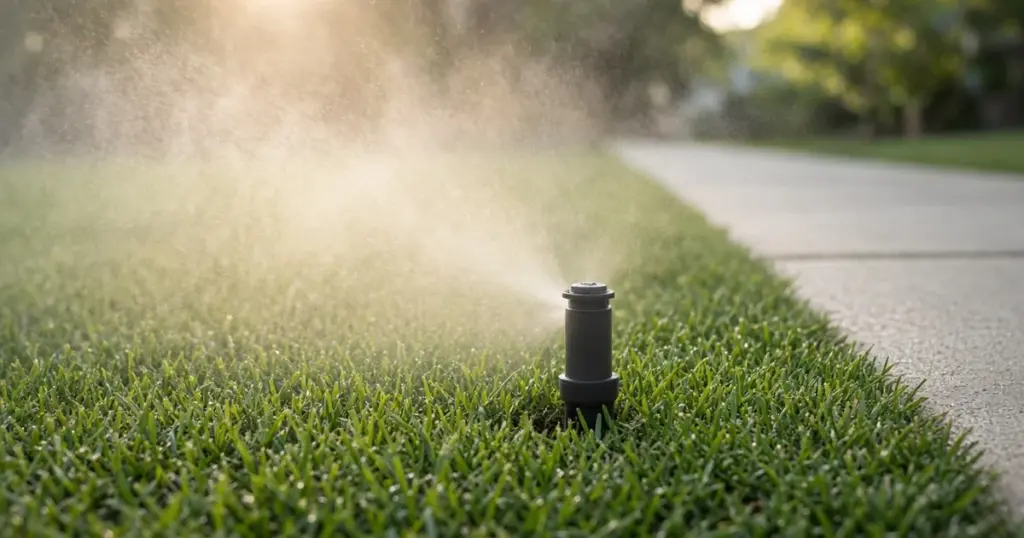
A sprinkler that sprays a fine fog instead of distinct droplets is telling you something about water pressure. When pressure at the nozzle is higher than the head was designed for, the stream breaks apart into mist. Mist looks soft and gentle, but it is wasteful. It drifts in even light wind, evaporates before reaching the ground, and leaves the area the head was supposed to cover unevenly watered. Over a summer, misting can add a lot to a water bill while leaving brown spots behind.
High pressure is common on some properties, especially those close to a water main, at lower elevations, or with zones that have only a few heads. This guide explains how to recognize misting, confirm high pressure, and fix it, with notes for homes in Huntsville, TX and Walker County.
What Misting Looks Like
- A cloud or fog around spray heads while they run.
- Spray that drifts onto walks, walls, and cars on calm days.
- A shortened pattern, because mist does not carry to the edge.
- Dry spots between heads.
- A hissing sound from nozzles.
Rotors can also be affected; a rotor stream that breaks up close to the head may be under too much pressure.
Why High Pressure Causes Misting
Spray nozzles are designed to produce droplets of a certain size within a recommended pressure range. Above that range, water exits the nozzle so fast that it shatters into tiny droplets. Small droplets are easily carried by wind and evaporate quickly. The nozzle may also flow more water than intended.
Confirming High Pressure
Static pressure
Screw a pressure gauge onto an outdoor faucet with no water running anywhere. This shows static pressure, the pressure in the system when nothing is flowing. Compare it with the recommended operating range for your heads.
Operating pressure
Pressure at the heads while a zone runs is lower than static pressure because of losses through the valve, pipe, and fittings. A technician can measure pressure at a head during operation with a gauge designed for that purpose.
Pattern of misting
- Misting on all zones: high system pressure.
- Misting on one zone: that zone may have few heads, sit at a lower elevation, or be closest to the supply.
- Misting at one head: possibly a damaged or wrong nozzle.
Fixes
1. Pressure-regulating heads
Heads with built-in regulators reduce pressure at each nozzle to a consistent level. They are often the simplest and most effective fix. See pressure-regulating sprinkler heads.
2. Pressure-regulating nozzles or fittings
Some products place a regulator in the nozzle or under the head, allowing an upgrade without replacing the body.
3. Zone regulators
A regulator installed after a zone valve reduces pressure for the whole zone. Useful where all heads on the zone are affected.
4. Main line regulator
A regulator on the irrigation supply controls pressure for the whole system. Use care: reducing pressure too much can starve zones with long runs or many heads.
5. Valve flow control
Turning down the flow control on a valve can reduce pressure on a zone somewhat, but it is not a precise fix and can affect coverage.
6. Correct nozzles
Make sure each head has the right nozzle. A worn or wrong nozzle can mist even at normal pressure.
Related Problems Caused by High Pressure
- Water hammer when zones shut off. See water hammer and banging pipes.
- Leaking fittings and swing joints under constant stress.
- Worn valve diaphragms.
- Overspray onto hardscape. See stopping overspray and runoff.
Do Not Overcorrect
Low pressure causes its own problems: weak spray, short patterns, and dry spots. If some zones mist while others are weak, the solution may be regulation on the high-pressure zones and leak repair or redesign on the low-pressure zones. Our existing article comparing spray heads, rotors, and rotary nozzles explains how different heads respond to pressure.
A Quick Way to Spot the Worst Zones
On a calm morning, run each zone for a minute or two and stand where you can see the heads against a dark background, such as a fence, hedge, or shaded wall. Misting zones produce a visible haze that hangs in the air; well-pressured zones throw clear streams and fans. Note the worst zones and start there. Upgrading the heads on those zones often captures most of the benefit without touching the rest of the system.
Elevation and Pressure
Elevation affects pressure. Heads at the bottom of a slope see higher pressure than heads at the top of the same zone. On sloped lots, misting at the low end and weak spray at the high end of one zone is common. Pressure-regulating heads even this out because each head controls its own pressure regardless of where it sits.
After Fixing Pressure
Once pressure is under control, coverage usually improves and less water is needed. Run a catch-cup test, adjust run times, and walk each zone to confirm the patterns reach their edges.
Wind and Timing
Even with correct pressure, wind increases drift. Water early in the morning when wind is usually calmer, especially on exposed lots.
When to Call a Pro
Call a professional if misting affects many zones, if you want pressure measured at the heads, if some zones mist while others are weak, or if you want a plan for upgrading heads. A technician can measure pressure, recommend the right regulation, and install it. The sprinkler troubleshooting guide covers related symptoms. We help homeowners across Huntsville and Walker County fix pressure problems. See our sprinkler repair page and our irrigation installation page.
Frequently Asked Questions
Why are my sprinklers misting?
Misting usually means pressure at the nozzle is above the head’s recommended range, causing the water to break into fine droplets.
How do I lower the water pressure to my sprinklers?
Options include pressure-regulating heads or nozzles, zone regulators, or a regulator on the irrigation supply.
Does misting waste water?
Yes. Mist drifts and evaporates before reaching the lawn, and high-pressure nozzles often flow more water than intended.
Fix Misting Sprinklers
If your sprinklers are fogging instead of spraying, call 346-586-6060 or schedule a visit.