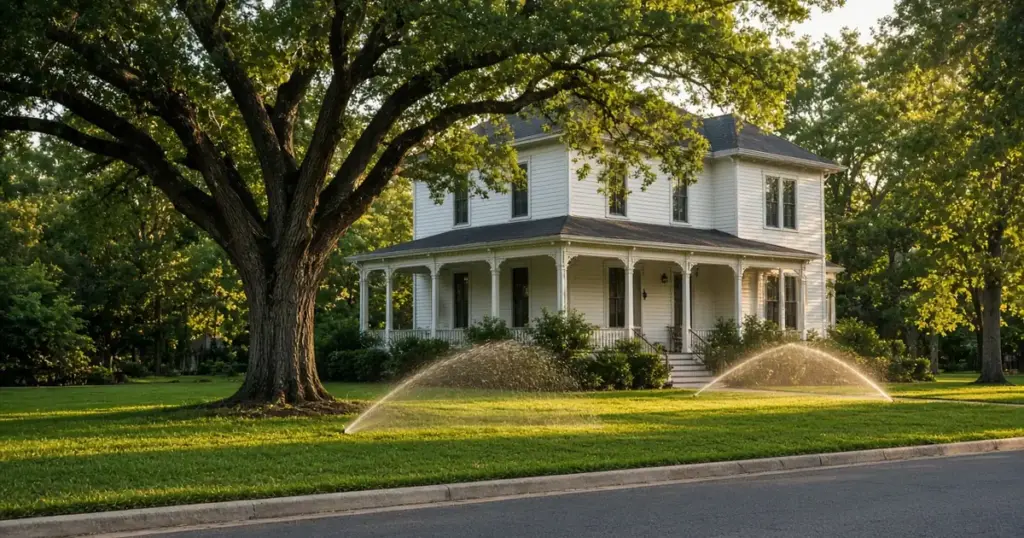
Crockett, the county seat of Houston County, sits north and east of Huntsville in the Piney Woods. Its older neighborhoods, newer subdivisions, and surrounding rural homesteads all depend on irrigation systems that face the same East Texas pattern: long hot summers, sudden heavy rain, and the occasional hard freeze.
As part of our service area around Huntsville, TX and Walker County, we handle sprinkler and irrigation repair for Crockett-area homeowners and businesses. This guide covers common local problems, what owners can check, and when it makes sense to call for help.
Irrigation Conditions Around Crockett
Older systems on established lots
Established homes often have irrigation systems that were installed years ago and modified since. That can mean mixed head types, undocumented valve locations, and controllers that have been replaced once or twice. Finding valves is often the first job. Our article on how to find buried sprinkler valves explains the usual methods.
Mature trees
Large oaks, pines, and other trees provide welcome shade, but their roots can crack pipe, lift heads, and compete for water. Shade also changes how much water lawns need, so zones under trees often need shorter run times than sunny zones.
Variable soils
Soils across the region vary from sandy to clay-heavy within short distances. Sandy areas drain quickly; clay areas hold water and can puddle. A single schedule rarely suits every zone.
Common Repairs for Crockett Properties
- Broken and leaking heads from mowing, traffic, and age.
- Mismatched heads on the same zone, causing uneven watering. Our existing post comparing spray heads, rotors, and rotary nozzles explains why mixing them causes trouble.
- Zones that will not turn on or will not shut off.
- Underground leaks from root damage or settling.
- Controller replacement and reprogramming.
- Backflow assembly repair and testing.
For a walk-through of how each repair is approached, read our homeowner’s guide to sprinkler repair.
A Quick Self-Check
Before calling, a few minutes of observation helps:
- Run each zone manually and note which ones have problems.
- Look for water pooling, bubbling, or running down the street.
- Check heads for tilting, sinking, or broken nozzles.
- Check the controller for power, settings, and any active rain delay.
- Look at the backflow assembly for drips or damage.
Write down what you see and which zones are affected. That shortens diagnosis time.
What a Service Visit Looks Like
A typical repair visit starts with a conversation about what you have noticed and when it started. The technician then checks the controller, runs each zone, and walks the property to watch the heads in operation. Any problem area gets a closer look: a valve box opened, a head dug out, or a wire tested with a meter. Once the cause is clear, you get an explanation of the repair and, for anything beyond a simple fix, a quote before work begins. After the repair, the affected zones are run again to confirm everything works, and the schedule is adjusted if needed.
For rural properties a little way outside town, it helps to mention the location and any gate codes or access details when you call.
Repair, Upgrade, or Replace?
Older systems sometimes reach the point where repeated repairs no longer make sense. The decision depends on the condition of the pipe, the layout, and how often repairs are needed. Upgrading heads and the controller often improves an older system substantially without replacing pipe. Our guide on whether to repair or replace an old sprinkler system explains how to weigh the options.
Backflow Requirements
Irrigation systems connected to public water must have an approved backflow prevention assembly. Under TCEQ rules, a licensed tester must test it after installation, repair, replacement, or relocation, and some water providers require periodic testing. Rural homes with septic systems and irrigation on potable water need a reduced pressure principle assembly under TCEQ guidance. If you are unsure what your property has, a technician can identify it.
Seasonal Tips for Crockett Yards
Spring
Start the system, check every zone, clean filters, and reset the schedule for warmer weather.
Summer
Water early in the morning, deeply and less often. Use cycle-and-soak on clay or slopes.
Fall
Reduce watering as temperatures drop and rain becomes more frequent.
Winter
Protect the backflow assembly and exposed pipe before hard freezes. Water only during extended dry spells.
Practical Tips for Lower Water Use
Even a well-working system can waste water if it is not tuned. A few habits make a real difference:
- Aim heads away from pavement. Water on driveways and sidewalks does nothing for the lawn.
- Match head types within each zone. Rotors and sprays apply water at very different rates.
- Set run times by zone. Shady zones under trees need less than sunny ones.
- Check after storms. Make sure the rain sensor is stopping cycles when it should.
- Fix leaks promptly. A small break can waste a surprising amount of water over a season.
These steps also reduce wet spots, mosquito-friendly puddles, and disease in the lawn.
When to Call a Pro
Call us if water is leaking from underground or from the backflow assembly, if a zone will not turn on or off, if coverage is uneven despite adjustments, or if your water bill has jumped without explanation. For older systems with unknown histories, a full inspection gives you a clear baseline. Visit our service areas page to confirm coverage, and see our sprinkler repair page for details on what we fix. The East Texas service area guide covers the other towns we serve.
Frequently Asked Questions
Do you travel to Crockett for sprinkler repairs?
Yes. Crockett is part of our service area. Call with your address to schedule a visit.
My system is old and nobody knows where the valves are. Can you still fix it?
Yes. Technicians use wire tracing and other methods to locate valves and map the system before repairing it.
Does my backflow assembly need to be tested every year?
Requirements depend on the assembly type, the hazard level, and your water provider. Testing is always required after installation or repair.
Schedule Service in Crockett
Call 346-586-6060 or request service to schedule sprinkler repair for your Crockett-area property.