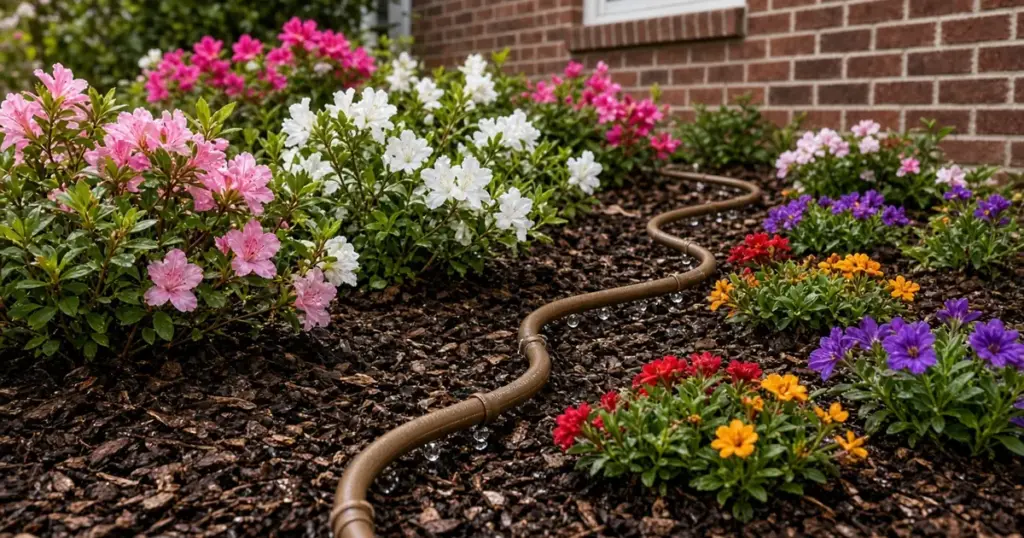
Look at the flower beds along a typical foundation after the sprinklers run. The siding is wet, the mulch has been blasted aside, the shrub leaves are dripping, and the soil under the plants may still be dry an inch down. Spray heads were designed for lawns. In beds, they waste water to wind and evaporation, wet foliage that would rather stay dry, and often soak walls and walkways.
Drip irrigation delivers water slowly at the base of each plant, where roots can use it. For beds, shrubs, and foundation plantings in Huntsville, TX and the rest of Walker County, it is usually the better tool. This guide explains how drip works and how to plan a zone that performs well for years.
Why Drip Suits Beds So Well
- Water goes where roots are. Little is lost to evaporation or overspray.
- Leaves stay dry, which helps limit fungal problems in humid East Texas weather.
- Walls, windows, and walkways stay dry, which protects siding and reduces stains.
- Slow application lets water soak into clay instead of running off.
- Flexible layout means you can serve plants of different sizes on the same zone with different emitters.
Drip also tends to be treated more favorably under watering restrictions. In the City of Huntsville’s published 2019 drought plan, for example, Stage 1 allows drip irrigation at any time, while sprinkler irrigation is limited by hours and days.
The Parts of a Drip Zone
A drip zone has a few components that spray zones do not:
- Valve. A dedicated zone valve, usually a low-flow-capable model.
- Filter. Drip emitters have tiny passages that clog easily. A filter at the head of the zone catches sand and debris.
- Pressure regulator. Drip runs at much lower pressure than spray heads. A regulator protects tubing and fittings from household pressure.
- Supply line. Usually half-inch poly tubing that runs through the bed.
- Emitters or inline drip tubing. These deliver water to plants.
- Flush caps or end closures so the zone can be flushed periodically.
Some drip products include a chemical root inhibitor. TCEQ guidance treats drip systems with chemically treated components as a health hazard for backflow purposes, which affects the type of backflow protection required. Ask your irrigator if you are unsure what your product includes.
Point-Source Emitters vs. Inline Drip Tubing
Point-source emitters
Individual emitters are punched into the supply line or connected with small distribution tubing and placed at each plant. They are rated in gallons per hour and come in several flow rates.
Best for: Shrubs, perennials, and trees spaced apart, where each plant can have its own emitter, or two or more for larger plants.
Inline drip tubing
Tubing with emitters built in at regular intervals, laid in rows or loops through the bed.
Best for: Densely planted beds, ground covers, and annual plantings where you want even moisture across the whole area.
Many beds benefit from a combination: inline tubing for dense plantings and individual emitters for the larger shrubs.
Planning a Drip Zone Step by Step
- Map the bed. Sketch plant locations and sizes. Note sun and shade.
- Group by water need. Plants with similar needs should share a zone. A shady foundation bed and a sunny perennial border may need separate zones.
- Choose emitter type and flow. Larger plants need more emitters or higher-flow emitters, placed out toward the drip line of the canopy, not just at the stem.
- Plan the supply line route. Keep runs reasonable in length and avoid sharp kinks.
- Add flush points at the ends of runs.
- Locate the valve, filter, and regulator in an accessible valve box.
- Cover tubing with mulch to protect it from sun and hide it, while keeping emitters visible enough to check.
Our irrigation installation and upgrades guide explains how drip zones fit into overall system design.
Scheduling Drip
Drip applies water much more slowly than spray, so run times are longer, often much longer, than a lawn zone. Do not copy a lawn schedule to a drip zone. Instead:
- Start with a run time based on emitter flow and plant needs.
- After watering, dig a small hole near a plant to see how far moisture spread and how deep it went.
- Adjust until the root zone is moist but not soggy.
- Reduce frequency in fall and winter as plants slow down.
Put drip on its own program in the controller so lawn changes do not affect it. Our post on how to set a sprinkler controller shows how to set up separate programs.
Drip and Local Soil
Sandy loam spreads water downward more than sideways, so emitters may need to be closer together than they would in heavier soil. Where clay sits close to the surface, water spreads wider but can puddle if applied too fast. Checking moisture patterns after the first few cycles tells you whether emitter spacing is right. The lawn and soil irrigation guide covers the local soil profile.
Common Mistakes to Avoid
- Skipping the filter or regulator. Clogged emitters and blown fittings follow.
- Mixing drip and spray on one zone. They apply water at very different rates.
- One emitter for a large shrub. As plants grow, emitters should move outward.
- Burying emitters too deep in soil instead of under mulch, where they can clog or be hard to check.
- Forgetting maintenance. Drip needs periodic flushing and checks.
Maintenance Basics
- Clean or replace the filter screen regularly.
- Flush lines periodically by opening end caps while the zone runs.
- Walk the beds while the zone runs and look for dry plants, geysers, or puddles.
- Repair punctures from rakes, shovels, and pets.
When to Call a Pro
Call a professional if you want an existing spray bed converted to drip, if you need a new valve and zone added, if your drip zone keeps clogging or blowing apart, or if you are unsure what backflow protection your drip system requires. A licensed irrigator can size the zone, choose the right filter and regulator, and set the schedule. See our irrigation installation page for new drip zones and our services page for maintenance and upgrades. The existing comparison of spray heads, rotors, and rotary nozzles can help you decide which areas should stay on spray.
Frequently Asked Questions
Can drip irrigation run on the same controller as my sprinklers?
Yes. Drip just needs its own valve and zone, with its own program and longer run times.
How long should I run a drip zone?
It depends on emitter flow, plant size, and soil. Start with an estimate, then check soil moisture around plants after watering and adjust.
Does drip work for trees?
Yes, with emitters placed around the drip line rather than at the trunk, and with more emitters added as the tree grows.
Will drip irrigation clog with well water?
It can if sediment or iron is present. Good filtration and regular flushing are especially important on well systems.
Plan Your Drip Zone
If your beds are getting sprayed instead of watered, call 346-586-6060 or request an estimate. We design and install drip irrigation for homes throughout Huntsville and Walker County.