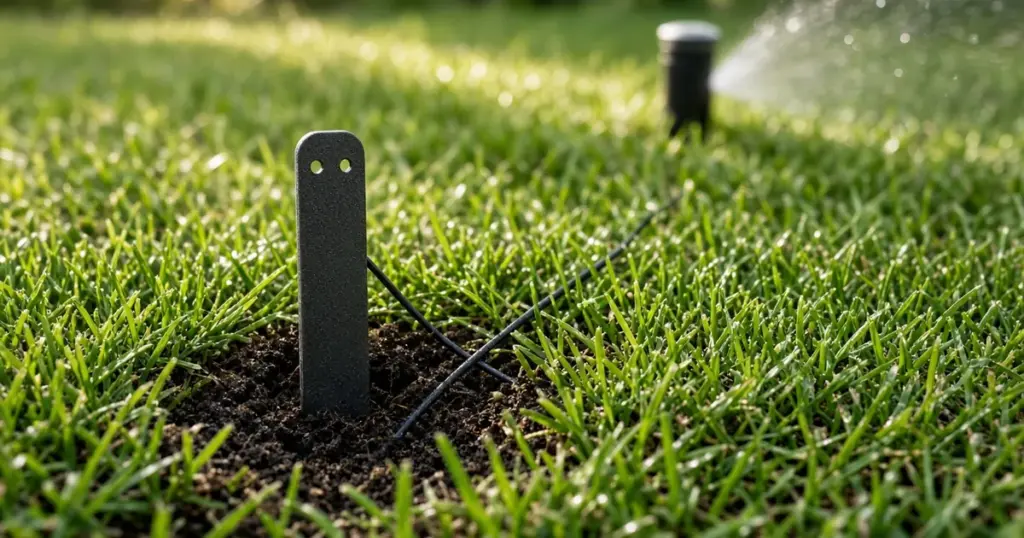
Most sprinkler controllers decide when to water based on a clock. Smart controllers add weather data to that decision. A soil moisture sensor takes a different approach: it measures how much water is actually in the root zone and lets the system water only when the soil needs it.
That sounds like the perfect solution, and in some yards it nearly is. In others, a poorly placed sensor creates new problems. This guide explains how soil moisture sensors work, what to consider on the layered soils common in Walker County, and whether one makes sense for your system.
How Soil Moisture Sensors Work
A soil moisture sensor has a probe buried in the root zone of a representative area. It measures soil moisture, often electronically, and connects to the controller. There are two common setups:
- Bypass sensors allow or block scheduled watering. The controller runs its normal schedule, but if the soil is above the moisture threshold you set, the sensor skips the cycle.
- On-demand systems start watering when the soil dries below a threshold, rather than following a fixed schedule.
Most residential setups use the bypass approach, which is simpler and works with many existing controllers that have sensor terminals.
Why They Can Save Water
A soil moisture sensor responds to actual conditions:
- After a rain, it blocks watering until the soil dries.
- In cool weather, it naturally waters less because the soil stays moist longer.
- In heat waves, it allows watering more often because the soil dries faster.
That automatic adjustment covers many of the mistakes people make with fixed schedules, especially the fall overwatering that keeps lawns soggy as temperatures drop. Texas rules require rain or moisture shut-off technology on new automatic systems, and a moisture sensor installed according to the manufacturer’s recommendations is one way to meet that requirement; your irrigator can confirm the right device for your system.
Placement Is Everything
A soil moisture sensor only knows what is happening around its probe. If the probe is in the wrong spot, the whole system follows the wrong signal.
Choosing the spot
- Pick a representative area of the zone or zones the sensor controls, not the wettest or driest corner.
- Avoid low spots where water collects, and high spots that dry out first.
- Stay away from downspouts, leaks, and the edge of pavement.
- Place it within the spray pattern so it receives the same irrigation as the turf around it.
- Put it at root depth. The manufacturer specifies how deep.
Layered soils
Many Huntsville-area yards have sandy loam over clay. The sandy surface dries quickly while the clay below stays moist. A probe set too shallow may report dry soil while the root zone is fine; set too deep, it may read the wet clay and block watering when the turf above is stressed. Matching the probe to the depth where most of the roots are is the key. Dig a small hole to see where roots and the clay layer actually are before installing. The lawn and soil irrigation guide explains the local soil profile.
One Sensor, Many Zones
Most residential systems use a single sensor that affects all or most zones. That works well when zones are similar. If your yard has both deep shade and full sun, a sensor in the sunny lawn may allow watering that overwaters the shade, while one in the shade may block watering the sun needs. Some controllers allow sensors to be assigned to specific programs or zones, which helps.
Pros and Cons
Pros:
- Responds to real soil conditions rather than forecasts.
- Reduces watering after rain and in cooler weather automatically.
- Works with many existing controllers.
- Can help with fall overwatering and disease prevention.
Cons:
- Placement mistakes can cause overwatering or underwatering.
- One sensor may not represent a varied yard.
- Probes can be damaged by aeration and digging.
- Wireless models need battery checks.
Soil Moisture Sensors vs. Smart Controllers
Smart controllers estimate water needs from weather data. Soil moisture sensors measure conditions directly. Each has strengths:
- Weather-based controllers adjust every zone individually based on settings like plant type, sun exposure, and soil.
- Soil moisture sensors know what actually happened in the ground, including rain that a weather service may have missed.
Some systems use both. Our existing article on whether smart sprinkler controllers are worth it in Huntsville covers weather-based options, and the controllers and smart irrigation guide compares sensors and controllers.
Soil Moisture Sensors vs. Rain Sensors
A rain sensor reacts to rain falling on it. A soil moisture sensor reacts to moisture in the ground, whether from rain, irrigation, or a leak. Rain sensors are simpler and cheaper; soil moisture sensors respond more precisely. For a closer look at rain sensors, see rain and freeze sensors for sprinkler systems.
Setting the Threshold
After installation, you set the moisture level that allows or blocks watering. Start with the manufacturer’s recommendation, then watch the lawn for a few weeks. If grass shows stress, lower the threshold so watering is allowed sooner. If the lawn stays soggy, raise it. Mark the probe location so mowing, aerating, and edging crews avoid it.
When to Call a Pro
Call a professional if you want a sensor installed and need help choosing a location, if your controller does not have sensor terminals, if the sensor seems to block or allow watering at the wrong times, or if you want sensors assigned to specific zones. A technician can also check whether coverage problems, rather than scheduling, are causing dry or wet spots. See our services page for sensor and controller upgrades and our sprinkler repair page for system problems.
Frequently Asked Questions
Will a soil moisture sensor work with my existing controller?
Many controllers have sensor terminals that work with bypass-style sensors. Older controllers may need an upgrade.
How deep should the probe go?
At the depth of most of the turf’s roots, as specified by the manufacturer. In layered soils, check where roots actually are before installing.
Can a soil moisture sensor detect a leak?
Indirectly. If a leak keeps the soil around the probe wet, the sensor will block watering. That may hide the leak, so keep an eye on your water meter.
Add a Sensor to Your System
Interested in a soil moisture sensor or other upgrades? Call 346-586-6060 or request a visit. We serve homeowners across Huntsville and Walker County.