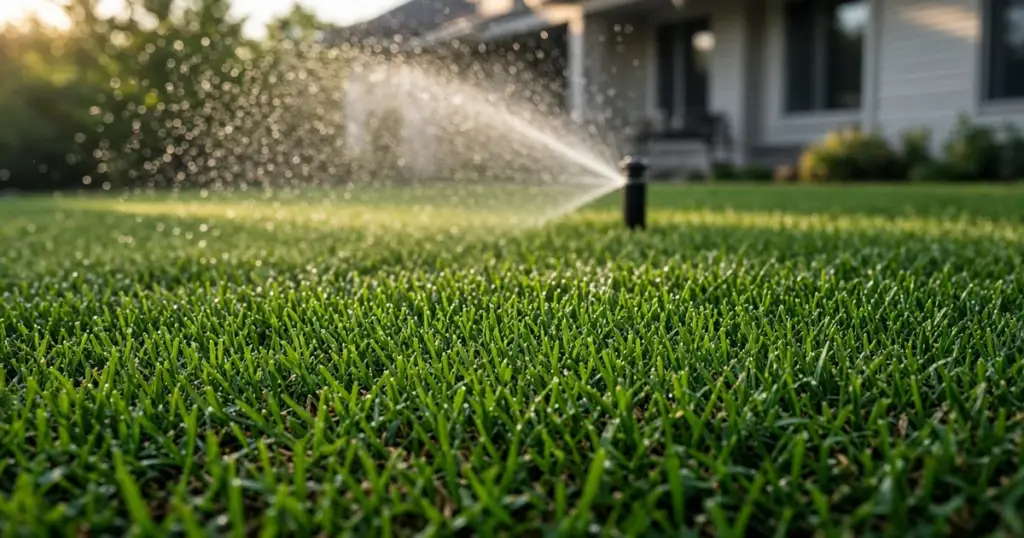
Zoysia has earned a following among East Texas homeowners who want a dense, carpet-like lawn that tolerates some shade and holds up to foot traffic. It grows more slowly than Bermuda, which means less frequent mowing, but it also means it recovers more slowly from damage. Zoysia’s dense growth is part of its appeal and part of its challenge: it tends to build thatch, and a thatchy lawn that is watered too often becomes a home for fungal disease.
Getting the irrigation right is a large part of keeping zoysia healthy. This guide explains how to water zoysia in the Huntsville, TX area, where humidity is high, summers are long, and many yards sit on sandy topsoil over clay.
How Zoysia Differs From Other Warm-Season Grasses
| Trait | Zoysia | Bermuda | St. Augustine |
|---|---|---|---|
| Shade tolerance | Moderate | Low | Moderate to good |
| Growth rate | Slow | Fast | Moderate |
| Thatch tendency | High | Moderate | Moderate |
| Recovery from damage | Slow | Fast | Moderate |
| Leaf texture | Fine to medium | Fine | Coarse |
These differences affect irrigation. Zoysia’s slow recovery means drought stress or disease leaves marks that linger. Its thatch tendency means frequent shallow watering is especially harmful. For comparison, see our guides to watering St. Augustine grass and watering Bermuda grass.
The Thatch and Disease Connection
Thatch is a layer of dead and living stems and roots between the soil and the green blades. A thin layer is normal. A thick layer:
- Holds moisture at the surface, which encourages fungal disease in humid weather.
- Keeps water from reaching the soil, so roots stay shallow.
- Sheds water when it dries out, causing runoff.
Frequent light watering feeds the problem. Roots grow up into the thatch, where moisture is, instead of down into the soil. The result is a lawn that wilts fast in heat and stays wet at night.
How to Water Zoysia
1. Water deeply
Apply enough water to moisten the root zone, then stop. Check with a soil probe or screwdriver an hour after watering.
2. Water infrequently
Let the surface dry between cycles. Zoysia shows drought stress through a dull color, leaf rolling, and footprints that remain visible. Water when you see those signs across a zone.
3. Water in the early morning
Morning watering lets blades dry quickly as the day warms. Evening watering leaves the turf wet overnight, which is an invitation to disease in humid East Texas weather. Our existing post on watering your Huntsville lawn in humid weather explains why timing matters so much here.
4. Use cycle-and-soak where needed
On clay or slopes, split run times into shorter cycles with a soak period between. This reduces runoff and helps water move past the thatch.
5. Match run times to zones
Sunny zones need more water than shaded ones. If your zoysia lawn spans both, separate zones let you water each correctly.
Zoysia in Partial Shade
Zoysia tolerates more shade than Bermuda, which makes it a popular choice for yards with some tree cover. Shaded zoysia uses less water and dries more slowly, so it is more prone to disease if watered on the same schedule as sunny areas. Reduce run times in shady zones and watch for thinning, which can signal too much shade rather than too little water.
Seasonal Adjustments
Spring
As zoysia greens up, increase watering gradually. Check the system for winter damage.
Summer
Peak demand. Water deeply in the early morning and adjust frequency during heat waves or drought restrictions.
Fall
Reduce watering as temperatures drop and rain returns. Fall is a period of high disease risk in many zoysia lawns, so avoid overwatering.
Winter
Zoysia goes dormant and brown in cold weather. Water only during extended dry periods, especially before a hard freeze.
The lawn and soil irrigation guide explains how soil layers and seasons affect all three common grasses.
Signs Your Zoysia Is Overwatered
- Spongy feel underfoot from thick thatch.
- Circular or irregular patches of discolored grass.
- Mushrooms and persistent moisture.
- Algae or moss in thin areas.
- Shallow roots when you lift a section of turf.
If you see these signs, cut back frequency, check for leaks or low-head drainage that keep areas wet, and consider dethatching. Our existing article on stopping sprinkler leaks and mold covers moisture problems around the yard.
Sprinkler Equipment for Zoysia
Zoysia lawns benefit from even coverage. Mismatched heads, poor spacing, or high pressure that causes misting all create wet and dry spots. Matched-precipitation nozzles and pressure-regulating heads help. If you are installing new irrigation or re-zoning, separate sun and shade areas.
A Simple Zoysia Watering Routine
If you want a straightforward way to put this into practice, try the following for a few weeks during the growing season:
- Set each lawn zone to deliver a moderate amount of water, split into two cycles.
- Water no more than every few days to start.
- The morning after watering, probe the soil to see how deep the moisture reached.
- Before the next scheduled day, walk the lawn. If it shows thirst signs, keep the schedule. If it still looks fresh and the soil is moist, skip a day.
- Adjust run times up or down based on what the probe shows.
After a few cycles, you will know how long each zone needs to wet the root zone and how many days the lawn can go between waterings. Revisit the routine at each change of season.
When to Call a Pro
Call a professional if your zoysia lawn has persistent disease spots, if some areas stay soggy while others dry out, if coverage is uneven despite adjustments, or if you want sun and shade areas separated into different zones. A coverage check often reveals the cause. We help homeowners across Huntsville and Walker County with sprinkler adjustments, repairs, and upgrades. See our sprinkler repair page and our irrigation installation page.
Frequently Asked Questions
How often should I water zoysia grass?
Water deeply and only when the lawn shows signs of thirst. The frequency depends on soil, sun, and weather.
Does zoysia need less water than St. Augustine?
Needs vary by site and conditions. Zoysia’s dense growth and thatch tendency make it especially sensitive to overwatering.
Can I water zoysia in the evening?
Morning watering is better. Evening watering leaves grass wet overnight, which increases disease risk in humid weather.
Keep Your Zoysia Healthy
For help setting a zoysia-friendly schedule or improving coverage, call 346-586-6060 or request a visit.