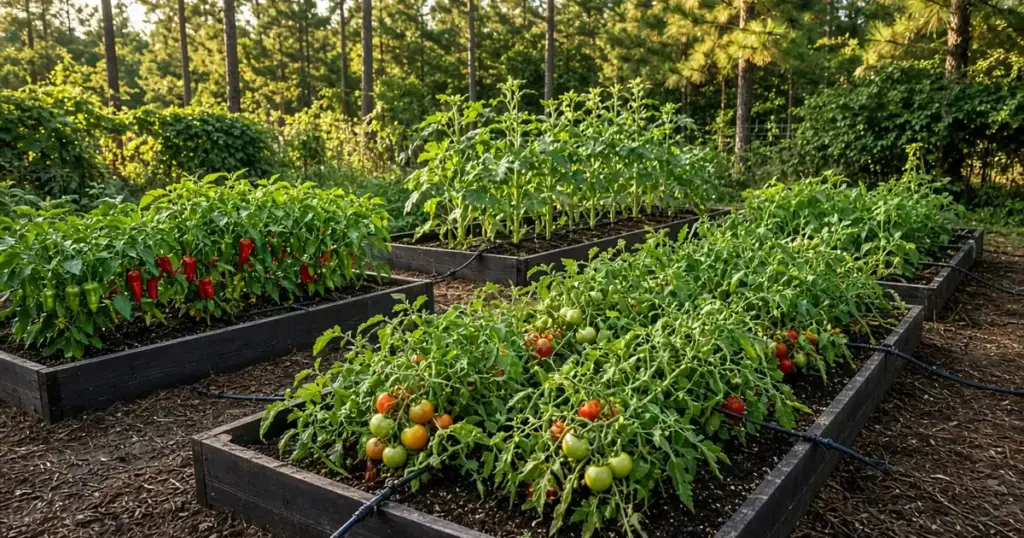
A vegetable garden is one of the most rewarding places to put drip irrigation. Vegetables need steady moisture to produce well, but their leaves are prone to disease when they stay wet, and East Texas humidity makes that worse. Overhead sprinklers soak the foliage and lose water to evaporation on hot afternoons. Drip puts water at the base of each plant, keeps leaves dry, and can be set on a timer so the garden is watered consistently even during a busy week.
This guide explains how to plan and set up drip irrigation for a home vegetable garden in the Huntsville, TX area, whether you are adding a zone to an existing sprinkler system or starting with a simple hose-bib setup.
Two Ways to Supply a Garden
From an existing irrigation system
If your sprinkler system has a spare station on the controller, a new valve can be added for the garden. This puts the garden on the same controller as the lawn but on its own schedule. Adding a valve involves tapping into the main line, running wire, and installing a backflow-protected supply, so it is usually a professional job. The irrigation installation and upgrade guide explains how zones are added.
From a hose bib
A battery-operated hose timer, backflow device, filter, and pressure regulator can supply a drip system directly from an outdoor faucet. This is a simple, flexible option for raised beds or rented properties.
Planning the Layout
- Measure the garden and sketch the beds, rows, and paths.
- Group crops by water needs if possible. Tomatoes and peppers, for example, have different needs from leafy greens.
- Plan supply lines along the edge of the beds, with lateral lines running down rows.
- Decide on emitters or drip line.
Emitters vs. inline drip line
- Point-source emitters suit widely spaced plants like tomatoes, peppers, and squash. Place one or more emitters at each plant.
- Inline drip line, with emitters built in at regular spacing, suits closely planted crops like lettuce, carrots, beans, and herbs. Lay lines down each row or in parallel lines across a bed.
Many gardens use both.
Essential Components
| Component | Purpose |
|---|---|
| Backflow prevention | Protects your drinking water |
| Filter | Keeps emitters from clogging |
| Pressure regulator | Reduces pressure to what drip needs |
| Supply tubing | Carries water to beds |
| Emitters or drip line | Delivers water to plants |
| Flush caps | Let you flush debris from line ends |
| Timer or controller | Waters on schedule |
Skipping the filter or pressure regulator is the most common reason home drip systems fail. Our article on drip irrigation problems and maintenance explains what happens when they are missing.
Setting Up the System
- Install the head assembly: backflow device, filter, and pressure regulator, in the order the manufacturer specifies.
- Run supply tubing to the beds.
- Lay drip line or install emitters along the rows.
- Close the ends with flush caps.
- Run the system and check each plant for flow.
- Cover tubing with mulch to reduce evaporation and protect it from sun.
Scheduling for Vegetables
Vegetables generally do best with steady moisture rather than cycles of drought and flooding. Uneven watering can contribute to problems like blossom end rot in tomatoes and cracked fruit.
- Start with a moderate run time and check soil moisture a few inches down after watering.
- Water in the morning so any splash dries quickly.
- Increase watering as plants grow and temperatures rise.
- Reduce watering after heavy rain, which East Texas gets often.
- Keep a separate schedule from the lawn. A garden zone should never share a program with turf.
Sandy topsoil in many local gardens drains quickly, so frequent, moderate watering may be needed during hot spells. Where clay is closer to the surface, water moves more slowly and less frequent watering works better.
Seasonal Gardens in East Texas
Many local gardeners grow in two main seasons: a spring-to-summer garden and a fall garden, with cool-season crops sometimes carrying through mild winters.
- Spring: Set up and test the system before planting.
- Summer: Watch for heat stress and increase watering as needed.
- Fall: Replant and adjust lines for new crops.
- Winter: Drain or protect above-ground components before hard freezes.
Drip is also flexible under watering restrictions. In the City of Huntsville’s 2019 drought plan, Stage 1 allows drip irrigation at any time, unlike sprinkler watering.
Raised Beds and Containers
Raised beds dry out faster than in-ground beds. A grid of drip line on top of the soil, under mulch, works well. Containers can use individual emitters or micro-tubing from a supply line. Our guide to drip irrigation for flower beds covers similar setups for ornamental beds.
Converting an Existing Spray Zone
If your garden is currently watered by spray heads on an existing zone, converting that zone to drip often improves both plant health and water use. Our guide to converting a spray zone to drip explains the process.
When to Call a Pro
Call a professional if you want the garden added as a new zone on your existing system, if your water pressure or supply is uncertain, if you are on a well and need filtration help, or if your current garden irrigation is uneven or clogs frequently. Our existing article on well water irrigation systems covers special considerations for well-supplied gardens. We design and install drip zones for homes across Huntsville and Walker County. See our irrigation installation page and services page.
Frequently Asked Questions
How long should I run drip irrigation in my vegetable garden?
It depends on emitter flow, soil type, and crops. Start moderate, check soil moisture a few inches down, and adjust.
Can I add a vegetable garden zone to my sprinkler system?
Often, yes, if your controller has a spare station and the main line can be tapped. A professional can add a valve and drip zone.
Do I need a filter for garden drip irrigation?
Yes. Drip emitters have small openings that clog easily. A filter is essential, especially on well water.
Grow a Better Garden
If you want help setting up garden irrigation, call 346-586-6060 or request an estimate.