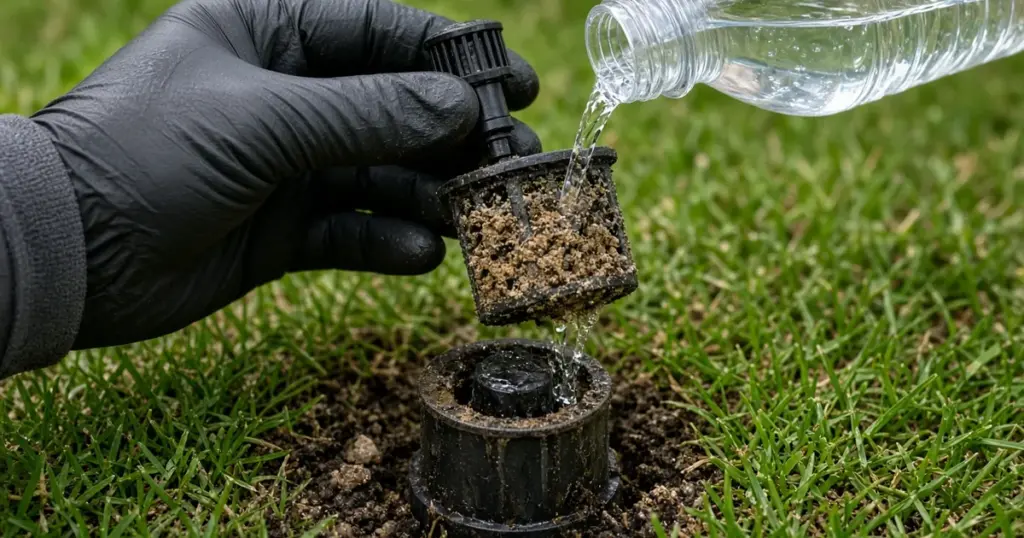
A sprinkler head that sputters, sprays unevenly, or throws water only a fraction of its normal distance is often not broken at all. It is clogged. Sand, soil, pipe debris, and mineral scale can collect in nozzles and the small filter screens under them. The result is weak, distorted spray and dry spots in the lawn.
Cleaning a clogged nozzle takes a few minutes and costs little. Preventing clogs takes a bit more thought, especially on well-supplied systems or after line repairs. This guide covers how to recognize clogs, clean them, and keep them from coming back, with notes for homeowners in Huntsville, TX and Walker County.
Signs of a Clogged Nozzle
- Short or weak spray compared with neighboring heads.
- A distorted pattern, such as a gap, fingers of water, or spray going sideways.
- Misting or spitting instead of a steady stream.
- Dry spots in the area that head should cover.
- A rotor that sputters or does not reach its normal distance.
If an entire zone is weak, a clog is less likely to be the cause than pressure, a partially closed valve, or a leak. Our existing post on common causes of low sprinkler pressure covers zone-wide pressure problems.
Where Clogs Happen
Nozzle orifice
The tiny opening in the nozzle can be blocked by sand or debris.
Filter screen
Most spray heads and many rotors have a small screen under the nozzle that catches debris before it reaches the orifice. Screens clog over time.
Drip filters
Drip zones rely on a filter near the valve. A clogged drip filter reduces flow to every emitter downstream.
Valve and lines
After a pipe repair, soil and debris can move through the line and lodge in heads all over the zone.
How to Clean a Spray Head
- Run the zone and note which heads are affected.
- Turn the zone off.
- Pull up the riser with a pull-up tool or pliers, or let the zone run briefly while you hold it up, and clamp it carefully.
- Unscrew the nozzle.
- Remove the filter screen underneath.
- Rinse both under running water. Use a soft brush or toothpick on the orifice; avoid enlarging it.
- Flush the head. With the nozzle off, run the zone briefly to push debris out of the riser.
- Reinstall the screen and nozzle, aligned correctly.
- Run the zone and check the pattern. Adjust as needed.
How to Clean a Rotor
Rotor designs vary, but most have a nozzle held in place by a screw and a filter screen at the base of the internal assembly. Follow the manufacturer’s instructions to remove the internal assembly, clean the screen, and clear the nozzle. Be careful not to lose small parts.
When a Clean Is Not Enough
If a head still sprays poorly after cleaning, the nozzle may be worn or the head may be damaged. Replacing the nozzle or head is straightforward; our guide to replacing a broken sprinkler head walks through the process. If the head will not rise properly, see sprinkler head won’t pop up.
Preventing Clogs
Flush after repairs
Any time a line is opened, debris can get in. Flushing the zone by removing the end head and running water before reinstalling nozzles clears most of it.
Keep heads at the right height
Sunken heads collect soil and grass clippings. Our existing article on why sprinkler head height matters covers how to fix them.
Address well sediment
Well water often carries sand or sediment. A properly sized filter on the irrigation supply, cleaned regularly, protects nozzles and valves. Iron in well water can also form deposits.
Check screens seasonally
A quick check of screens at the start of the watering season catches buildup before it causes dry spots.
Tools Worth Keeping on Hand
A small kit makes nozzle maintenance quick:
- A pull-up tool for spray heads, so you can hold risers up without damaging them.
- A nozzle adjustment tool or small flat screwdriver for rotors and adjustable nozzles.
- Spare nozzles and screens that match your heads.
- A soft brush and a container of clean water for rinsing parts.
- Flags to mark heads that need attention while you walk a zone.
Keep spare parts labeled by brand and type. Mixing nozzles from different series on the same zone can change the precipitation rate and undo the benefit of cleaning.
A Seasonal Nozzle Routine
At the start of the watering season and again in midsummer, run each zone and walk it slowly. Flag any head with a weak or distorted pattern. Clean the flagged heads, then run the zone again to confirm. The whole process takes less than an hour for many homes and prevents a summer of dry spots.
Clogs and Your Water Use
Clogged heads lead to dry spots, and dry spots tempt homeowners to increase run times for the whole zone. That wastes water on every other head. Cleaning clogs and checking coverage with a catch-cup test lets you set run times based on how the zone actually performs.
When to Call a Pro
Call a professional if many heads clog repeatedly, if a whole zone is weak, if cleaning does not restore the pattern, or if you suspect sediment from a well or a recent repair is spreading through the system. Technicians can flush zones, install or service filters, and replace worn parts. The sprinkler troubleshooting guide covers related symptoms. We serve homeowners in Huntsville and Walker County. See our sprinkler repair page and services page.
Frequently Asked Questions
Can I clean a sprinkler nozzle with a pin?
Use something soft, like a toothpick or the tool that comes with some nozzles. A metal pin can scratch or enlarge the orifice and change the spray.
Why do my sprinkler nozzles keep clogging?
Common causes include well sediment, debris from recent repairs, sunken heads collecting soil, and missing or damaged filter screens.
Do drip zones need a filter?
Yes. Drip emitters clog easily without a filter, and the filter should be cleaned regularly.
Restore Your Coverage
If clogs or weak heads are leaving dry spots, call 346-586-6060 or schedule a repair.