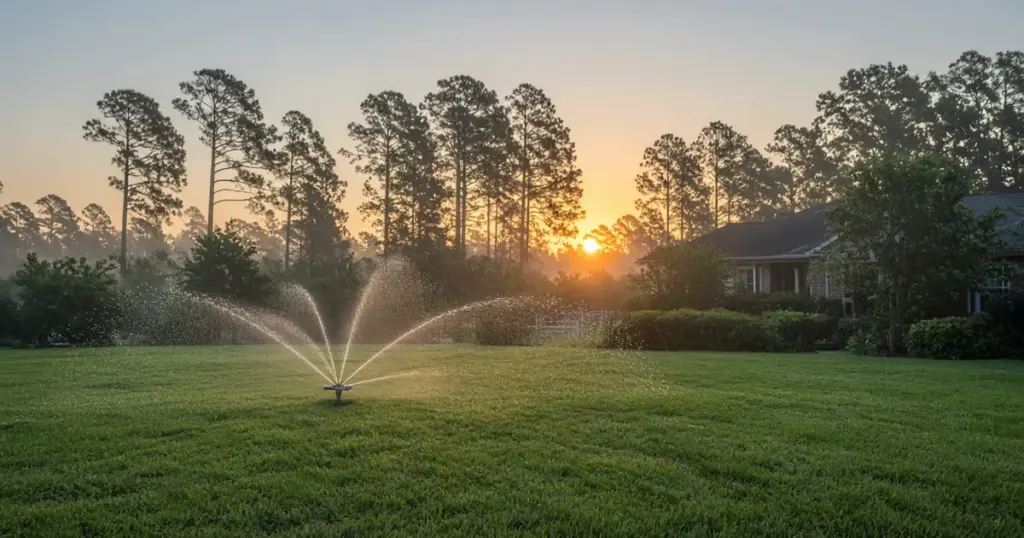
Summer in Huntsville, TX is long, hot, and often humid, with stretches of dry weather that can push lawns to their limits. It is also when irrigation systems work hardest and when small problems become expensive ones. A broken head that would barely matter in March can brown out a section of lawn in a week in July. A schedule that overwaters in May can still underwater during a heat wave.
This guide covers the summer irrigation practices that make the most difference for lawns and landscapes around Walker County, from schedule timing to system checks and drought stress signs.
Start Early in the Morning
The best time to water in summer is early morning, before sunrise or shortly after. Temperatures are lower, wind is usually calmer, and less water is lost to evaporation. Turf dries as the day warms, which reduces disease risk. Evening watering leaves turf wet overnight in humid weather, which can encourage fungal problems.
If the City of Huntsville declares a drought stage, sprinkler watering may be restricted between 7 a.m. and 7 p.m. under its published plan. Early-morning watering already fits within that rule. See Huntsville drought watering stages.
Water Deeply, Not Daily
Frequent short cycles keep only the top layer of soil moist. Roots stay shallow and wilt quickly in the afternoon heat. Deeper watering, a few times a week, encourages roots to grow down where soil stays cooler and moister. Check depth with a soil probe or screwdriver an hour after watering.
Use Cycle-and-Soak
Sandy topsoil over clay, common around Huntsville, absorbs water fast at first and then slows. Long single cycles cause runoff. Split each zone’s run time into two or three shorter cycles with a soak period between. That gets more water into the root zone and less onto the sidewalk. Our guide to stopping overspray and runoff has more on this.
Measure, Do Not Guess
Different zones apply water at very different rates. A catch-cup test shows how much each zone applies, so you can set run times by depth rather than habit. Early summer is a good time to run the test.
Adjust for Heat Waves
During extended heat, lawns use more water. Rather than adding extra days immediately, try:
- Increasing run times modestly on sunny zones.
- Adding a cycle if runoff limits how much you can apply at once.
- Watching for stress signs before making more changes.
Use your controller’s seasonal adjust feature to raise or lower all zones at once.
Know the Signs of Drought Stress
- Dull, bluish-gray color.
- Footprints that stay visible.
- Leaf blades folding or rolling.
- Soil that is dry several inches down.
If stress appears in one spot only, check coverage before increasing run times for the whole zone.
Grass-Specific Notes
- St. Augustine is common in Huntsville yards and responds well to deep, infrequent watering. Watch for chinch bug damage in hot, dry areas, which can look like drought stress. See watering St. Augustine grass.
- Bermuda tolerates heat and can go dormant in drought, recovering when water returns.
- Zoysia benefits from deep watering and careful moisture management to avoid thatch and disease.
Summer System Checks
Once a month during summer, run each zone and walk the yard:
- Broken or tilted heads.
- Clogged nozzles.
- Blocked spray from grown shrubs and turf.
- Leaks and soggy spots.
- Overspray onto pavement.
Small fixes pay off quickly when water demand is highest.
Beds and Trees
Shrubs and trees need water too, especially newly planted ones. Drip in beds delivers water efficiently and, under Stage 1 of the city’s 2019 drought plan, is allowed at any time. Water trees deeply and slowly at the dripline rather than at the trunk.
Mowing and Mulch
- Raise mowing height in summer to shade the soil and reduce stress.
- Leave clippings to return moisture and nutrients.
- Mulch beds to keep soil cooler and reduce evaporation.
Vacations and Summer Travel
Summer is also travel season, and a lawn left on autopilot for two weeks in July can suffer if something breaks. Before you leave, run each zone and fix any problems, confirm the rain sensor works, and make sure the controller’s clock and programs are correct. A smart controller lets you check on the system and adjust watering from the road. Ask a neighbor to keep an eye out for water running into the street or soggy spots, and leave a contact number in case something goes wrong.
Pools and Hardscape
Pool decks and patios heat up and reflect heat onto nearby turf and plants, which then dry out faster than the rest of the yard. These edges may need slightly more water, but they also need careful aiming so spray does not hit the deck or fill the pool with overspray. Strip nozzles and drip are often the best fit along pool edges.
Summer Storms
Thunderstorms can deliver heavy rain quickly. A working rain sensor prevents the system from running right after a storm. Smart controllers can skip watering based on local weather. Our existing article on watering your Huntsville lawn in humid weather covers scheduling around rain and humidity.
When to Call a Pro
Call a professional if dry spots persist despite adjustments, if your water bill spikes, if zones apply water very unevenly, or if you want a summer tune-up before peak demand. A technician can fix coverage problems, adjust nozzles, and reprogram the controller for summer. The year-round maintenance calendar covers seasonal tasks. We help homeowners across Huntsville and Walker County get through summer with healthy lawns. See our sprinkler repair page and our services page.
Frequently Asked Questions
What time should I water my lawn in a Texas summer?
Early morning is best. It reduces evaporation and lets turf dry during the day.
How often should I water during a heat wave?
Water deeply and adjust based on stress signs. Modestly increasing run time or adding a cycle often works better than adding days.
Why are some parts of my lawn brown while others are green?
Uneven coverage, soil differences, shade, and pest damage can all cause patchy browning. Check coverage first.
Get Ready for Summer
For a summer system tune-up, call 346-586-6060 or request service.