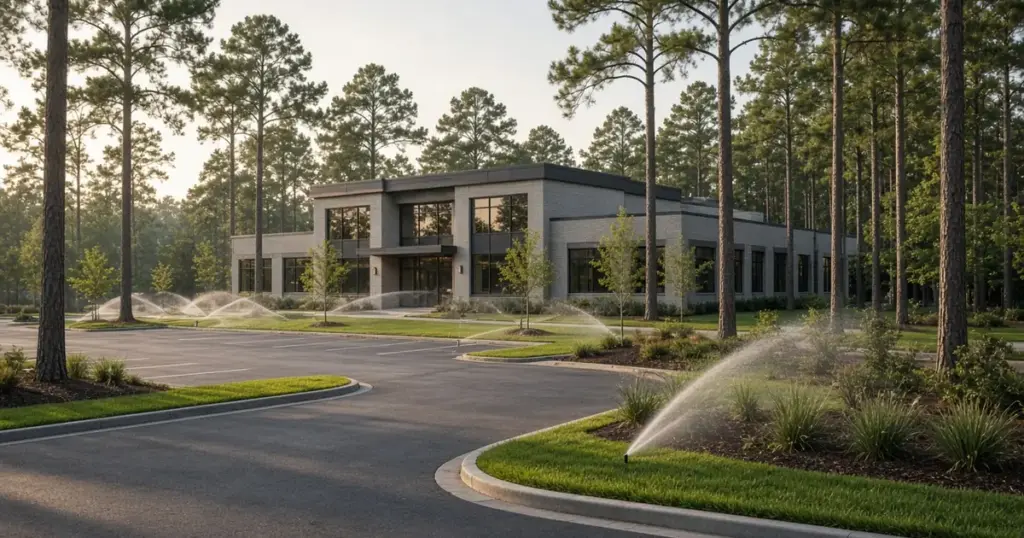
Commercial irrigation systems work harder than most residential systems. They often cover larger areas, run more zones, serve high-visibility landscapes, and sit in places where foot traffic, delivery vehicles, and landscaping equipment take a toll on heads and valves. A broken head in a parking island can waste water for weeks before anyone notices. A failed backflow test can bring a notice from the water provider. And a stained building facade or a flooded sidewalk is a bad look for any business.
This guide outlines a practical maintenance approach for commercial properties in Huntsville, TX and across Walker County, including retail centers, offices, churches, multifamily properties, and other sites with irrigated landscapes.
Why Commercial Systems Need a Plan
- Scale. More zones and heads mean more opportunities for failure.
- Visibility. Landscapes shape first impressions.
- Liability. Water on walkways can create slip hazards; overspray onto parking areas and roads can cause problems.
- Water costs. Large systems use a lot of water, so waste adds up quickly.
- Compliance. Backflow testing and watering restrictions apply.
A Maintenance Calendar
Monthly during the growing season
- Run each zone and walk the property.
- Fix broken heads, clogged nozzles, and misaligned spray.
- Check controllers for correct programs and active sensors.
- Look for leaks, soggy spots, and runoff.
Seasonally
- Adjust schedules for spring, summer, fall, and winter.
- Inspect valves and valve boxes.
- Check backflow assemblies for leaks and damage.
- Clean filters on drip and well-supplied zones.
Annually
- Backflow testing as required by the water provider.
- Full audit of coverage, pressure, and schedules.
- Review water use against previous years.
Backflow Testing and Records
Commercial irrigation systems connected to public water require approved backflow prevention, and TCEQ rules require testing by a licensed tester after installation, repair, replacement, or relocation, with results provided to the water provider. Many providers require annual testing. The City of Huntsville’s customer service agreement places responsibility for installing, testing, and maintaining required devices, and for keeping records, on the customer. Keep test reports organized by site.
Commercial assemblies are often targets for theft and impact damage. See backflow preventer covers and enclosures for protection options.
Watering Restrictions
Under the City of Huntsville’s published 2019 drought plan, multifamily and commercial properties have their own watering days when a drought stage is declared: Monday, Wednesday, and Friday in Stage 1, and Monday and Friday in Stage 2, with no sprinkler watering between 7 a.m. and 7 p.m. Check the city’s current notices for any changes. Programming all controllers on a site to the allowed days and hours in advance makes compliance easier.
Leak Protection
Large systems benefit from automatic leak detection. A flow sensor paired with a master valve lets the controller detect high flow from a broken head or pipe and shut down the zone. See flow sensors and master valves. Smart controllers can send alerts to property managers.
Common Commercial Problems
| Problem | Typical cause | Fix |
|---|---|---|
| Overspray onto parking | Heads aimed poorly, wrong nozzles | Adjust or replace nozzles |
| Broken heads in islands | Vehicle and equipment damage | Relocate heads, use drip |
| Wet walkways | Overspray, low-head drainage | Adjust, add check valves |
| High water bills | Leaks, overwatering | Audit, leak repair, scheduling |
| Brown areas | Coverage gaps, clogged nozzles | Repair and adjust |
| Stained facades | Spray hitting buildings, iron in well water | Re-aim, convert to drip |
Parking Islands and Narrow Strips
Parking islands and narrow strips along walks are hard to water with spray. Texas standards for new installations prohibit above-ground spray in areas less than 48 inches wide bordered by pavement on two or more sides. Drip irrigation or non-irrigated landscaping is often the better answer for these areas, both for compliance on new work and for reducing overspray.
Multifamily and Rental Properties
Apartment complexes and rental properties share many commercial concerns, plus tenant traffic and turnover. Our guide to sprinkler care for rentals near Sam Houston State covers rental-specific practices. For HOA common areas, see HOA common area irrigation.
Coordinating With Landscape Contractors
On many commercial sites, one company mows and another maintains irrigation. That split can leave gaps: a mowing crew breaks a head and no one reports it, or the irrigation is adjusted without telling the landscaper about new plantings. A few habits help. Ask the mowing crew to flag damaged heads and report them the same day. Share the irrigation schedule so crews are not working in areas while zones run. When beds are replanted, have the irrigation checked so new plants get the right water. A simple shared log or email thread for each site keeps everyone informed.
Budgeting for Maintenance
Predictable maintenance costs less than emergency repairs. Setting aside a budget for routine inspections, annual backflow testing, and a modest number of head and nozzle replacements each year makes it easier to keep systems in good shape. Larger items, like controller replacement or drip conversions, can be planned over several budget cycles.
Reporting and Communication
Property managers benefit from clear reporting:
- Inspection reports listing what was checked and repaired.
- Photos of problem areas.
- Recommendations prioritized by urgency and cost.
- Water use trends where available.
Consistent records make budgeting easier and help justify upgrades.
Efficiency Upgrades
- Smart controllers with weather adjustment.
- Pressure-regulating heads to reduce misting.
- Drip conversion in beds and islands.
- Matched-precipitation nozzles.
- Rain and freeze sensors.
The lower water bill guide covers these in more detail. Our existing article on why regular sprinkler inspections matter explains what thorough inspections cover.
When to Call a Pro
Call a professional to set up a maintenance schedule, to handle backflow testing and records, to audit a system with rising water costs, or to repair damage after storms or vehicle impacts. We serve commercial and multifamily properties across Huntsville and Walker County. See our services page and our sprinkler repair page.
Frequently Asked Questions
How often should commercial irrigation be inspected?
Monthly visual checks during the growing season, seasonal schedule adjustments, and an annual full audit and backflow test are a solid baseline.
Who is responsible for backflow testing at a commercial property?
The customer is typically responsible. In Huntsville, the city’s customer service agreement places responsibility for required devices and records on the customer.
What watering days apply to commercial properties during drought in Huntsville?
Under the city’s 2019 plan, commercial and multifamily properties water Monday, Wednesday, and Friday in Stage 1 and Monday and Friday in Stage 2. Check current notices.
Commercial Irrigation Service
For commercial irrigation maintenance, call 346-586-6060 or request a proposal.