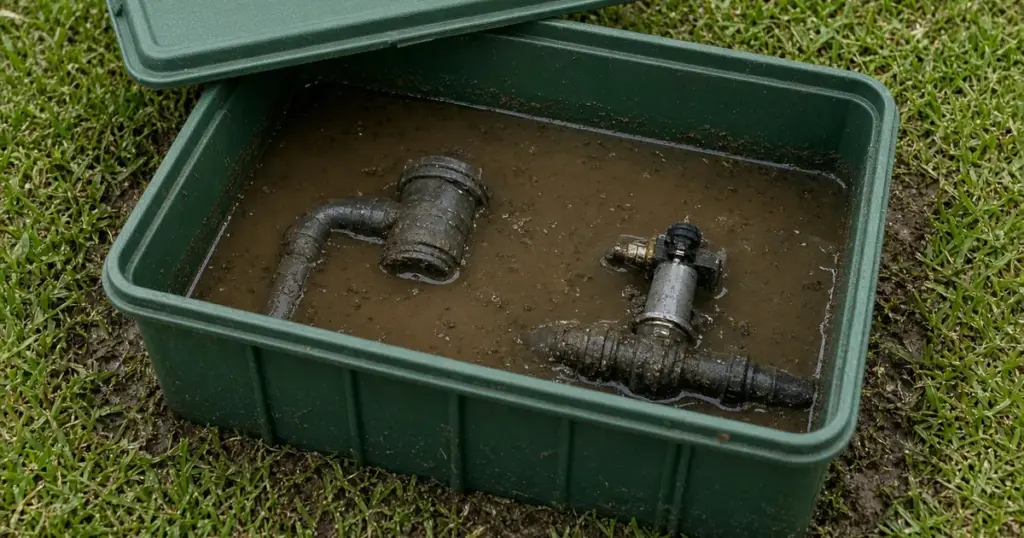
Lifting the lid on a valve box and finding it full of water is unsettling. Sometimes it means nothing more than recent rain soaking into low ground. Other times it means a valve, fitting, or pipe is leaking, sometimes constantly. Since the valves are usually the first place a technician looks when a zone acts up, knowing how to read a flooded box can save time and water.
This guide explains the common reasons valve boxes fill with water, how to tell them apart, and what to do about each, with notes for the clay-heavy and low-lying yards found around Huntsville, TX and Walker County.
First, a Few Observations
Before you start bailing, take note of:
- When it rained last. Heavy rain can fill boxes, especially in clay.
- Whether the water is clear or muddy. Clear water that keeps returning suggests a pressurized source.
- Whether the water level changes when zones run or when the irrigation supply is closed.
- Whether other boxes are flooded too. One box flooding is more telling than every box in a low area.
Common Causes
Rain and groundwater
Valve boxes are open at the bottom so water can drain. In heavy clay or low spots, rainwater collects and drains slowly. After a storm, a box may stay full for days. This is common and not a leak, but it can cause problems: solenoids and wire splices sitting underwater corrode, and debris gets into valves when they are opened.
A leaking valve
Water can leak from a cracked valve body, a loose or cracked bonnet, a worn bonnet seal, or the solenoid. These leaks are often slow and steady.
A leaking fitting or pipe
Fittings on either side of the valve, especially threaded connections and older glued joints, can weep. A leak on the main line near the valve will flood the box constantly because the main line stays pressurized.
A valve that is not closing
If a valve does not close completely, water flows to the heads continuously. The box itself may not flood, but the low heads on that zone will weep, and soil around them stays wet. Our existing post on a sprinkler zone that won’t shut off covers this.
A Simple Test
- Bail or pump the box until it is mostly dry.
- Make sure no zone is running.
- Watch the box for 15 to 30 minutes.
- If water returns quickly and clear, close the irrigation supply. If the refilling stops, the source is likely on the pressurized side of the system near that box.
- If water seeps in slowly and muddy and stops changing after you close the supply, groundwater is the more likely cause.
Running the meter test, with all water use off and the irrigation supply open, also helps confirm whether the system is losing water.
Fixing the Cause
For a leaking valve
Tightening a loose bonnet, replacing a bonnet seal, or replacing the solenoid O-ring may stop the leak. If the body is cracked or the valve is old, replacement is usually the answer. Our guide to sprinkler valve diaphragm replacement walks through opening and resealing a valve.
For a leaking fitting or pipe
The fitting or pipe section needs to be cut out and replaced. Because these leaks are usually right next to the valve, the repair often includes reworking the manifold. The sprinkler leak repair guide explains how leaks are located and repaired.
For drainage problems
- Add gravel in the bottom of the box below the valves.
- Raise the box slightly if it sits in a low spot where water flows in.
- Improve surface grading around the box so runoff does not pour into it.
- Use waterproof splices on all wiring inside the box. Our article on sprinkler wire repair explains how.
What Standing Water Does to Valves
Constant moisture shortens the life of valve components:
- Solenoids and splices corrode.
- Debris settles around the valve and enters it during repairs.
- Bonnet screws rust.
- Valve boxes become home to insects and frogs, making inspection unpleasant.
Even if the water is just from rain, a box that is always flooded is worth improving.
Working Safely in a Flooded Box
A few precautions make the job easier and safer:
- Turn the controller off before reaching into the box, so a valve does not open while your hands are in it.
- Wear gloves. Valve boxes can hold insects, spiders, snakes, and sharp debris.
- Use a small cup or hand pump to remove water rather than reaching blindly.
- Clear soil away from the valve before opening anything, so mud does not fall into it.
- Take photos of the wiring and valve orientation before disturbing anything.
When you finish, set the lid back securely. A loose or broken lid lets in more soil, water, and debris, and can be a trip hazard.
Finding Lost or Buried Boxes
If you cannot find a valve box, or the lid is buried under soil and grass, see how to find buried sprinkler valves. A box that has been buried for years often has standing water and debris inside.
When to Call a Pro
Call a professional if water refills the box quickly and clear, if the meter shows a leak with all zones off, if you see a crack in a valve or fitting, if the box is in a spot you cannot reach, or if multiple boxes are flooding. Main-line leaks at valve manifolds should be repaired promptly. Our existing post on signs of an underground sprinkler leak lists other clues. We repair valves and manifolds for homes across Huntsville and Walker County. See our sprinkler repair page and our emergency service page.
Frequently Asked Questions
Is it normal for a sprinkler valve box to have water in it?
Some water after rain is common, especially in clay soil. Water that returns quickly when the weather is dry often signals a leak.
Can a flooded valve box stop my sprinklers from working?
It can contribute to problems by corroding solenoids and wire splices, which can prevent valves from opening.
Should I drill holes in my valve box?
Valve boxes are usually open-bottomed already. Adding gravel underneath and improving surface drainage is more effective.
Dry Out Your Valve Box
If your valve box keeps flooding, call 346-586-6060 or schedule a repair.