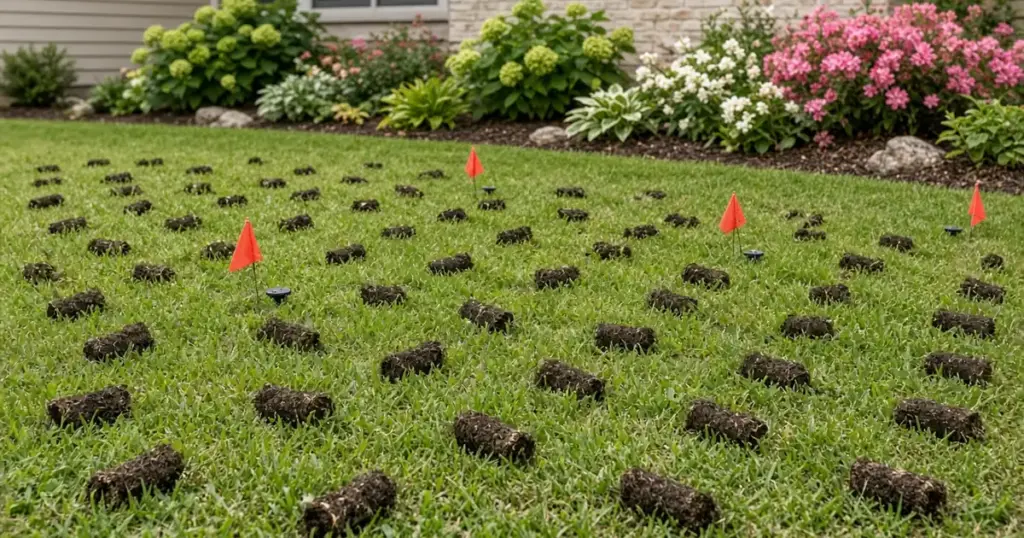
Core aeration pulls small plugs of soil from the lawn, opening channels for air, water, and nutrients to reach the roots. On compacted soil, it can make a noticeable difference in how well water soaks in, which is valuable in yards around Huntsville, TX where sandy topsoil sits over denser clay. But aerator tines do not know where your sprinkler heads, lines, and wires are. A single pass can snap heads, crack shallow pipe, and puncture wire, leaving you with repairs that cost more than the aeration.
This guide explains how to aerate without damaging the irrigation system, and how to adjust watering before and after.
Why Aeration Helps Irrigation
- Better water entry. Compacted soil sheds water. Aeration holes let it in.
- Less runoff on slopes and clay.
- Deeper roots, which help lawns handle heat and drought.
- Thatch breakdown over time.
Our guide to sandy loam over clay explains why water entry is such a common issue in local soils.
What Aerators Can Damage
| Component | How it is damaged |
|---|---|
| Spray heads | Tines strike the cap or body |
| Rotor heads | Tines crack the cap or cover |
| Shallow lateral pipe | Tines puncture or crack it |
| Valve box lids | Machine wheels or tines crack them |
| Low-voltage wire | Tines cut or nick shallow wire |
| Drip tubing | Tines puncture surface or shallow lines |
Before You Aerate
1. Mark every head
Run each zone and place a flag next to every head. This is the single most important step. Heads hidden in grass are easy to miss.
2. Mark valve boxes and known pipe routes
Flag valve boxes and, if you know them, routes where lateral pipe or wire runs shallow.
3. Fix sunken heads first
Heads that sit low in the turf are hard to see and more likely to be hit. Raising them to the correct height helps. Our existing post on why sprinkler head height matters explains the right position.
4. Water the day before
Aeration works best when soil is moist but not soggy. Dry, hard soil resists the tines; saturated soil smears. A moderate watering a day or so before usually helps.
5. Talk to the aeration crew
If someone else is aerating, walk the yard with them, point out flags, and mention any shallow lines or drip areas to avoid.
During Aeration
- Stay a safe distance from flagged heads.
- Skip drip areas and beds.
- Avoid valve boxes.
- Watch for resistance that could signal pipe or rock.
After Aeration
- Run each zone and look for broken heads, geysers, or weak zones.
- Check valve boxes for damage.
- Look for zones that fail to run, which could signal cut wire. Our guide to sprinkler wire repair explains how to fix it.
- Water to help the lawn recover, especially in warm weather.
- Leave the plugs on the surface to break down.
- Remove the flags once you have confirmed every zone works, so they do not get caught in the mower or blown into the street.
If a head was damaged, see how to replace a broken sprinkler head.
Timing for East Texas Lawns
Warm-season grasses like Bermuda, St. Augustine, and zoysia generally recover best from aeration during active growth, typically late spring into early summer. Avoid aerating during drought stress or dormancy. The lawn and soil irrigation guide covers each grass type.
Adjusting Your Watering After Aeration
Aeration can change how quickly water soaks in. After aerating:
- Watch for less runoff and consider shortening cycles if water now soaks in faster.
- Watch for faster drying of the surface in sandy areas.
- Recheck the schedule after a few weeks.
If You Hire a Lawn Service
Many homeowners in Walker County hire a lawn care company for aeration. A few steps protect your system:
- Flag heads yourself the day before, even if the crew says they will.
- Share a simple map of valve boxes, drip beds, and any areas where pipe is known to be shallow.
- Ask how the crew handles damage. Agree beforehand on what happens if a head is broken.
- Walk the yard afterward and run each zone while the crew is still nearby if possible.
- Remove the flags after you confirm everything works, so they do not end up in the mower.
Spike vs. Core Aeration
Spike aerators push solid tines into the soil, while core aerators remove plugs. Core aeration is generally preferred for relieving compaction because spikes can compress the soil around each hole. Both types can damage irrigation components, so the same precautions apply. Manual tools like a hand core aerator or digging fork are an option for small areas near heads where a machine would be risky.
Preventing Damage Long Term
- Keep a map of heads, valves, and pipe routes.
- Install heads at proper depth so they sit flush.
- Bury wire and pipe properly. TCEQ guidance for new installations calls for pipe to be covered to the manufacturer’s specified depth, or at least six inches of select backfill where none is given, and wire buried at least six inches deep.
- Replace damaged heads with matching models.
Mowing can damage heads in similar ways; see preventing mower damage to sprinkler heads.
When to Call a Pro
Call a professional if aeration damaged pipe, wire, or several heads, if a zone will not run afterward, if water bubbles up from the ground, or if you want heads raised and mapped before aeration. We repair aeration damage and prepare systems for lawn care work across Huntsville and Walker County. See our sprinkler repair page and our services page.
Frequently Asked Questions
Can aeration break sprinkler lines?
Yes. Shallow pipe and wire can be punctured or cracked by aerator tines. Flagging heads and known lines helps prevent damage.
Should I water before aerating?
Moist soil aerates better. A moderate watering a day or so before usually helps, but avoid saturating the lawn.
How do I find sprinkler heads before aerating?
Run each zone and flag every head while the water is on. This is the most reliable method.
Repair or Prevent Aeration Damage
Call 346-586-6060 or schedule service for help before or after aeration.