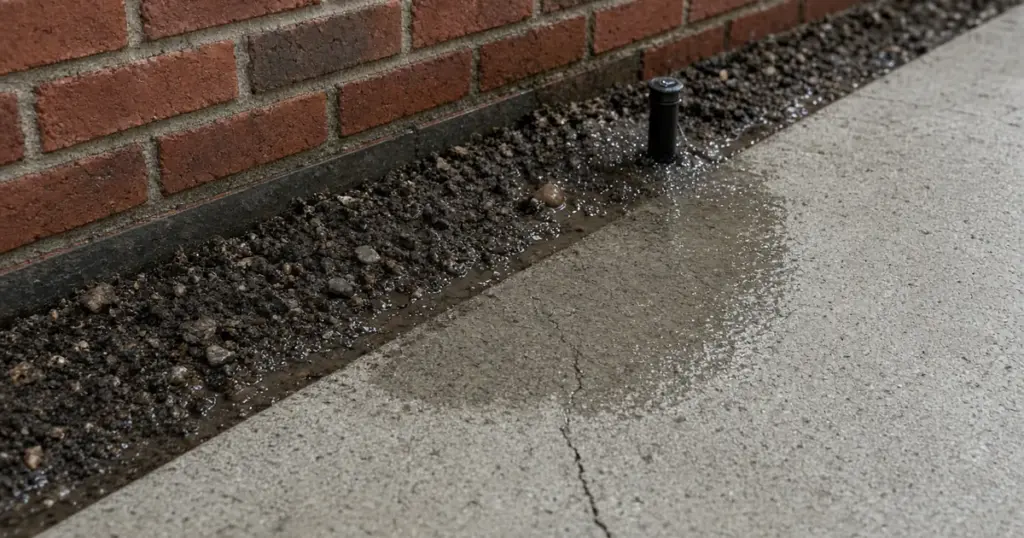
A sprinkler leak in the middle of the lawn mostly wastes water. A sprinkler leak next to the house, under a driveway, or along a sidewalk can do more. Constant moisture near a slab foundation can contribute to soil movement. Water running under concrete can wash out the soil that supports it. In sandy soils, a persistent leak can create voids that lead to settling or sinkholes. These leaks deserve faster attention than most.
This guide explains how to spot leaks near foundations and hardscape, why they matter, and how repairs are handled, with notes for homes in Huntsville, TX and Walker County, where sandy topsoil over clay is common.
Why Location Matters
Foundations
Many homes in the area sit on concrete slab foundations. Foundations are affected by changes in soil moisture. A leak that keeps one area constantly wet while the rest of the soil dries out can contribute to uneven moisture. Spray hitting the foundation wall, or water pooling against it, adds to the problem. Our existing article on stopping sprinkler leaks and mold covers moisture against the house.
Driveways and sidewalks
Irrigation pipe often runs under or alongside driveways and walks to reach planting areas. A leak there can wash fine soil out from under the slab, leaving voids. Over time, the concrete can crack or settle.
Sandy soil and voids
Sandy soil moves easily with water. A steady leak can carry sand away, creating a hollow beneath the surface. A sunken spot near a walk or drive is a warning sign.
Signs of a Leak Near the House or Hardscape
- A wet spot along the foundation or the edge of a drive that does not dry out.
- Water seeping from the joint between concrete and soil.
- Sunken soil or a depression next to a slab.
- New cracks in a walk or drive near irrigation lines.
- Mold, mildew, or moss on walls near the ground.
- Unusually green grass along a slab edge in dry weather.
- A meter that moves with all water off.
Our existing post on signs of an underground sprinkler leak lists more clues. A water meter test can confirm whether the irrigation system is losing water.
Do Not Confuse Leaks With Drainage
Not every wet spot near the house is a leak. Gutters that discharge next to the foundation, soil that slopes toward the slab, and low-head drainage from nearby sprinklers can all keep an area wet. Check after a dry spell with the system off; if the area dries, the source is likely rain or irrigation spray rather than a leaking pipe.
Main Line or Lateral?
Leaks that run constantly, even with the system off, are on the main line, which stays pressurized. These are the most urgent near foundations and hardscape. Leaks that appear only when a zone runs are on a lateral line. See main line vs. lateral line leaks for how to tell the difference.
What to Do Right Away
- Close the irrigation supply if the leak is on the main line or you are unsure.
- Turn the controller off so no zone runs.
- Mark the area with flags.
- Take photos of any cracks or settling.
- Call for repair.
If the leak could be from the house plumbing rather than irrigation, the meter test helps separate them. A plumber may be needed for house-side leaks.
How Repairs Work Near Hardscape
Leaks beside a slab
The pipe is exposed by digging beside the concrete, not under it. The damaged section is cut out and replaced, and the soil is backfilled and compacted carefully to support the slab edge.
Leaks under concrete
Options depend on the situation:
- Tunneling under the slab to reach the pipe.
- Rerouting the pipe around the hardscape.
- Boring a new sleeve under the drive or walk for a new line.
- Abandoning the old line and capping it at both ends.
Rerouting is often the most practical approach, because it avoids breaking concrete and makes future repairs easier.
Preventing Problems Near the House
- Keep heads at least 4 inches from hardscape and directed away from it, as Texas standards require for new installations.
- Do not spray foundations, walls, or windows.
- Convert narrow beds along the house to drip.
- Install sleeves under new hardscape for future irrigation lines.
- Fix overspray. Our guide to stopping overspray and runoff covers adjustments.
Watering Near the Foundation the Right Way
Keeping soil moisture reasonably consistent around a slab is better than letting one side flood while another dries out. That means fixing leaks and overspray, but it also means not ignoring the foundation zone entirely during long dry spells. Beds along the house are good candidates for drip irrigation, which delivers water to plants without soaking the slab edge or spraying walls. Make sure gutters and downspouts carry rainwater away from the foundation, and that soil slopes away from the house so neither rain nor irrigation collects against it.
Insurance and Foundation Concerns
If you see significant cracking, settling, or foundation movement, consult a qualified foundation professional. Irrigation repairs stop the water, but they do not assess structural damage. Keep records and photos of what you found and when the irrigation leak was repaired.
When to Call a Pro
Call a professional promptly for any suspected leak near a foundation, under a driveway or sidewalk, or anywhere you see sunken soil. Close the irrigation supply in the meantime. The sprinkler leak repair guide explains how leaks are located and repaired. We repair and reroute irrigation lines for homes across Huntsville and Walker County. See our emergency service page for urgent leaks and our sprinkler repair page for repairs.
Frequently Asked Questions
Can a sprinkler leak damage my foundation?
A persistent leak can contribute to uneven soil moisture near a foundation. Prompt repair and keeping spray off the foundation help.
How do you fix a sprinkler pipe under a driveway?
Options include tunneling under the slab, rerouting the line around it, or installing a new sleeve. Rerouting is often the most practical.
Why is the soil sinking next to my sidewalk?
A leak can wash sand from under or beside concrete, creating a void. Have the irrigation checked and the area inspected.
Fast Help for Leaks Near Your Home
If you see a leak near your foundation or driveway, call 346-586-6060 or request service.