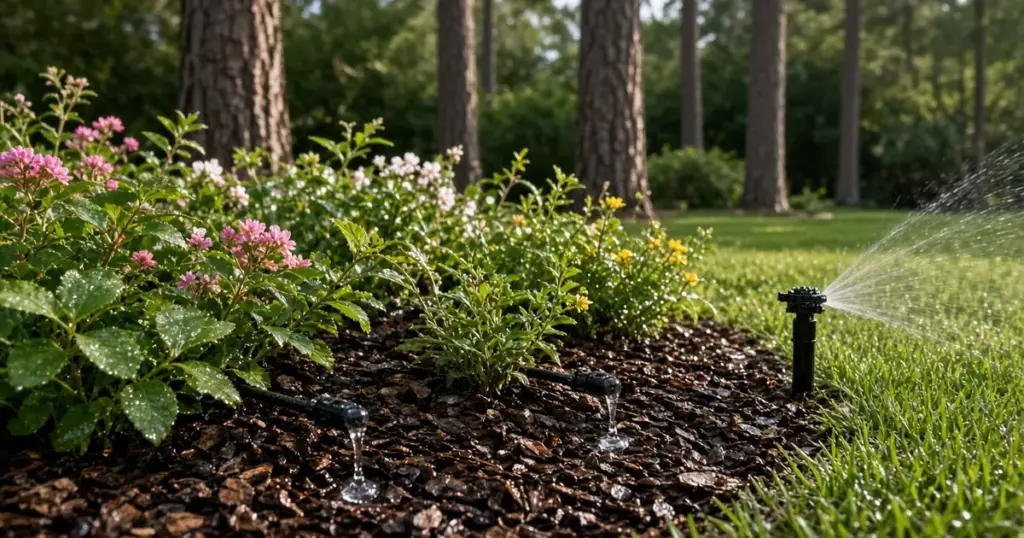
Outdoor watering is often one of the biggest swings in a household water bill, and much of the water a sprinkler system uses never benefits the lawn. It evaporates as mist, runs off onto the street, soaks a sidewalk, leaks from a cracked fitting, or keeps an already-wet lawn soggy because the controller does not know it rained.
The good news is that most of that waste is fixable, often with adjustments rather than new equipment. This guide covers how to figure out how much water your system really uses, where the waste usually hides, which upgrades pay attention to efficiency, and how to think about repair and replacement costs. It is written for homeowners in Huntsville, TX and across Walker County, and each section links to a deeper article.
Step One: Know What Your System Uses
You cannot reduce what you have not measured. Two simple measurements tell you most of what you need:
- How many gallons each zone uses per cycle. This comes from the zone’s flow rate multiplied by run time. Our guide on how much water your sprinkler system uses shows how to estimate it with your water meter.
- How much water each zone applies to the lawn. A catch-cup test measures depth of water applied in a set time, and it also reveals uneven coverage. See the catch-cup test for the method.
With those two numbers, you can set run times based on what the lawn needs rather than habit.
Where Irrigation Water Gets Wasted
Leaks
A leaking pipe, fitting, or valve wastes water every time the zone runs, and a main-line leak wastes water around the clock. Your water meter is the fastest way to check. The sprinkler leak repair guide covers detection and repair.
Overspray and runoff
Water that lands on driveways, sidewalks, and streets is lost. So is water that runs off slopes because it is applied faster than the soil can absorb it. Texas irrigation standards specifically prohibit spraying water over impervious surfaces such as concrete and streets. Our article on stopping sprinkler overspray and runoff covers head adjustments, nozzle changes, and cycle-and-soak programming.
Misting from high pressure
When water pressure is higher than a spray head is designed for, the water breaks into a fine mist that drifts and evaporates. Pressure-regulating sprinkler heads are one of the simplest fixes.
Poor coverage that leads to overwatering
When one corner of a zone stays dry, many people respond by increasing run time for the whole zone, which overwaters everything else. Fixing coverage first, then setting run times, is far more efficient. Our existing post on preventing lawn brown spots explains how to diagnose dry areas.
Watering on a fixed schedule regardless of weather
A summer schedule left running into fall, or a system that waters the morning after a heavy rain, wastes a great deal of water. Seasonal adjustments, rain sensors, and smart controllers address this. See are smart sprinkler controllers worth it in Huntsville and the controllers and smart irrigation guide.
Low-Cost Fixes to Try First
- Walk each zone while it runs and adjust heads that hit pavement or siding.
- Clean clogged nozzles so heads throw their full pattern.
- Straighten tilted heads and raise sunken ones.
- Reduce run times in fall and winter, or use the seasonal adjust setting.
- Water early in the morning when wind and evaporation are lowest.
- Split long run times into cycles on clay and slopes.
- Check that the rain sensor works by pressing its test button or wetting it.
These steps cost little or nothing and often produce noticeable results.
Upgrades That Improve Efficiency
- Smart controllers that adjust to weather.
- Pressure-regulated heads to stop misting.
- Rotary nozzles that apply water more slowly on spray zones.
- Drip irrigation for beds instead of spray.
- Flow sensors and master valves that shut the system down if a leak occurs.
- Check valves that prevent low-head drainage on slopes.
The irrigation installation and upgrades guide covers these options in more detail.
Understanding Repair and Installation Costs
We do not publish set prices, because every property is different and an honest quote depends on what we find. What we can do is explain what drives cost:
- For repairs: how hard the problem is to find, how deep and accessible the pipe or valve is, whether hardscape is in the way, parts availability for the brand, and whether one repair reveals others. See what affects sprinkler repair cost.
- For new systems: lot size and shape, number of zones, water source and pressure, soil and roots, drip versus spray, controller choice, backflow requirements, and restoration. See irrigation installation cost factors.
- For aging systems: whether repeated repairs make more sense than a partial or full replacement. See repair or replace an aging sprinkler system.
Local Rules That Affect Watering
Inside Huntsville city limits, the city’s drought contingency plan can limit landscape irrigation to certain days and hours when drought stages are in effect. Other water providers in the region have their own plans. Even when no restrictions are active, watering on a schedule that fits those patterns is a good habit. Check the City of Huntsville water department page for the current plan.
For Businesses and Larger Properties
Commercial sites, churches, schools, and HOAs often have larger systems where small inefficiencies add up quickly. Regular maintenance schedules, flow monitoring, and documented zone settings help. See commercial irrigation maintenance for Huntsville businesses.
When to Call a Pro
If your meter shows water moving when nothing is on, if your bill jumped without explanation, if coverage problems persist after adjustments, or if you want an efficiency review of the whole system, a professional visit is worth it. A technician can measure pressure, check every zone, find leaks, and recommend which upgrades will make the biggest difference on your property. See our services page for inspections and upgrades, or sprinkler repair for leaks and broken parts.
Frequently Asked Questions
Will a smart controller lower my water bill?
It can, especially if your current controller runs the same schedule year-round. Savings depend on how your system is set now and whether other problems like leaks and overspray are fixed too.
How do I know if my sprinklers are using too much water?
Measure. Estimate gallons per cycle with your meter, run a catch-cup test, and probe the soil after watering. If water goes deeper than the roots or runs off, you are applying more than you need.
Is it cheaper to repair or replace an old system?
It depends on the condition of the pipe, valves, and heads, and on how often repairs are needed. A professional evaluation can help you compare the options honestly.
Get an Efficiency Check
If you want to use less water without sacrificing your lawn, we can help find where the waste is. Call 346-586-6060 or request a visit for service anywhere in Huntsville and Walker County.