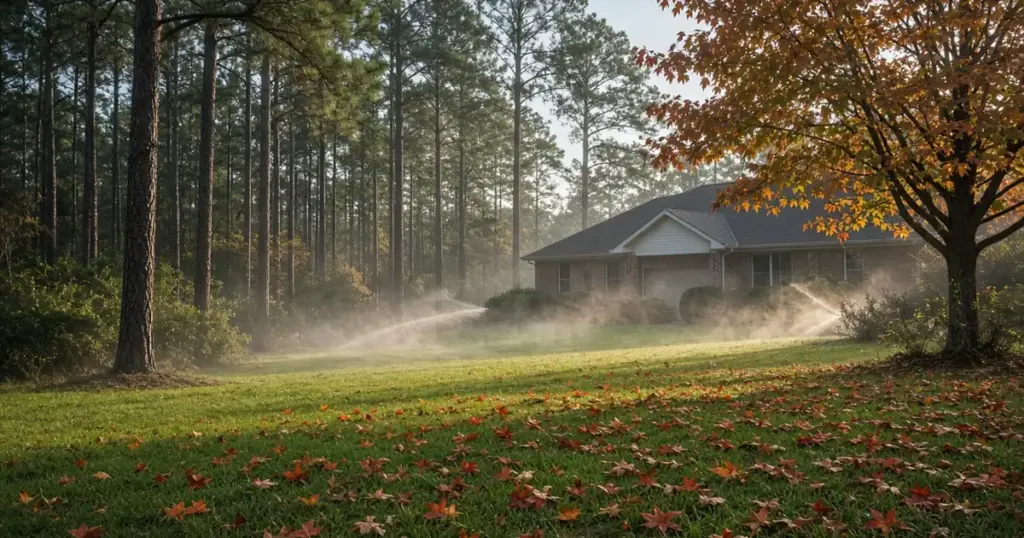
East Texas does not have the kind of winter that forces you to shut a sprinkler system down for months, and that can be a trap. Because the system can run all year, it often does, on the same schedule, with the same worn parts, until something breaks in the middle of a heat wave. A little seasonal attention prevents most of that.
This calendar is built around the weather patterns homeowners in Huntsville, TX and across Walker County actually deal with: hot, humid summers, a long and pleasant fall, mild winters punctuated by occasional hard freezes, and a hurricane season that can bring days of heavy rain. Use it as a checklist, and follow the links for detailed guidance on each task.
Spring: Wake the System Up Properly (March to May)
Spring is the best time for a thorough check, because problems found now get fixed before the summer demand on the system.
- Inspect every zone. Run each one and walk it. Look for broken heads, tilted heads, clogged nozzles, and heads buried by thatch or new mulch.
- Check the backflow assembly for cracks, drips, or freeze damage from winter.
- Update the controller. Replace the backup battery if it uses one, confirm the date and time, and set a spring schedule that reflects rising temperatures.
- Test the rain sensor so it shuts the system off when it should.
- Look for leaks. Spring growth makes wet spots and green streaks easy to see.
Our spring sprinkler start-up checklist covers each step in order. If you would rather have it done for you, a professional inspection is described in why inspect your Huntsville sprinkler system.
Summer: Water Deeply, Watch Closely (June to September)
Summer is when the system works hardest and when weak spots show up.
- Water early in the morning to reduce evaporation and let foliage dry during the day.
- Use cycle-and-soak on slopes and in clay areas so water soaks in instead of running off.
- Walk the zones every couple of weeks. A broken head in July can brown a section of lawn within days.
- Watch for fungus. Overwatering in humid weather invites disease. Our post on watering your Huntsville lawn through humidity and fungus season explains how to balance it.
- Know the drought rules. When drought stages are in effect, the City of Huntsville can restrict watering days and hours. See Huntsville drought watering stages for how to program around them.
For more summer specifics, read summer irrigation in East Texas heat.
Hurricane Season Overlay (June 1 to November 30)
The Atlantic hurricane season runs from June through November, and even a storm that makes landfall far away can send days of tropical rain inland. The National Hurricane Center is the official source for forecasts.
Before a storm, turn the controller off or set a rain delay, make sure you know where your main shutoff is, and clear debris away from heads and valve boxes. Our hurricane season sprinkler prep guide has a full checklist. After heavy rain or flooding, do not just turn the system back on; check for washed-out soil, buried heads, and debris in valve boxes first. Sprinkler system checks after flooding explains what to look for.
Fall: Cut Back and Prepare (October to November)
Fall is when most systems are overwatering. Temperatures drop, days shorten, and lawns need far less water than in August, yet many controllers are still running summer schedules.
- Reduce run times or use the seasonal adjust feature.
- Water less often, not just for shorter periods.
- Watch for large patch and other fall fungus, which thrives when turf stays wet in cool weather.
- Plan freeze protection before the first cold front.
Fall sprinkler adjustments for East Texas covers how much to cut back and how to tell if you have gone too far. If you are overseeding with ryegrass, your fall schedule will look different; the lawn and soil irrigation guide covers that and other turf-specific needs.
Winter: Protect Against Freezes (December to February)
Winter here is usually mild, but hard freezes do happen, and they can crack backflow assemblies, valves, and exposed pipe in a single night.
- Insulate above-ground parts, especially the backflow assembly, before a hard freeze.
- Turn off automatic watering before freezing nights to avoid icing walkways and stressing turf.
- Water dormant lawns sparingly during long dry stretches.
- After a freeze, inspect before running the system.
Our existing post on protecting irrigation and backflow from East Texas freezes covers insulation methods. Whether you need a full shutdown is covered in do you need to winterize sprinklers in East Texas. For damage checks after a cold snap, see after a hard freeze: checking your sprinkler system, and for winter watering amounts, see watering a dormant lawn in winter.
A Quick-Reference Seasonal Checklist
| Season | Key tasks |
|---|---|
| Spring | Full inspection, controller update, rain sensor test, leak check |
| Summer | Early-morning watering, cycle-and-soak, biweekly zone walks, drought rules |
| Hurricane season | Rain delay before storms, post-storm inspection, clear debris |
| Fall | Cut run times and frequency, watch for fungus, plan freeze protection |
| Winter | Insulate backflow, shut off before freezes, light watering of dormant turf |
When to Call a Pro
Seasonal checks are easy to do yourself, but some findings need professional attention: a cracked backflow assembly after a freeze, a valve that will not close, signs of a main-line leak, or storm damage to buried pipe. An annual professional inspection, ideally in spring, also catches wear you might not notice. Our services page describes seasonal inspections and tune-ups, and our emergency service is available when a freeze or storm leaves water running where it should not be. The sprinkler troubleshooting guide can help you sort out symptoms in the meantime.
Frequently Asked Questions
Should I turn my sprinklers off completely in winter?
Many East Texas lawns go dormant and need little water in winter, but a complete shutdown is not always necessary. Turning off automatic schedules and watering manually during long dry spells works well for many yards. Protect the backflow assembly before hard freezes either way.
When should I switch from a summer to a fall schedule?
When daytime highs start to drop consistently and nights cool off, it is time to reduce. Watch the lawn: if it stays green and soil stays moist between waterings, cut back further.
Do I need to adjust my system after heavy rain?
Yes. Use a rain delay or let the rain sensor do its job, and inspect for washed-out soil, buried heads, or debris before resuming the normal schedule.
How often should a system get a professional inspection?
Once a year is a good baseline for most homes, with spring being the most useful time.
Schedule a Seasonal Check-Up
A seasonal tune-up keeps small problems from becoming big ones. Call 346-586-6060 or request a visit online, and we will help your system handle every season in Huntsville and Walker County.